
Contents
Overview
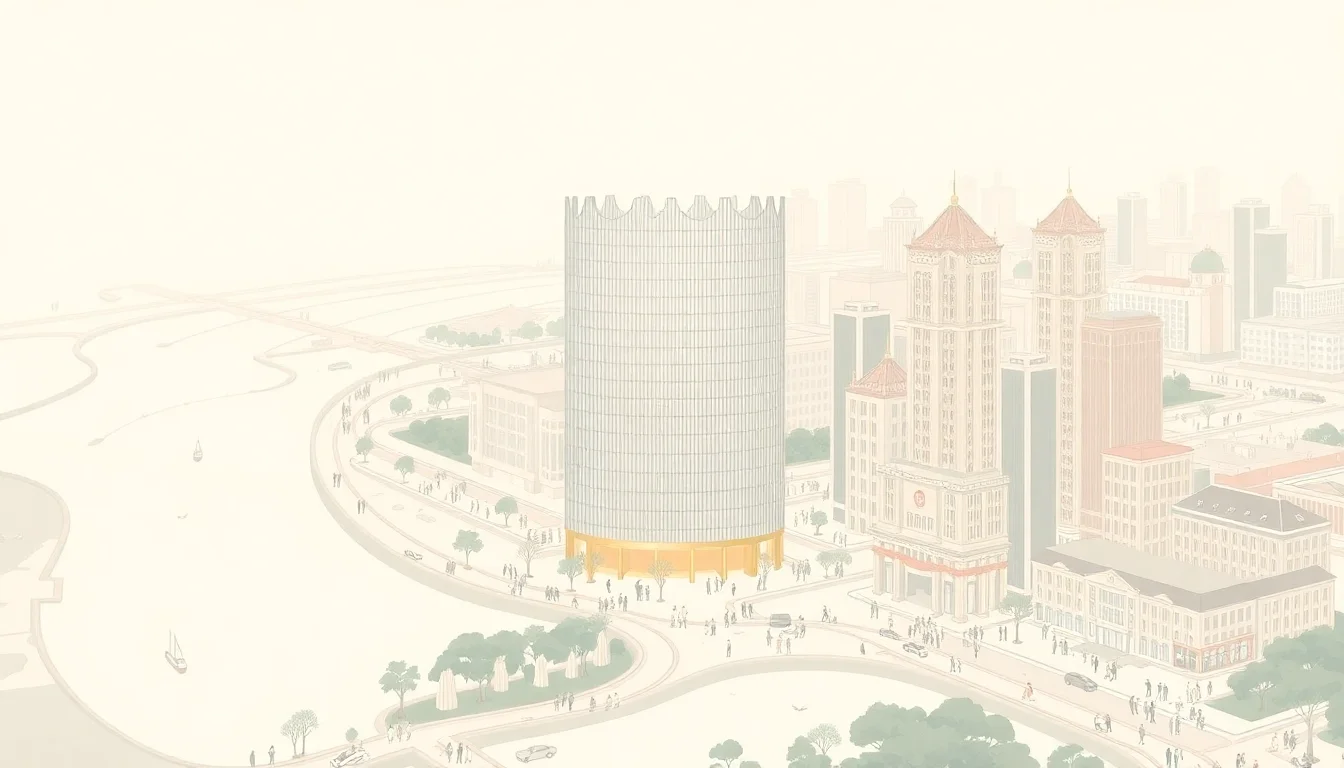
The genesis of Xiong'an can be traced back to a strategic decision by the Chinese Communist Party leadership, formally announced on April 1, 2017. This initiative wasn't born in a vacuum; it's a direct response to the escalating challenges of Beijing's overpopulation and the need for coordinated regional development within the Beijing-Tianjin-Hebei economic triangle. The area itself is a composite of three existing counties: Xiong County, Rongcheng County, and Anxin County, with its name derived from the first characters of Xiong and Anxin. This state-level new area is designed to be a "city of the future," a deliberate departure from the organic growth patterns of older metropolises, aiming to integrate advanced infrastructure and ecological principles from its inception. Precedents like Shenzhen and Pudong in Shanghai serve as historical touchstones, but Xiong'an is positioned to surpass them in scale and ambition, representing a bold new chapter in China's urban planning history.
⚙️ How It Works
Xiong'an New Area operates on a multi-layered strategic framework designed to foster innovation and sustainability. At its core, it's conceived as a "smart city" and an "ecological city." This translates into a heavy emphasis on advanced infrastructure, including integrated public transportation networks and ubiquitous high-speed internet. The area is meticulously planned to prioritize green spaces, water conservation, and renewable energy sources, aiming for a low-carbon footprint. Furthermore, Xiong'an is intended to be a hub for technological research and development, attracting leading academic institutions and tech firms. The relocation of non-essential government functions and state-owned enterprises from Beijing is a key mechanism for populating the city and driving its economic engine, creating a symbiotic relationship with the capital.
📊 Key Facts & Numbers
The scale of Xiong'an New Area is staggering. The resident population, as recorded in the seventh national census, is 1,205,440. Projections estimate a future population of 5 million people, a figure comparable to major global cities. The project involves an estimated investment exceeding 3 trillion yuan (approximately $420 billion USD) for its initial phases, making it one of the most expensive urban development projects globally. By 2035, Xiong'an is slated to be a fully functional city, with full completion anticipated by the middle of the 21st century, aiming to achieve a GDP of 1 trillion yuan within its first decade of significant development.
👥 Key People & Organizations
The vision for Xiong'an is inextricably linked to President Xi Jinping, who has personally championed the project, referring to it as a "millennium plan." Key governmental bodies driving its development include the Xiong'an New Area Planning and Construction Management Committee, established in 2017, and various ministries within the State Council. Major state-owned enterprises like China Railway Construction Corporation (CRCC) and China State Construction Engineering Corporation (CSCEC) are instrumental in the physical construction. Leading technology firms such as Tencent and Alibaba are reportedly involved in developing smart city solutions, while academic powerhouses like Tsinghua University are establishing research campuses. The Hebei Provincial Government plays a crucial administrative role in overseeing the area's integration into the regional economy.
🌍 Cultural Impact & Influence
Xiong'an's ambition to be a model for future urban development has significant cultural implications. It's presented as a blueprint for "high-quality development," emphasizing ecological civilization and technological advancement over unchecked growth. The project aims to foster a new urban culture characterized by efficiency, innovation, and a harmonious relationship with nature, a stark contrast to the often-congested and polluted urban environments elsewhere in China. Its success or failure will heavily influence global perceptions of China's capacity for large-scale, forward-thinking urban planning and its commitment to sustainable development. The narrative surrounding Xiong'an is carefully curated to project an image of national strength and visionary leadership, influencing both domestic and international discourse on urbanism.
⚡ Current State & Latest Developments
As of 2024, Xiong'an is in a critical phase of construction and relocation. Significant infrastructure projects, including the Xiong'an Railway Station, a major high-speed rail hub, and the Beijing-Xiong'an Intercity Railway, are operational, connecting the new area to the capital. Several universities, including Tsinghua University's Xiong'an campus, and research institutions have begun operations. The relocation of state-owned enterprises and government agencies is ongoing, though at a pace that has drawn scrutiny. The development of the Xiong'an Green Smart City Exhibition Center and various residential and commercial complexes signals tangible progress. However, the full realization of its population and economic targets remains a long-term endeavor, with continuous infrastructure build-out and policy adjustments being the norm.
🤔 Controversies & Debates
The development of Xiong'an is not without its critics and controversies. A primary debate centers on the immense cost and the potential for it to become a "ghost city" if population and economic growth don't materialize as planned, a concern echoed by some urban planning experts. The displacement of existing residents and the impact on local communities in the three original counties raise questions about social equity and land rights. Furthermore, the top-down, state-driven nature of the project has led to discussions about whether it can truly foster organic innovation and a vibrant civic life, or if it will remain an overly managed, sterile environment. The environmental impact of such a massive construction project, despite stated green intentions, also remains a point of contention among environmental watchdogs.
🔮 Future Outlook & Predictions
The future outlook for Xiong'an hinges on its ability to attract talent, businesses, and residents beyond state mandates. Projections suggest that by 2035, it will be a functional city with a significant population and a burgeoning economy driven by innovation and green industries. The long-term vision includes Xiong'an becoming a national model for coordinated urban development and a key node in the Belt and Road Initiative. Success will likely depend on sustained political will, effective policy implementation, and the ability to create a genuinely attractive living and working environment that competes with established cities. The ultimate goal is for Xiong'an to become a "demonstration zone" for China's modernization, showcasing a new paradigm for urban living in the 21st century.
💡 Practical Applications
Xiong'an New Area serves as a practical laboratory for cutting-edge urban planning and technological implementation. Its core function as a de-congesting hub for Beijing means it's designed to host administrative functions, research and development centers, and headquarters of state-owned enterprises, such as CNPC and State Grid. The area is a proving ground for smart city technologies, including intelligent transportation systems, advanced environmental monitoring, and integrated digital governance platforms. Its emphasis on green infrastructure makes it a showcase for sustainable building practices, renewable energy integration, and water resource management. For businesses, it offers incentives for high-tech industries and a strategic location within the economically vital Jing-Jin-Ji region.
Key Facts
- Category
- places
- Type
- topic
