
Contents
- 🌕 Introduction to Solar Eclipses
- 🔭 History of Solar Eclipse Viewing
- 🌖 Types of Solar Eclipses
- 🕶 Safety Precautions for Viewing
- 🌐 Path of Totality and Eclipse Maps
- 📸 Capturing the Eclipse: Photography Tips
- 🌟 Cultural Significance of Solar Eclipses
- 🚀 Future Solar Eclipses: What to Expect
- 🌎 Solar Eclipse Viewing Around the World
- 📊 Statistics and Records of Solar Eclipses
- 🤔 Solar Eclipse Myths and Misconceptions
- 📚 Conclusion and Further Reading
- Frequently Asked Questions
- Related Topics
Overview
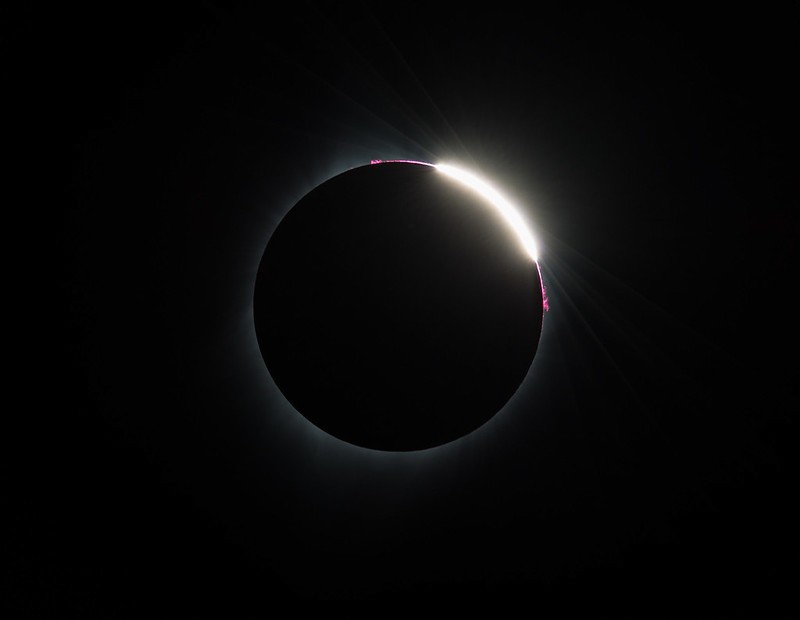
Solar eclipse viewing has captivated humans for centuries, with the first recorded observation dating back to 2134 BCE in ancient China. This rare celestial event occurs when the Moon passes directly between the Earth and the Sun, blocking the Sun's light and revealing the Sun's ethereal corona. With a vibe score of 8, solar eclipse viewing has become a cultural phenomenon, attracting millions of enthusiasts worldwide. The most recent total solar eclipse, which occurred on December 14, 2020, was visible from parts of South America, with an estimated 10 million people witnessing the event. As technology advances, scientists can now predict solar eclipses with unprecedented accuracy, allowing for better planning and observation. However, the increasing popularity of solar eclipse viewing has also raised concerns about safety, with improper viewing techniques posing a significant risk to eye health, highlighting the need for proper education and precautions.
🌕 Introduction to Solar Eclipses
Solar eclipses are rare and awe-inspiring events that have captivated humans for centuries. A solar eclipse occurs when the Moon passes directly between the Earth and the Sun, blocking the Sun's light and casting a shadow on the Earth. The path of totality, where the eclipse is visible in its entirety, is usually about 100 miles wide and covers a specific region of the Earth. To witness a solar eclipse, one must be within this path of totality, making it a unique and exciting experience. For more information on the science behind solar eclipses, visit the Solar Eclipse page. The Astronomy community is always eager to study and observe these events.
🔭 History of Solar Eclipse Viewing
The history of solar eclipse viewing dates back to ancient civilizations, with records of eclipses found in the writings of China, Greece, and Mesopotamia. The ancient Greeks, in particular, were known for their advanced understanding of astronomy and their ability to predict eclipses. The Greek philosopher Aristotle wrote extensively on the subject, and his works had a significant impact on the development of Astronomy as a science. For more information on the history of astronomy, visit the History of Astronomy page. The study of solar eclipses has also been influenced by the work of Galileo Galilei and Isaac Newton.
🌖 Types of Solar Eclipses
There are three types of solar eclipses: partial, annular, and total. A partial solar eclipse occurs when the Moon only partially covers the Sun, while an annular solar eclipse occurs when the Moon appears smaller than the Sun, creating a ring of light around the Moon. A total solar eclipse, on the other hand, is the rarest and most spectacular type, where the Moon completely covers the Sun, revealing the Sun's corona. The Sun's corona is only visible during a total solar eclipse, making it a unique opportunity for scientists to study the Sun's outer atmosphere. For more information on the different types of solar eclipses, visit the Types of Solar Eclipses page. The Astronomy community is always excited to observe and study these events.
🕶 Safety Precautions for Viewing
When viewing a solar eclipse, it is essential to take safety precautions to protect one's eyes. Looking directly at the Sun, even during an eclipse, can cause serious eye damage, including solar retinopathy. Specialized solar viewing glasses or handheld solar viewers with a solar filter can be used to safely view the eclipse. It is also important to ensure that the solar filter is ISO 12312-2 certified, as this guarantees that it meets international safety standards. For more information on solar viewing safety, visit the Solar Viewing Safety page. The Astronomy community emphasizes the importance of eye safety during solar eclipses. Always follow the guidelines set by reputable organizations, such as the National Aeronautics and Space Administration (NASA).
🌐 Path of Totality and Eclipse Maps
The path of totality for a solar eclipse is usually narrow and covers a specific region of the Earth. Eclipse maps, which show the path of totality and the timing of the eclipse, are essential for planning and preparing for the event. These maps can be found online or in astronomy magazines and are often created by experts in the field, such as the United States Naval Observatory. For more information on eclipse maps and the path of totality, visit the Eclipse Maps page. The Astronomy community relies on these maps to plan and prepare for solar eclipses.
📸 Capturing the Eclipse: Photography Tips
Capturing the beauty of a solar eclipse can be a challenging but rewarding experience. To take stunning photos of the eclipse, it is essential to use a camera with a solar filter and a tripod to ensure stability. It is also important to practice taking photos of the Sun before the eclipse to get a feel for the camera settings and to ensure that the solar filter is working correctly. For more information on photography tips and techniques, visit the Photography Tips page. The Astronomy community is always eager to share their photos and experiences with others. Always follow the guidelines set by reputable organizations, such as the National Geographic.
🌟 Cultural Significance of Solar Eclipses
Solar eclipses have significant cultural and spiritual meaning in many societies around the world. In some cultures, eclipses are believed to be omens or signs from the gods, while in others, they are seen as opportunities for spiritual growth and renewal. The Mayan civilization, for example, believed that eclipses were a time of great spiritual significance and would often hold ceremonies and rituals to mark the occasion. For more information on the cultural significance of solar eclipses, visit the Cultural Significance page. The Astronomy community recognizes the importance of cultural sensitivity and respect when observing and studying solar eclipses.
🚀 Future Solar Eclipses: What to Expect
Future solar eclipses will continue to captivate audiences around the world. The next total solar eclipse visible from North America will occur in 2024, and it is expected to be one of the most widely viewed eclipses in history. The National Aeronautics and Space Administration (NASA) and other space agencies will provide extensive coverage of the event, including live streams and educational resources. For more information on future solar eclipses, visit the Future Solar Eclipses page. The Astronomy community is always excited to observe and study these events.
🌎 Solar Eclipse Viewing Around the World
Solar eclipse viewing is a global phenomenon, with people from all over the world traveling to witness these rare events. The European Space Agency (ESA) and other space agencies often provide resources and information for eclipse viewers, including maps, timing, and safety guidelines. For more information on solar eclipse viewing around the world, visit the Solar Eclipse Viewing page. The Astronomy community is always eager to share their experiences and knowledge with others.
📊 Statistics and Records of Solar Eclipses
Solar eclipses are relatively rare, with a total solar eclipse visible from a specific location on the Earth's surface about once every 360 years. The longest total solar eclipse of the 20th century occurred on July 11, 1991, and lasted for 6 minutes and 53 seconds. For more information on solar eclipse statistics and records, visit the Solar Eclipse Statistics page. The Astronomy community is always interested in studying and analyzing data from these events.
🤔 Solar Eclipse Myths and Misconceptions
Despite the scientific understanding of solar eclipses, many myths and misconceptions still exist. One common myth is that solar eclipses are a sign of impending doom or disaster. However, there is no scientific evidence to support this claim, and solar eclipses are simply a natural phenomenon that occurs when the Moon passes between the Earth and the Sun. For more information on solar eclipse myths and misconceptions, visit the Solar Eclipse Myths page. The Astronomy community emphasizes the importance of scientific literacy and critical thinking.
📚 Conclusion and Further Reading
In conclusion, solar eclipses are rare and awe-inspiring events that have captivated humans for centuries. By understanding the science behind solar eclipses and taking necessary safety precautions, we can appreciate the beauty and significance of these events. For further reading and resources, visit the Solar Eclipse page or the Astronomy page. The Astronomy community is always eager to share their knowledge and experiences with others.
Key Facts
- Year
- 2134
- Origin
- Ancient China
- Category
- Astronomy
- Type
- Astronomical Event
Frequently Asked Questions
What is a solar eclipse?
A solar eclipse is a rare and awe-inspiring event that occurs when the Moon passes directly between the Earth and the Sun, blocking the Sun's light and casting a shadow on the Earth. The path of totality, where the eclipse is visible in its entirety, is usually about 100 miles wide and covers a specific region of the Earth. For more information on solar eclipses, visit the Solar Eclipse page. The Astronomy community is always eager to study and observe these events.
How often do solar eclipses occur?
Solar eclipses are relatively rare, with a total solar eclipse visible from a specific location on the Earth's surface about once every 360 years. The frequency of solar eclipses depends on the alignment of the Earth, Moon, and Sun, as well as the Moon's elliptical orbit. For more information on solar eclipse statistics and records, visit the Solar Eclipse Statistics page. The Astronomy community is always interested in studying and analyzing data from these events.
What are the different types of solar eclipses?
There are three types of solar eclipses: partial, annular, and total. A partial solar eclipse occurs when the Moon only partially covers the Sun, while an annular solar eclipse occurs when the Moon appears smaller than the Sun, creating a ring of light around the Moon. A total solar eclipse, on the other hand, is the rarest and most spectacular type, where the Moon completely covers the Sun, revealing the Sun's corona. For more information on the different types of solar eclipses, visit the Types of Solar Eclipses page. The Astronomy community is always excited to observe and study these events.
How can I safely view a solar eclipse?
When viewing a solar eclipse, it is essential to take safety precautions to protect one's eyes. Looking directly at the Sun, even during an eclipse, can cause serious eye damage, including solar retinopathy. Specialized solar viewing glasses or handheld solar viewers with a solar filter can be used to safely view the eclipse. It is also important to ensure that the solar filter is ISO 12312-2 certified, as this guarantees that it meets international safety standards. For more information on solar viewing safety, visit the Solar Viewing Safety page. The Astronomy community emphasizes the importance of eye safety during solar eclipses.
What is the cultural significance of solar eclipses?
Solar eclipses have significant cultural and spiritual meaning in many societies around the world. In some cultures, eclipses are believed to be omens or signs from the gods, while in others, they are seen as opportunities for spiritual growth and renewal. The Mayan civilization, for example, believed that eclipses were a time of great spiritual significance and would often hold ceremonies and rituals to mark the occasion. For more information on the cultural significance of solar eclipses, visit the Cultural Significance page. The Astronomy community recognizes the importance of cultural sensitivity and respect when observing and studying solar eclipses.
What are some common myths and misconceptions about solar eclipses?
Despite the scientific understanding of solar eclipses, many myths and misconceptions still exist. One common myth is that solar eclipses are a sign of impending doom or disaster. However, there is no scientific evidence to support this claim, and solar eclipses are simply a natural phenomenon that occurs when the Moon passes between the Earth and the Sun. For more information on solar eclipse myths and misconceptions, visit the Solar Eclipse Myths page. The Astronomy community emphasizes the importance of scientific literacy and critical thinking.
How can I learn more about solar eclipses?
There are many resources available to learn more about solar eclipses, including online articles, books, and educational programs. The National Aeronautics and Space Administration (NASA) and other space agencies often provide extensive coverage of solar eclipses, including live streams and educational resources. For more information on solar eclipses, visit the Solar Eclipse page or the Astronomy page. The Astronomy community is always eager to share their knowledge and experiences with others.