
Contents
- 🎵 Origins & History
- ⚙️ How It Works
- 📊 Key Facts & Numbers
- 👥 Key People & Organizations
- 🌍 Cultural Impact & Influence
- ⚡ Current State & Latest Developments
- 🤔 Controversies & Debates
- 🔮 Future Outlook & Predictions
- 💡 Practical Applications
- 📚 Related Topics & Deeper Reading
- Frequently Asked Questions
- References
- Related Topics
Overview
The seeds of Romanticism were sown in the late 18th century, a direct rebellion against the rigid order and intellectualism of the Neoclassical era and the burgeoning Industrial Revolution. Precursors like Jean-Jacques Rousseau's emphasis on natural goodness and Johann Wolfgang von Goethe's novel The Sorrows of Young Werther (1774) ignited a passion for individual feeling and subjective experience. In art, early stirrings can be seen in the dramatic landscapes of Claude Lorrain and the emotional intensity of Henry Fuseli's dreamscapes. The movement truly coalesced in Germany with the Sturm und Drang literary movement and then spread like wildfire through Britain, France, and beyond, with key figures like William Blake and Caspar David Friedrich pushing the boundaries of artistic expression by the turn of the 19th century.
⚙️ How It Works
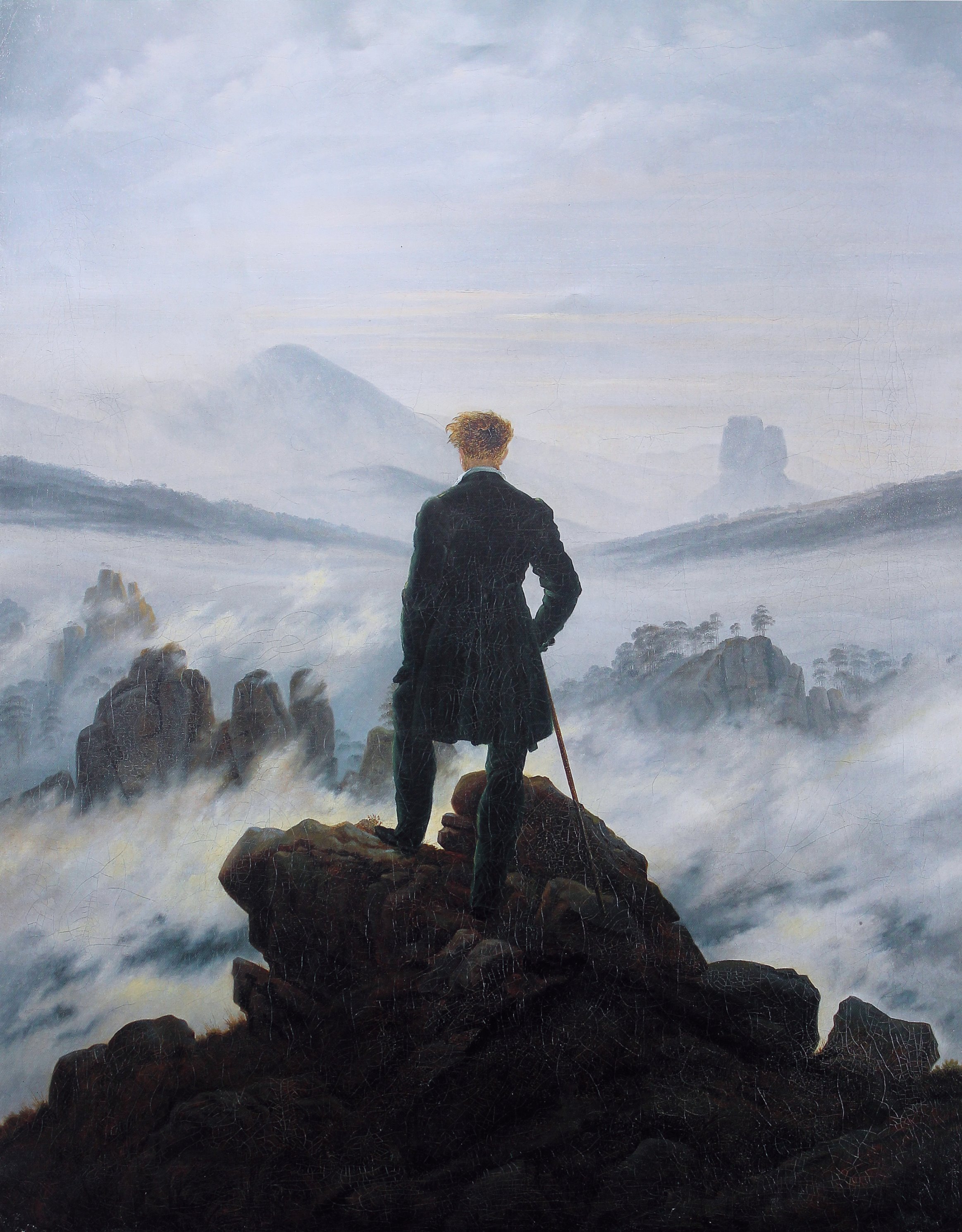
Romantic art operates on a visceral, emotional frequency, prioritizing subjective experience over objective representation. Artists employed dramatic contrasts of light and shadow (chiaroscuro), dynamic compositions, and often turbulent subject matter to evoke powerful feelings in the viewer. The sublime—a sense of awe mixed with terror inspired by vast, powerful natural phenomena like storms, mountains, and shipwrecks—became a central aesthetic. Nature itself was not merely a backdrop but a living, breathing entity, often imbued with spiritual significance or reflecting the inner turmoil of the human soul. Imagination was paramount, allowing artists to explore the exotic, the mysterious, the medieval past, and the realm of dreams and nightmares, as exemplified by the works of Francisco Goya and Eugène Delacroix.
📊 Key Facts & Numbers
The Romantic era saw an explosion of artistic output, with an estimated 50,000 to 100,000 paintings produced across Europe between 1780 and 1850. Exhibitions like the Paris Salon grew in prominence, attracting hundreds of thousands of visitors annually, showcasing the public's burgeoning appetite for dramatic and emotional art. The market for prints and engravings also boomed, making Romantic imagery accessible to a wider audience, with some popular prints selling over 10,000 copies. The average price for a major oil painting by a leading Romantic artist could range from £50 to £500, a significant sum for the time, reflecting the high demand and perceived value of these emotionally charged works.
👥 Key People & Organizations
Key figures who defined the Romantic art movement include the visionary William Blake, whose mystical engravings and paintings explored spiritual realms; the German painter Caspar David Friedrich, master of atmospheric landscapes that evoked profound solitude and the sublime; the French master Eugène Delacroix, known for his vibrant colors and dramatic historical scenes like Liberty Leading the People (1830); and the Spanish genius Francisco Goya, whose later works delved into the dark, irrational corners of the human psyche. In Britain, J.M.W. Turner and John Constable revolutionized landscape painting, capturing the raw power and fleeting beauty of nature. Organizations like the Pre-Raphaelite Brotherhood, though emerging later, were deeply influenced by Romantic ideals.
🌍 Cultural Impact & Influence
Romanticism's impact on culture is immeasurable, fundamentally altering how art was perceived and created. It shifted the focus from idealized forms to individual expression, paving the way for modern art movements like Impressionism and Symbolism. The Romantic fascination with nature inspired the conservation movement and environmentalism. Its emphasis on national identity and historical narratives fueled nationalist sentiments across Europe. The movement's dramatic flair and emotional intensity permeated literature, with poets like Lord Byron and Percy Bysshe Shelley, and music, with composers like Ludwig van Beethoven and Frédéric Chopin, all embodying Romantic ideals. The very concept of the tortured artist, driven by passion and genius, is a Romantic legacy.
⚡ Current State & Latest Developments
While the peak of the Romantic movement has passed, its echoes resonate powerfully today. Contemporary artists continue to explore themes of nature's power, individual emotion, and the uncanny, often through new media and technologies. The resurgence of interest in landscape art, the popularity of fantasy and gothic genres in film and literature, and the ongoing dialogue about humanity's relationship with the environment all bear the hallmarks of Romantic influence. Digital art exploring surrealism and dreamlike states, as well as the continued fascination with historical reenactments and folklore, demonstrate the enduring appeal of Romantic sensibilities in the 21st century.
🤔 Controversies & Debates
The primary controversy surrounding Romantic art centers on its perceived subjectivity and potential for irrationality. Critics, particularly those aligned with later realist or modernist movements, argued that Romanticism's embrace of emotion and imagination led to escapism, melodrama, and a disregard for social realities. The idealization of the past was seen by some as a regressive rejection of progress. Furthermore, the Romantic cult of the individual genius sometimes led to an elitist artistic culture, detached from the concerns of ordinary people. Debates also persist regarding the appropriation of folk traditions and national myths within Romantic narratives, questioning the authenticity and political implications of these artistic choices.
🔮 Future Outlook & Predictions
The future of Romanticism lies in its reinterpretation through contemporary lenses. As global challenges like climate change intensify, the Romantic reverence for nature may find new urgency, inspiring art that advocates for ecological preservation and explores humanity's place within a fragile ecosystem. The exploration of the subconscious and the irrational, amplified by advancements in psychology and neuroscience, could lead to new forms of surreal and dreamlike art. Furthermore, the increasing digitization of experience might spur a counter-movement emphasizing the tangible, the emotional, and the 'authentic' human connection, echoing Romanticism's core values in a technologically saturated world. The potential for AI-generated art to mimic or even transcend human emotional expression also presents a fascinating, albeit complex, future frontier.
💡 Practical Applications
Romanticism's principles have found application far beyond the gallery walls. Its emphasis on nature has directly influenced landscape architecture and urban planning, promoting the integration of green spaces and naturalistic designs. The movement's dramatic aesthetics continue to inform filmmaking, particularly in genres like fantasy, horror, and historical epics, shaping visual storytelling and mood. In graphic design and advertising, Romantic motifs—like dramatic lighting, evocative imagery, and emotional appeals—are frequently employed to create compelling narratives and connect with consumers on an emotional level. The very idea of a 'brand story' often taps into Romantic archetypes of heroism, adventure, and aspiration.
Key Facts
- Year
- c. 1780-1850
- Origin
- Europe
- Category
- aesthetics
- Type
- movement
Frequently Asked Questions
What is the core philosophy behind Romanticism art?
The core philosophy of Romanticism art is the elevation of individual emotion, imagination, and subjective experience above reason and objective reality. It champions the power of intuition, the beauty and terror of nature, and a fascination with the exotic, the supernatural, and the past. Romantic artists sought to evoke powerful emotional responses in the viewer, moving beyond the strictures of Neoclassical order and the perceived soullessness of the Industrial Revolution.
How did Romanticism differ from Neoclassicism?
Romanticism starkly contrasted with Neoclassicism by prioritizing emotion over intellect, imagination over order, and the individual over societal convention. While Neoclassicism drew inspiration from the clarity and rationality of ancient Greece and Rome, Romanticism looked to the medieval past, exotic locales, and the untamed forces of nature. Neoclassical art often featured balanced compositions, clear lines, and moralistic themes, whereas Romantic art embraced dramatic contrasts, dynamic movement, and explorations of passion, mystery, and the sublime, as seen in the works of artists like Jacques-Louis David (Neoclassical) versus Eugène Delacroix (Romantic).
What are the key themes explored in Romantic art?
Key themes in Romantic art include the overwhelming power and beauty of nature, often depicted as the 'sublime'—awe-inspiring and terrifying. The individual's emotional and psychological journey is central, exploring passion, melancholy, heroism, and the supernatural. There's a strong idealization of the past, particularly the medieval era, and a fascination with the exotic, the mysterious, and the exotic. Dreams, nightmares, and the irrational aspects of the human psyche, as exemplified by Francisco Goya's 'Black Paintings,' are also prominent.
Who were the most influential artists of the Romantic period?
The most influential artists of the Romantic period include the German painter Caspar David Friedrich, known for his atmospheric landscapes; the French painter Eugène Delacroix, celebrated for his vibrant, dramatic historical scenes; the Spanish artist Francisco Goya, whose later works delved into dark psychological territory; and the British artists J.M.W. Turner and John Constable, who revolutionized landscape painting. William Blake also stands out for his unique visionary art and poetry.
Was Romanticism purely an artistic movement, or did it encompass other fields?
Romanticism was far more than just an art movement; it was a broad intellectual and cultural phenomenon that profoundly impacted literature, music, philosophy, and even politics. In literature, poets like Lord Byron and Percy Bysshe Shelley embodied Romantic ideals of individualism and passion. Composers like Ludwig van Beethoven and Frédéric Chopin infused their music with intense emotion and dramatic flair. Philosophically, it challenged Enlightenment rationalism, emphasizing intuition and subjective experience, influencing thinkers like Arthur Schopenhauer.
How can I identify a piece of art as Romantic?
To identify Romantic art, look for dramatic and emotional subject matter, such as intense storms, heroic battles, poignant moments of solitude, or scenes from literature and mythology. Pay attention to the use of color and light—often characterized by strong contrasts, rich hues, and atmospheric effects designed to evoke mood. The depiction of nature is usually prominent, emphasizing its power, wildness, and sublime qualities. The overall impression should be one of passion, individualism, and a departure from strict realism or classical order.
What is the 'sublime' in Romantic art, and why was it important?
The 'sublime' in Romantic art refers to an aesthetic experience that evokes feelings of awe, wonder, and even terror in the face of overwhelming power, vastness, or beauty, particularly in nature. Think of towering mountains, raging seas, or vast, dark forests. It was crucial because it offered an alternative to the beautiful (which was considered pleasing and harmonious) by tapping into deeper, more primal emotions and a sense of humanity's smallness in the face of the infinite. Artists like Caspar David Friedrich and J.M.W. Turner masterfully captured this sense of the sublime.