
Contents
Overview
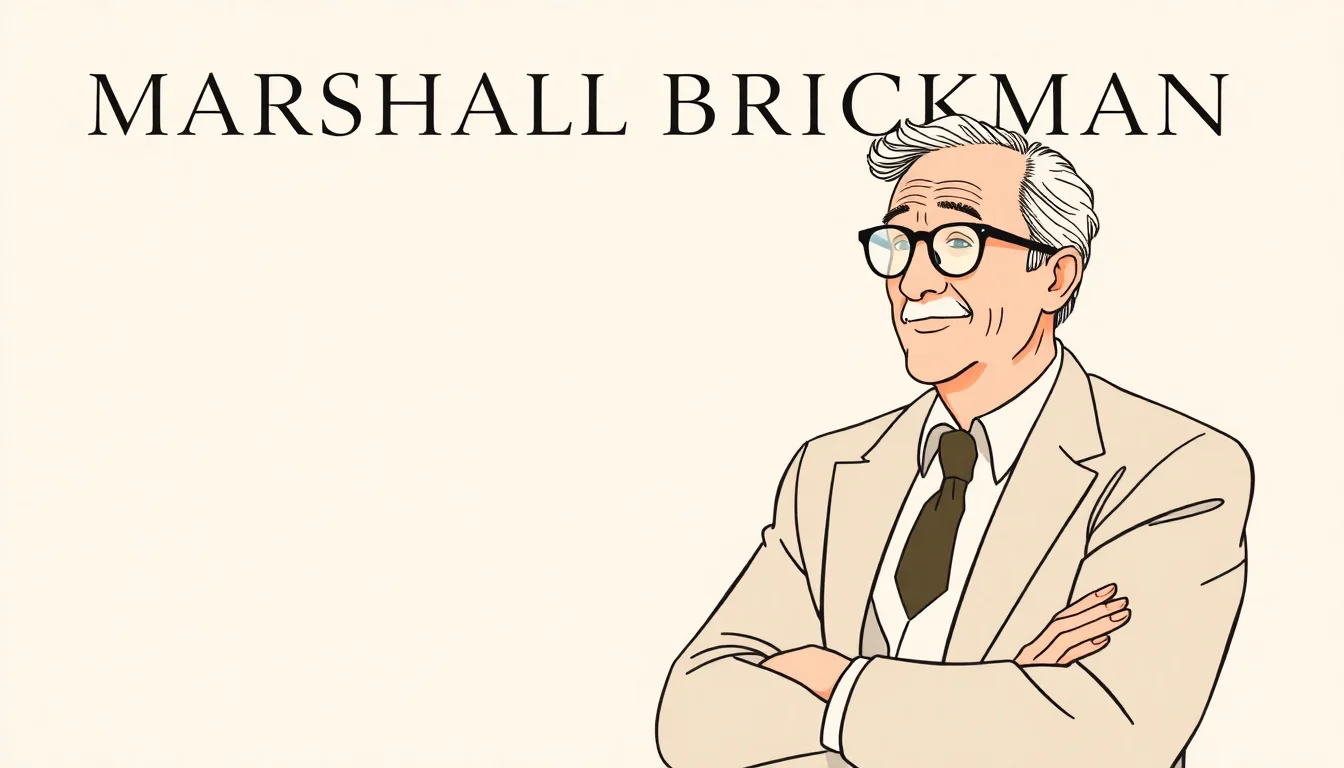
Marshall Brickman (August 25, 1939 – November 29, 2024) was an American screenwriter, director, and musician whose career spanned decades of iconic contributions to film and television. He is perhaps most celebrated for his Oscar-winning collaboration with Woody Allen on the screenplay for Annie Hall (1977), a film that redefined romantic comedy. Before his cinematic success, Brickman honed his comedic voice as the head writer for The Tonight Show Starring Johnny Carson, crafting memorable material for characters like Carnac the Magnificent. His talents extended beyond writing, as he was also a skilled musician, playing the mandolin and banjo, and a contributor to The New Yorker with his satirical parodies. Brickman's legacy is one of intellectual humor, sharp dialogue, and a profound impact on American comedy.
🎵 Origins & History
Born Marshall Jacob Brickman in Rio de Janeiro, Brazil, on August 25, 1939, Brickman's early life was marked by a move to the United States. He pursued higher education at the University of Wisconsin–Madison, where he likely developed the analytical and observational skills that would later define his writing. His initial foray into the entertainment industry was not in film, but in the burgeoning world of television comedy. Brickman's career trajectory began to solidify in the late 1960s and early 1970s, a period that saw him emerge as a significant comedic voice. His musical talents also surfaced during this era, performing with Eric Weissberg and contributing to the vibrant folk and bluegrass scene of the time. This diverse background in music, writing, and observation provided a unique foundation for his later successes.
⚙️ How It Works
Brickman's screenwriting process, particularly his collaborations with Woody Allen, was characterized by a deep understanding of character and dialogue. He was known for his ability to imbue scripts with a sophisticated, often neurotic, yet profoundly human humor. For Annie Hall, Brickman and Allen famously shared writing duties, developing a narrative that blended autobiographical elements with sharp, witty exchanges and innovative cinematic techniques. His work on The Tonight Show involved crafting punchlines and character-driven bits for Johnny Carson and his recurring characters, demanding a keen sense of timing and an ability to generate consistent comedic material. Brickman's parodies for The New Yorker demonstrated his skill in mimicking and satirizing various styles and subjects, showcasing a meticulous attention to detail and a sharp satirical edge.
📊 Key Facts & Numbers
Brickman's career boasts significant accolades, including an Academy Award for Best Original Screenplay for Annie Hall in 1977, shared with Woody Allen. This film grossed over $38 million domestically against a budget of $4 million, marking a substantial commercial and critical success. He also received a Hugo Award for Best Dramatic Presentation. Brickman's tenure as head writer for The Tonight Show spanned approximately 100 episodes, contributing to a show that consistently dominated late-night television ratings during his involvement. His musical collaborations, while less quantified in terms of commercial success, were part of a vibrant folk scene that produced hits like "Dueling Banjos".
👥 Key People & Organizations
Key figures in Marshall Brickman's professional life include Woody Allen, his most prominent collaborator, with whom he co-wrote several critically acclaimed films such as Annie Hall, Manhattan, and Sleeper. Johnny Carson was the ultimate recipient of Brickman's early television writing talents, providing a platform for his comedic genius on The Tonight Show. Eric Weissberg, a fellow musician, collaborated with Brickman in the folk and bluegrass music scene of the 1960s. Brickman also worked with director Hal Ashby on the film Being There. His contributions to The New Yorker placed him among a lineage of celebrated humor writers for the publication.
🌍 Cultural Impact & Influence
Brickman's influence on American comedy is undeniable, particularly through his work with Woody Allen. The dialogue and narrative structure of films like Annie Hall became benchmarks for intelligent, character-driven romantic comedies, impacting countless filmmakers and writers. His contributions to The Tonight Show helped shape the format and comedic sensibility of late-night television for decades, influencing generations of comedians and writers. The satirical parodies he penned for The New Yorker demonstrated a mastery of observational humor and linguistic playfulness that resonated with a sophisticated audience. Furthermore, his musical background added a unique rhythm and sensibility to his creative output, subtly influencing his pacing and comedic timing.
⚡ Current State & Latest Developments
Marshall Brickman passed away on November 29, 2024, in New York City. His death marked the end of a significant era in American screenwriting and comedy. While no new projects are forthcoming from Brickman himself, his extensive body of work continues to be studied, celebrated, and enjoyed. His films remain in circulation, his television writing is archived, and his musical contributions are part of the folk music canon. The enduring quality of his humor and the timeless themes in his screenplays suggest that his influence will persist in the cultural landscape.
🤔 Controversies & Debates
One of the primary debates surrounding Brickman's career, particularly his collaborations with Woody Allen, centers on the precise division of creative labor and the extent to which Brickman's distinct voice shaped the final product. While Annie Hall is credited to both writers, the extent of each individual's contribution is often a subject of speculation among film critics and historians. Some critics have argued that Brickman's more grounded, observational humor provided a crucial counterpoint to Allen's more overtly neurotic persona, creating a unique alchemy. Conversely, others tend to attribute the lion's share of the films' distinctive style to Allen. The legacy of Brickman's work is also intertwined with the controversies surrounding Woody Allen, leading to discussions about whether his contributions should be viewed independently or as part of a larger, complex artistic partnership.
🔮 Future Outlook & Predictions
The future for Marshall Brickman's legacy lies in the continued appreciation and analysis of his work. As film studies evolve, deeper dives into his screenwriting techniques and collaborative processes are likely. His influence on the genre of romantic comedy, particularly its more intellectual and dialogue-driven subgenres, will likely be a subject of ongoing academic and critical interest. Furthermore, the resurgence of interest in classic television comedy could lead to renewed attention to his writing for The Tonight Show. His musical recordings, though perhaps less prominent, may also find new audiences through streaming platforms and curated playlists of folk and bluegrass music. The potential for his parodies to be collected and re-examined also exists.
💡 Practical Applications
Brickman's screenwriting expertise has direct practical applications in the fields of filmmaking and television production. His ability to craft sharp, memorable dialogue and compelling character arcs serves as a masterclass for aspiring screenwriters. The structure and pacing of his films, such as Annie Hall, offer valuable lessons in narrative construction for directors and producers. His work on The Tonight Show provides a blueprint for generating topical humor and developing recurring comedic bits for broadcast television. Musicians and composers can study his instrumental work with Eric Weissberg to understand the interplay of melody and rhythm in folk and bluegrass ensembles. His satirical writing for The New Yorker offers practical examples of how to employ wit and observation for comedic effect.
Key Facts
- Category
- culture
- Type
- topic