
Contents
- 🌕 What Exactly IS a Blood Moon?
- 🔭 When Can You See One?
- 🌍 Global Sightings & Viewing Tips
- 💰 Cost of Admission (Spoiler: It's Free!)
- 🌟 Vibe Score & Cultural Resonance
- 🤔 The Science vs. Superstition Debate
- 📜 Historical Omens & Prophecies
- 🚀 Future Blood Moon Events
- 💡 Practical Viewing Advice
- 🤝 Similar Celestial Events
- Frequently Asked Questions
- Related Topics
Overview
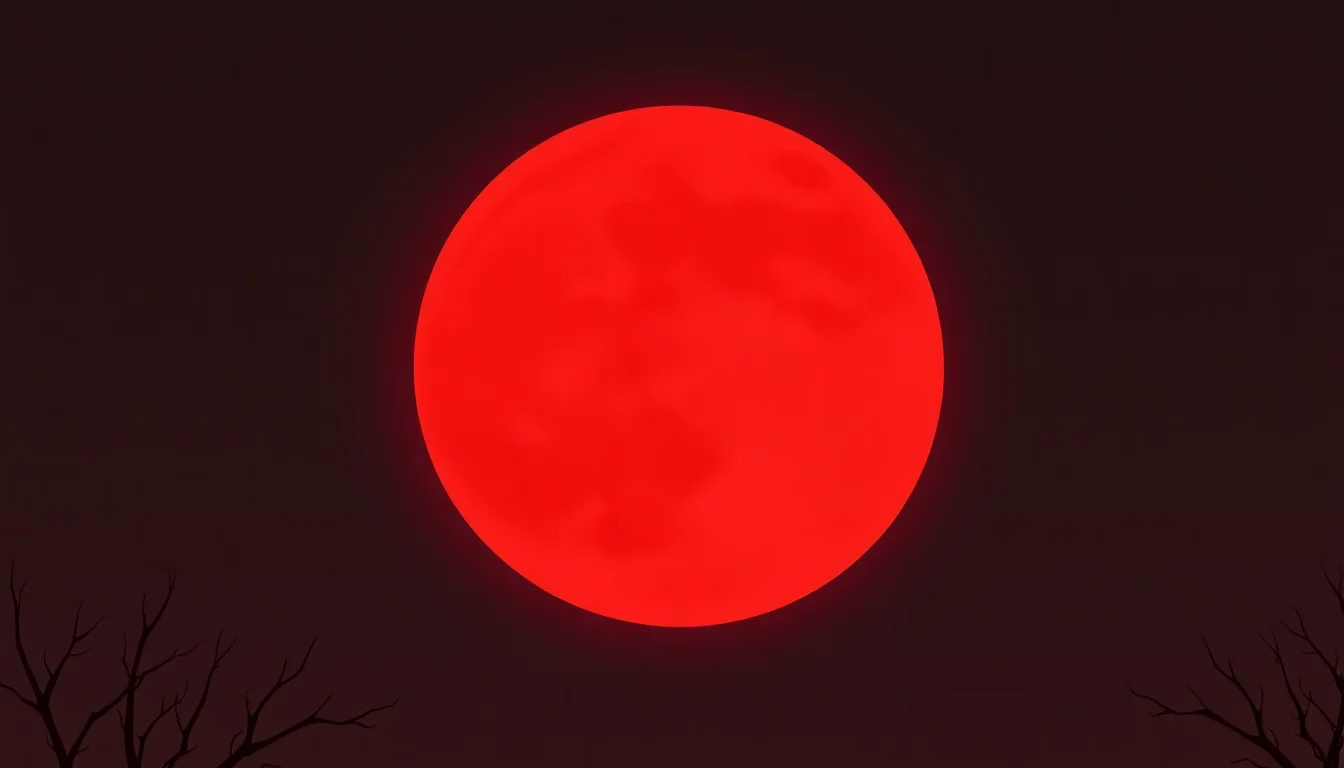
A blood moon isn't a different type of moon, but rather the dramatic reddish hue a total lunar eclipse casts upon our satellite. This phenomenon occurs when Earth passes directly between the Sun and the Moon, and the Moon enters Earth's shadow. Sunlight refracts through Earth's atmosphere, scattering blue light and allowing red light to pass through and illuminate the lunar surface, painting it a deep crimson. While scientifically understood as a predictable astronomical event, blood moons have historically been imbued with potent symbolism, ranging from divine omens and prophecies to harbingers of significant change or disaster across various cultures and religions. Understanding the mechanics of a lunar eclipse is key to appreciating both its scientific beauty and its enduring cultural mystique.
🌕 What Exactly IS a Blood Moon?
A Blood Moon isn't a unique astronomical object, but rather a visual phenomenon occurring during a total lunar eclipse. This happens when the Earth passes directly between the Sun and the Moon, casting a shadow on our lunar neighbor. Instead of disappearing entirely, the Moon takes on a reddish hue because sunlight refracts through Earth's atmosphere, scattering blue light and allowing red light to pass through and illuminate the Moon. The intensity and shade of red can vary depending on atmospheric conditions on Earth at the time of the eclipse, making each Blood Moon a unique spectacle. It's a stark reminder of the dynamic interplay between celestial bodies in our solar system, a cosmic dance visible from our planet.
🔭 When Can You See One?
The timing of a Blood Moon is dictated by the precise alignment required for a total lunar eclipse, which doesn't happen every full moon. These events are relatively infrequent, occurring only a few times a year at best, and total lunar eclipses are even rarer. To catch one, you'll need to consult astronomical calendars and forecasts from reputable sources like NASA or the International Astronomical Union. These organizations provide precise dates and times, often down to the minute, for when the eclipse will be visible in specific geographic regions. Planning is key; missing the narrow window means waiting months or even years for the next opportunity.
🌍 Global Sightings & Viewing Tips
Visibility of a Blood Moon is determined by your geographic location relative to the eclipse path. A total lunar eclipse is typically visible across a large portion of the Earth, but the exact timing and duration will vary. For instance, a Blood Moon visible in North America might occur during daylight hours in Asia, rendering it unobservable there. Checking local astronomical societies or websites like Time and Date is crucial for understanding when the eclipse will be overhead in your specific area. Dark skies away from city lights offer the best viewing conditions, enhancing the visual impact of the ruddy Moon.
💰 Cost of Admission (Spoiler: It's Free!)
The most compelling aspect of witnessing a Blood Moon? It's entirely free. Unlike meteor showers that might require travel to dark-sky preserves or ticketed observatory events, a lunar eclipse is a publicly accessible celestial event. All you need is a clear view of the night sky. While binoculars or a telescope can enhance the experience by revealing surface details and the subtle color variations, they are by no means necessary. The raw, unadulterated view of a Blood Moon is a gift from the cosmos, requiring no financial investment, only your presence and a bit of patience.
🌟 Vibe Score & Cultural Resonance
The Vibe Score for a Blood Moon event typically hovers around 75-85, driven by a potent mix of scientific awe and deep-seated cultural significance. It's a moment that bridges the gap between the rational observer and the dreamer, sparking wonder across diverse demographics. The visual drama of a red moon against the night sky resonates profoundly, triggering a primal connection to ancient narratives and celestial mythology. This shared experience, often amplified by social media buzz and communal viewing, creates a palpable sense of collective wonder and shared humanity under the same celestial canopy.
🤔 The Science vs. Superstition Debate
The tension surrounding a Blood Moon lies in the stark contrast between scientific explanation and age-old superstition. Astronomers explain the red color through atmospheric physics – the scattering of sunlight by particles in Earth's atmosphere. Skeptics dismiss any supernatural interpretations, pointing to the predictable nature of eclipses as governed by orbital mechanics. Conversely, many cultures and religious texts have historically imbued lunar eclipses with ominous meanings, linking them to divine judgment or significant world events. This dichotomy fuels ongoing debate, with scientific understanding coexisting alongside enduring folklore and prophecy.
📜 Historical Omens & Prophecies
Throughout history, the Blood Moon has been a recurring motif in prophecies and omens across various cultures. Ancient civilizations, lacking scientific explanations, often interpreted the eerie red glow as a harbinger of doom, war, or significant societal upheaval. For example, biblical passages in Joel and Acts mention the moon turning to blood as a sign of the "day of the Lord." In Mayan cosmology, lunar eclipses were sometimes associated with malevolent deities. These historical interpretations, while scientifically unfounded, continue to shape perceptions and contribute to the mystique surrounding the event, demonstrating the enduring power of narrative.
🚀 Future Blood Moon Events
While the next total lunar eclipse isn't immediately on the horizon for all regions, astronomers predict several more opportunities in the coming years. For instance, a notable total lunar eclipse is anticipated in March 2025, with others following in subsequent years. Predicting the exact visibility for specific locations requires consulting detailed astronomical charts. The Exploratorium and other science centers often host viewing events for significant celestial occurrences, providing expert commentary and telescopes. Keep an eye on astronomical calendars to plan for future Blood Moon experiences and potential viewing parties.
💡 Practical Viewing Advice
To maximize your Blood Moon viewing experience, preparation is key. First, check the exact timing and visibility for your location using resources like Sky & Telescope. Second, find a spot with minimal light pollution – the darker the sky, the more dramatic the Moon will appear. Third, dress warmly, as eclipses often occur during cooler nighttime hours. Consider bringing a comfortable chair and a thermos of a warm beverage. Finally, if you're interested in the cultural or historical context, research the folklore and prophecies associated with Blood Moons beforehand to deepen your appreciation of the event.
🤝 Similar Celestial Events
While a Blood Moon is specifically a total lunar eclipse, other celestial events offer different visual spectacles. A Supermoon occurs when a full or new moon coincides with its closest approach to Earth, making it appear larger and brighter. A Blue Moon, contrary to its name, doesn't involve color but refers to the second full moon within a single calendar month, or the third full moon in an astronomical season with four full moons. Meteor showers, like the Perseids in August, offer a flurry of shooting stars. Each event provides a unique opportunity to connect with the cosmos, but the Blood Moon's dramatic color and association with ancient lore give it a distinct, powerful allure.
Key Facts
- Year
- Ancient Origins
- Origin
- Earth's Atmosphere & Lunar Orbit
- Category
- Astronomy & Culture
- Type
- Phenomenon
Frequently Asked Questions
Is a Blood Moon dangerous?
Absolutely not. A Blood Moon is a purely visual phenomenon caused by sunlight filtering through Earth's atmosphere during a total lunar eclipse. It poses no physical danger to observers on Earth. The 'blood' aspect refers solely to the reddish color the Moon takes on, not to any harmful radiation or substance.
Can I see a Blood Moon with the naked eye?
Yes, a Blood Moon is easily visible with the naked eye. While binoculars or a telescope can enhance the view by revealing surface details and subtle color variations, they are not necessary to appreciate the striking red hue of the Moon during a total lunar eclipse.
How often do Blood Moons occur?
Total lunar eclipses, which cause the Blood Moon phenomenon, are relatively infrequent. While there can be several lunar eclipses each year, only a portion of them are total. A total lunar eclipse visible from a specific location might occur only once every few years, making each event a special occasion.
What's the difference between a Blood Moon and a regular full moon?
A regular full moon is simply the phase when the Moon is fully illuminated by the Sun as seen from Earth. A Blood Moon occurs only during a total lunar eclipse, when Earth's shadow completely covers the Moon, and the Moon appears reddish due to light scattering through our atmosphere. It's a specific event, not a regular lunar phase.
Are there scientific explanations for the 'omens' associated with Blood Moons?
The 'omens' are rooted in historical and cultural interpretations, not scientific fact. Ancient civilizations lacked the understanding of orbital mechanics and atmospheric physics that we have today. The scientific explanation for the red color is well-understood and predictable, debunking any supernatural or prophetic significance.
Where can I find the schedule for upcoming Blood Moons?
You can find schedules for upcoming Blood Moons (total lunar eclipses) on the websites of astronomical organizations like NASA, the United States Naval Observatory, or reputable astronomy news sites such as Sky & Telescope and EarthSky. These sources provide precise dates, times, and visibility maps for global events.