
Contents
Overview
The roots of water scarcity conflicts stretch back to antiquity, with historical accounts detailing disputes over access to wells and springs in arid regions. Ancient civilizations developed sophisticated irrigation systems and water laws, often leading to territorial claims and conflicts over vital water sources. The modern era, however, has amplified these tensions due to rapid industrialization, population booms, and the construction of large-scale infrastructure projects like dams and diversions, such as the Aswan High Dam on the Nile River, which significantly altered downstream water availability and relations between Egypt, Sudan, and Ethiopia. The concept of 'water wars' gained prominence in the late 20th century, fueled by geopolitical analyses predicting increased conflict over transboundary water resources, particularly in the Middle East and South Asia.
⚙️ How It Works
Water scarcity conflicts manifest through a spectrum of tensions, from diplomatic negotiations and legal battles to outright violence. At its core, the conflict arises from the unequal distribution and unsustainable consumption of a finite resource. Competition for water often occurs between agriculture (the largest consumer of freshwater globally), industry, and domestic needs. Issues of poor infrastructure, lack of investment, or inadequate governance can exacerbate these problems, particularly in developing regions like Sub-Saharan Africa. Conflicts can occur between upstream and downstream users of a river basin, such as the Indus River Basin shared by India and Pakistan, or between different sectors within a nation, like farmers versus urban populations in California. The engineering of water infrastructure, like the Three Gorges Dam, can also become a focal point of contention.
📊 Key Facts & Numbers
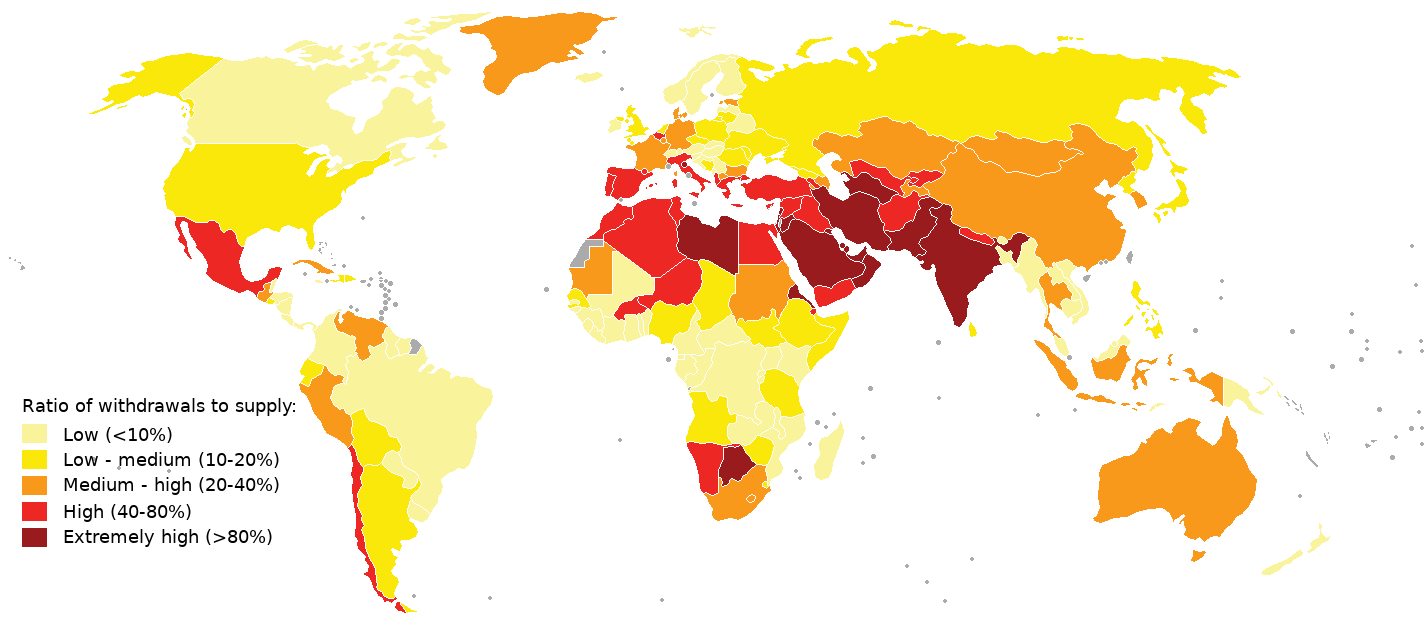
The scale of water scarcity is staggering: over 2 billion people live in countries with high water stress, according to the United Nations. The World Economic Forum consistently ranks water crises among the top global risks. Agriculture accounts for approximately 70% of global freshwater withdrawals, a figure that rises to over 90% in some developing countries. The economic cost is also immense, with water scarcity costing some regions up to 6% of their GDP annually, according to the World Bank.
👥 Key People & Organizations
Numerous individuals and organizations are at the forefront of addressing and analyzing water scarcity conflicts. The UN Environment Programme (UNEP) and the Food and Agriculture Organization of the UN (FAO) work on water resource management and conflict prevention. Organizations like the World Water Council convene global forums to discuss solutions. Geopolitical analysts such as Fred Caulder have extensively studied the potential for 'water wars,' while figures like Maude Barlow advocate for water as a human right. The Stockholm International Water Institute awards the prestigious Stockholm Water Prize to individuals and organizations making significant contributions to water management. The International Water Management Institute (IWMI) conducts vital research on water-related challenges.
🌍 Cultural Impact & Influence
Water scarcity conflicts have a profound cultural impact, shaping societal norms, migration patterns, and even artistic expression. In regions where water is scarce, its value is deeply embedded in local traditions, folklore, and religious practices. The struggle for water can lead to significant internal displacement and international migration, creating refugee crises and straining social cohesion in receiving areas. Furthermore, the unequal access to water often highlights and exacerbates existing social and economic inequalities, disproportionately affecting marginalized communities and women, who often bear the primary responsibility for water collection. The narrative of 'water wars' has also permeated popular culture, appearing in films and literature as a dystopian future scenario, such as in the film Mad Max: Fury Road.
⚡ Current State & Latest Developments
The current state of water scarcity conflicts is one of escalating tension. Climate change is intensifying droughts and altering precipitation patterns, making physical scarcity more acute in regions like the Sahel and the American Southwest. Geopolitical rivalries over shared river basins, such as the Tigris-Euphrates (shared by Turkey, Syria, and Iraq) and the Mekong (shared by China, Myanmar, Laos, Thailand, Cambodia, and Vietnam), continue to simmer. The development of new water infrastructure, including desalination plants and large-scale irrigation projects, often creates new economic dependencies and potential points of friction. The COP28 climate summit in 2023 highlighted the urgent need for better water governance and adaptation strategies.
🤔 Controversies & Debates
The debate surrounding water scarcity conflicts is multifaceted. A central controversy lies in the framing of 'water wars' – some scholars argue that while localized conflicts over water are common, large-scale interstate wars solely over water are rare, with water often being a contributing factor rather than the sole cause. Others contend that the potential for such conflicts is significantly underestimated, especially as scarcity intensifies. Another debate centers on the role of privatization versus public control of water resources; proponents of privatization argue it can lead to more efficient management, while critics fear it exacerbates economic scarcity and denies water as a human right. The ethics of large-scale water transfer projects and geoengineering solutions also remain highly contentious.
🔮 Future Outlook & Predictions
The future outlook for water scarcity conflicts is concerning, with projections indicating a significant increase in both the frequency and intensity of disputes. Climate models predict more extreme weather events, leading to prolonged droughts and flash floods, further stressing already limited water resources. Population growth, particularly in arid and semi-arid regions, will continue to drive up demand. Experts predict a rise in 'hydro-diplomacy' and cooperative water management agreements, but also a greater likelihood of localized conflicts and increased migration due to water stress. Innovations in water-saving technologies, such as drip irrigation and advanced water recycling, will become increasingly critical, but their equitable distribution and accessibility remain key challenges. The potential for conflicts to spill over into broader geopolitical instability is a significant concern for organizations like the UN Security Council.
💡 Practical Applications
Water scarcity conflicts have direct implications for practical applications in resource management and international relations. Understanding these dynamics informs the design of transboundary water agreements, such as the Colorado River Compact, aiming to allocate shared resources equitably. It also drives investment in water-efficient technologies for agriculture, like precision agriculture and drought-resistant crops, which are crucial for food security in water-stressed regions. Furthermore, it underpins the development of robust water governance frameworks and early warning systems to detect and mitigate potential conflicts before they escalate. The engineering of desalination plants and advanced wastewater treatment facilities are practical responses to increasing demand in coastal and arid areas.
Key Facts
- Category
- phenomenon
- Type
- topic