
Contents
Overview
The roots of vocal pedagogy stretch back to ancient Greece, where philosophical discussions on music and rhetoric laid early groundwork for understanding voice. However, formalization began to take shape during the Renaissance and Baroque periods, with treatises on singing emerging from Italy. Figures like Pierfrancesco Tosi and Manuel García were pivotal, publishing influential works that codified techniques for breath control, registration, and ornamentation. García's "Traité complet d''>{l'art du chant|Art of Singing}''" remains a foundational text, detailing concepts like the laryngeal mechanism and vocal registers. The 20th century saw the establishment of academic departments dedicated to vocal pedagogy in universities and conservatories, transforming it from an apprenticeship-based art into a rigorous scientific discipline, with institutions like the Juilliard and the Eastman School of Music becoming centers for its study and advancement.
⚙️ How It Works
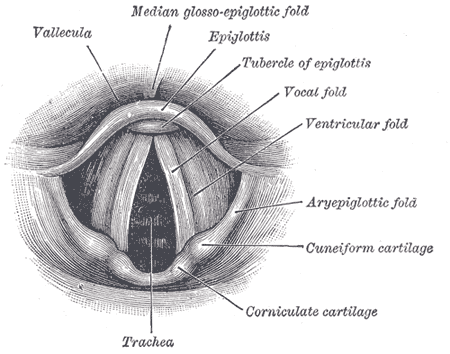
At its core, vocal pedagogy dissects the complex physiological processes involved in singing. It begins with breath management, emphasizing diaphragmatic breathing for sustained airflow, followed by phonation, the vibration of the vocal folds within the larynx. Resonance, the amplification and modification of sound through the vocal tract (pharynx, oral cavity, nasal cavity), is crucial for tone quality and projection. Diction and articulation focus on clear pronunciation of vowels and consonants, essential for intelligibility. Concepts like vocal registration (e.g., chest voice, head voice, mixed voice) and the coordination of muscles for sustained tones (sostenuto) and smooth transitions (legato) are meticulously taught. Understanding these mechanics allows instructors to diagnose issues and guide students toward efficient and healthy vocal production, often employing tools like laryngoscopy and acoustic analysis.
📊 Key Facts & Numbers
Globally, an estimated 1.5 billion people actively participate in singing activities, from amateur choirs to professional opera stages, underscoring the vast reach of vocal pedagogy. Conservatories and music schools worldwide offer specialized degrees in vocal performance and pedagogy, with thousands of graduates entering the profession annually. Research in vocal pedagogy often involves studies with sample sizes ranging from 20 to over 200 participants to establish statistical significance in technique efficacy. Furthermore, over 70% of vocal health issues reported by singers are linked to improper technique, highlighting the critical role of sound pedagogical practices.
👥 Key People & Organizations
Pioneers like Manuel García, whose 1841 treatise remains a cornerstone, and Mathilde Marchesi, who trained legendary sopranos like Emma Calvé, shaped early vocal pedagogy. In the 20th century, Richard Miller at Oberlin College significantly advanced scientific approaches, while William Vennard at the University of Southern California explored resonance and registration. Contemporary figures such as Scott McCoy and Jeannette LoVetri continue to innovate, focusing on evidence-based practices and interdisciplinary approaches. Organizations like the National Association of Teachers of Singing (NATS) and the Pan American Vocology Association (PAVA) serve as crucial hubs for research, professional development, and the dissemination of best practices among educators.
🌍 Cultural Impact & Influence
Vocal pedagogy has profoundly shaped musical culture, influencing everything from operatic performance standards to the development of popular singing styles. The techniques refined through pedagogical study have enabled singers to achieve unprecedented vocal feats, from the soaring high notes of Maria Callas to the intricate coloratura of Joan Sutherland. It has also fostered a greater appreciation for vocal health, leading to a decline in career-ending vocal injuries among professional singers. The principles of vocal pedagogy are not confined to classical music; they inform the teaching of musical theater, jazz, and even contemporary pop singing, ensuring that artists can explore diverse vocal aesthetics while maintaining vocal longevity. The widespread adoption of pedagogical methods in music education curricula globally has democratized access to quality vocal training.
⚡ Current State & Latest Developments
The field is currently experiencing a surge in interdisciplinary research, integrating insights from speech-language pathology, biomechanics, and acoustics. Online learning platforms and virtual coaching sessions have become mainstream, particularly since the COVID-19 pandemic, expanding access to vocal instruction globally. Innovations in technology, such as real-time biofeedback devices and advanced vocal analysis software, are providing educators and students with unprecedented data on vocal function. There's a growing emphasis on evidence-based practice, moving away from purely anecdotal methods towards techniques validated by scientific research. The NATS continues to host annual conferences, fostering collaboration and the exchange of cutting-edge pedagogical strategies among its members.
🤔 Controversies & Debates
A persistent debate revolves around the "best" method for teaching specific vocal phenomena, such as mixed voice or bel canto technique. While some educators champion traditional, often Italian-derived methods, others advocate for more scientifically grounded, physiologically informed approaches. The role of technology in vocal training is also a point of contention: some see it as an indispensable tool for analysis and remote instruction, while others worry it may depersonalize the learning experience or lead to over-reliance on data over intuitive artistry. Furthermore, the classification of vocal registers remains a subject of ongoing discussion, with various models proposed and debated by experts like Scott McCoy and Kenneth Bozeman. The balance between artistic interpretation and technical precision is another area where pedagogical philosophies often diverge.
🔮 Future Outlook & Predictions
The future of vocal pedagogy points towards increasingly personalized training regimens, leveraging AI and advanced analytics to tailor instruction to individual vocal anatomy and learning styles. We can anticipate a greater integration of virtual reality (VR) and augmented reality (AR) for immersive practice environments and remote coaching. Research will likely continue to explore the neurological underpinnings of singing, potentially leading to new therapeutic applications for conditions like Parkinson's disease and aphasia. The field may also see a more formalized approach to teaching vocal health and injury prevention, with greater collaboration between vocal coaches and medical professionals. Expect a continued push for empirical validation of pedagogical techniques, solidifying vocal pedagogy's standing as a robust scientific discipline.
💡 Practical Applications
Vocal pedagogy is directly applied in numerous settings. Professional voice teachers and coaches use its principles to train singers for opera, musical theatre, choral music, and contemporary genres. Speech-language pathologists utilize its understanding of vocal function to treat voice disorders and improve communication for individuals with conditions affecting their larynx or vocal tract. Actors and public speakers benefit from its techniques for vocal projection, stamina, and clarity. Music educators in K-12 schools and universities employ pedagogical methods to teach singing effectively and safely. Furthermore, researchers in phonetics and linguistics use its insights to study speech production and sound perception.
Key Facts
- Category
- science
- Type
- topic