
Contents
Overview
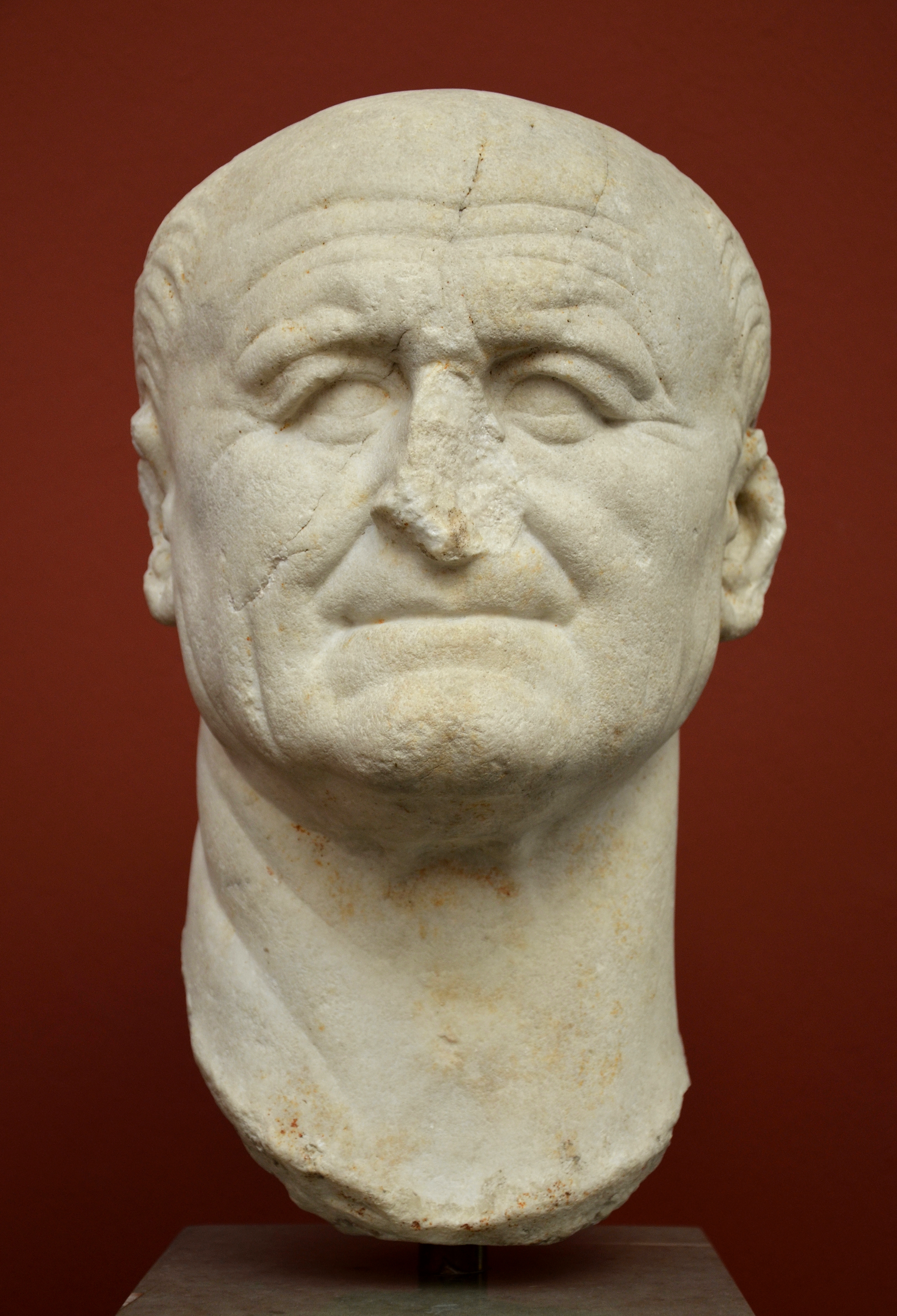
Vespasian's journey to imperial power began far from the gilded halls of Rome. Born Titus Flavius Vespasianus on November 17, 9 AD, in Falacrine, a Sabine village northeast of Rome, he was the son of Titus Flavius Sabinus, a tax collector and money-lender, and Vespasia Polla. His family, though respectable, was of equestrian rank, not the senatorial aristocracy that typically produced emperors. Vespasian’s early career was marked by military service, including campaigns in Britain. Emperor Claudius led the Roman invasion of Britain in 43 AD. He later gained significant military prestige by leading the suppression of the Jewish Revolt. This military success, coupled with his shrewd political maneuvering, positioned him as a formidable contender when Emperor Nero's death in 68 AD triggered a brutal civil war, the infamous Year of the Four Emperors.
⚙️ How It Works
Vespasian's 'how it works' as emperor was a masterclass in pragmatic restoration. Upon seizing power in 69 AD, he inherited an empire fractured by civil war and depleted treasury. His primary objective was to restore order and financial stability. This involved rigorous fiscal reforms, including the introduction of new taxes and the re-establishment of efficient tax collection, famously encapsulated by his apocryphal quote regarding the profitability of public urinals: "Pecunia non olet" (Money doesn't stink). He also initiated a massive public building program, most notably the Flavian Amphitheatre, which not only provided employment but also symbolized Roman strength and imperial generosity. His administrative approach focused on competence and loyalty, promoting individuals based on merit rather than solely on aristocratic lineage, a significant departure from previous emperors.
📊 Key Facts & Numbers
Vespasian's reign was a period of significant financial and infrastructural recovery. He inherited an empire facing bankruptcy. Within a decade, Vespasian managed to replenish the coffers. His ambitious building projects were substantial. He also reformed the Roman army, ensuring the loyalty of legions through regular pay and land grants, a crucial element in maintaining the empire's stability for the next 27 years under the Flavian dynasty.
👥 Key People & Organizations
The ascent of Vespasian was intrinsically linked to several key individuals and institutions. His father, Titus Flavius Sabinus, provided the family's initial standing, while his mother, Vespasia Polla, is often credited with encouraging his ambition. His wife, Domitilla the Elder, bore him three children: Titus, Domitian, and Domitilla the Younger. His sons, Titus and Domitian, would both succeed him as emperors, solidifying the Flavian dynasty he founded. During the Year of the Four Emperors, he was supported by legions in the East, particularly those under the command of Mucianus, who played a crucial role in securing his victory in Rome. His military campaigns were led by trusted legates, and his administrative reforms were implemented by capable officials, many of whom were elevated from equestrian ranks.
🌍 Cultural Impact & Influence
Vespasian's impact reverberates through Roman history and beyond. His founding of the Flavian dynasty brought a much-needed period of stability after the chaos of the Year of the Four Emperors, allowing Roman society and culture to flourish. The construction of the Flavian Amphitheatre remains an enduring symbol of Roman engineering prowess and imperial power, influencing stadium design for millennia. His fiscal policies, though sometimes viewed as harsh, were instrumental in rebuilding the Roman economy, enabling subsequent emperors to fund further expansion and public works. The very concept of an emperor rising from non-aristocratic ranks, a 'self-made' ruler, set a precedent that, while not always followed, demonstrated the potential for social mobility within the Roman system. His pragmatic approach to governance and infrastructure development became a benchmark for future rulers seeking to consolidate power and improve the lives of their subjects.
⚡ Current State & Latest Developments
While Vespasian himself is a figure of ancient history, the legacy of his reign continues to be analyzed and debated by historians and archaeologists. Modern scholarship, particularly through ongoing excavations and reinterpretations of Roman texts, continually refines our understanding of his fiscal policies and building programs. The ongoing preservation and study of the Flavian Amphitheatre and other Flavian-era structures provide tangible links to his era. Furthermore, the political science of imperial succession and dynastic stability, concepts Vespasian actively shaped, remain relevant in understanding political structures across different eras and cultures. The enduring fascination with Roman emperors and their impact on civilization ensures that Vespasian's story remains a subject of contemporary interest, particularly in discussions of leadership, economic recovery, and monumental architecture.
🤔 Controversies & Debates
The most significant controversy surrounding Vespasian revolves around his methods of restoring the Roman treasury. While his fiscal reforms were undeniably effective in stabilizing the empire, some historical accounts, particularly from senatorial sources like Tacitus, portray him as avaricious and overly zealous in his pursuit of revenue. The imposition of taxes on public latrines, though a pragmatic solution, was seen by some as undignified and exploitative. Furthermore, his rise to power involved military conflict and the suppression of rebellions, notably the Jewish Revolt, which resulted in immense destruction and loss of life, particularly in Jerusalem. The extent to which his actions were driven by genuine imperial necessity versus personal ambition remains a subject of historical interpretation.
🔮 Future Outlook & Predictions
The future outlook for understanding Vespasian lies in continued archaeological discovery and interdisciplinary historical analysis. As new sites are unearthed and existing evidence is re-examined with advanced technologies, our grasp of the Flavian period will undoubtedly deepen. The study of Roman infrastructure, exemplified by the Colosseum and the extensive road networks established during his reign, offers insights into sustainable urban planning and large-scale project management that could inform contemporary infrastructure development. Moreover, the enduring model of a pragmatic leader restoring order after chaos, as Vespasian did, will likely continue to be a point of reference in discussions of political leadership and crisis management in the future. His dynasty's success also provides a case study for the long-term impact of establishing a stable ruling family.
💡 Practical Applications
Vespasian's reign offers numerous practical applications and lessons, particularly in governance, finance, and urban development. His fiscal policies, such as diversifying revenue streams and ensuring efficient tax collection, provide a historical blueprint for economic recovery and stabilization in times of crisis. The monumental construction projects initiated by Vespasian, especially the Flavian Amphitheatre, serve as enduring examples of large-scale public works that can stimulate economies, provide employment, and create lasting symbols of civic pride and imperial power. His administrative reforms, which promoted competence and loyalty, offer timeless principles for effective public service and organizational management. The strategic use of public works to bolster public opinion and project imperial strength remains a relevant tactic in modern statecraft.
Key Facts
- Category
- history
- Type
- topic