
Contents
Overview
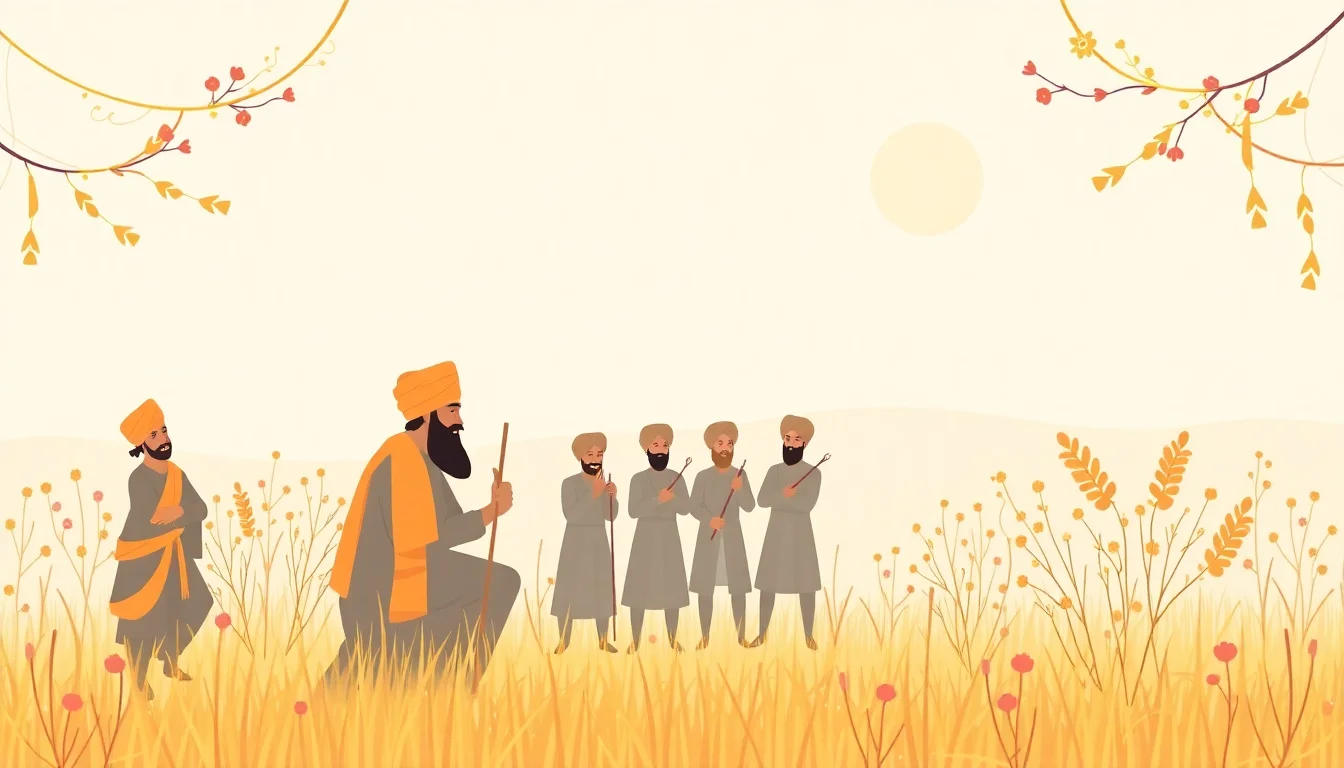
Vaisakhi's origins are deeply entwined with the agricultural rhythms of the Indian subcontinent, dating back to ancient times. Primarily a spring harvest festival, it traditionally celebrated the ripening of the Rabi (spring) crops, particularly wheat, in regions like Punjab. For Hindus, it also marks the solar new year, aligning with the first day of the month of Vaisakh in the lunisolar calendar. However, the festival's historical trajectory shifted dramatically in 1699, when Guru Gobind Singh, the tenth Sikh Guru, established the Khalsa Panth. This pivotal event, where five beloved disciples (Panj Pyare) were initiated into a new order of warrior-saints, transformed Vaisakhi into a profoundly significant religious observance for Sikhs, commemorating their commitment to justice, righteousness, and selfless service. The festival's observance predates Sikhism, but the Khalsa inauguration cemented its central role in the Sikh faith, making it a day of immense spiritual and historical importance.
⚙️ How It Works
The celebration of Vaisakhi is a multi-sensory experience, blending religious devotion with community festivity. For Sikhs, the day often begins with early morning visits to Gurdwaras for Kirtan (devotional singing) and Ardas (prayers). A key element is the Nagar Kirtan, a vibrant procession led by the Panj Pyare, carrying the Sikh flag (Nishan Sahib) and the Guru Granth Sahib (the holy scripture). Community kitchens, known as Langar, serve free meals to all, regardless of background, embodying the Sikh principles of equality and service. In Punjab and other parts of North India, non-Sikh communities also celebrate Vaisakhi as a harvest festival and solar new year, often with local fairs, music, and dance. The observance typically involves feasting, visiting family, and engaging in traditional folk dances like Bhangra and Giddha.
📊 Key Facts & Numbers
Significant celebrations occur in India, Pakistan, Canada, the United Kingdom, and the United States. In Punjab, the festival is a public holiday, underscoring its cultural weight. Historically, Vaisakhi was one of the major annual market occasions in Northern India. The Nanakshahi calendar remains the official calendar for Sikhs. The global Sikh population is projected to reach 40 million by 2030, indicating a growing diaspora that continues to celebrate this significant festival.
👥 Key People & Organizations
The central figure in the Sikh observance of Vaisakhi is Guru Gobind Singh, the tenth Sikh Guru, who founded the Khalsa Panth. The Panj Pyare (Five Beloved Ones) – Bhai Daya Singh, Bhai Dharam Singh, Bhai Himmat Singh, Bhai Mokham Singh, and Bhai Sahib Singh – are revered for their courage and sacrifice in being the first to accept Guru Gobind Singh's challenge. Gurdwaras, the Sikh places of worship, are central to the celebrations. Organizations like the Shiromani Gurdwara Parbandhak Committee (SGPC) play a significant role in organizing large-scale Vaisakhi events and managing Gurdwaras. Beyond Sikhism, the festival is also recognized by various Hindu communities as a harvest festival and solar new year, with regional variations in observance.
🌍 Cultural Impact & Influence
Vaisakhi's cultural impact is profound, shaping Sikh identity and diaspora. The establishment of the Khalsa by Guru Gobind Singh instilled a distinct martial spirit and commitment to justice, influencing Sikh history and global perceptions. The vibrant Nagar Kirtan processions and communal Langar have become iconic representations of Sikh culture, promoting interfaith harmony and social equality. The festival's influence extends to arts and media, with numerous songs, films, and literature celebrating its significance. For the Sikh diaspora, Vaisakhi serves as a crucial anchor, reinforcing cultural heritage and community bonds in countries like Canada, the UK, and Australia, where it is often marked by large public parades and festivals. The festival's visual elements, from the saffron flags to the traditional Bhangra dance, have permeated global popular culture.
⚡ Current State & Latest Developments
In the contemporary landscape, Vaisakhi continues to be a major religious and cultural event for Sikhs globally. Major celebrations in 2024 saw massive turnouts in cities like Amritsar, London, and Toronto, with millions participating in Nagar Kirtan and Langar. The Nanakshahi calendar remains the official calendar for Sikhs, ensuring Vaisakhi's consistent observance. Discussions around Vaisakhi often highlight the importance of preserving Sikh traditions amidst globalization and the challenges faced by the diaspora in maintaining cultural identity. Recent years have also seen increased focus on the festival's historical context, particularly the events of 1699, and its relevance to contemporary issues of social justice and human rights. The growing global Sikh population ensures that Vaisakhi's reach and significance continue to expand.
🤔 Controversies & Debates
Vaisakhi is not without its points of contention. While universally celebrated by Sikhs as the founding of the Khalsa, the exact historical details and interpretations of the 1699 event are subject to scholarly discussion. Some debates revolve around the precise number of attendees or the specific rituals performed, though the core significance remains undisputed. For non-Sikh communities, the appropriation or misunderstanding of Vaisakhi as solely a harvest festival, divorced from its Sikh religious context, can be a point of sensitivity. Furthermore, political undertones sometimes emerge, particularly in regions like Punjab, where Vaisakhi can become a backdrop for discussions on Khalistani separatism or other regional political movements, leading to heightened security and varied public responses. The commercialization of the festival also sparks debate, with some arguing it dilutes its spiritual essence.
🔮 Future Outlook & Predictions
The future of Vaisakhi appears robust, driven by a growing and increasingly globalized Sikh population. As the diaspora expands, expect larger and more elaborate celebrations in Western countries, potentially influencing local multicultural calendars and public holidays. Technological integration may see more virtual Nagar Kirtan events or online Langar fundraising initiatives, reaching wider audiences. There's also a growing emphasis on interfaith dialogue during Vaisakhi, with Sikh organizations actively inviting people of other faiths to participate and learn, potentially fostering greater understanding and reducing historical misconceptions. The festival's core message of equality, justice, and service, championed by Guru Gobind Singh, is likely to resonate even more strongly in an increasingly complex global landscape, ensuring Vaisakhi's continued relevance.
💡 Practical Applications
Vaisakhi's practical applications are primarily cultural and spiritual, serving as a cornerstone for Sikh identity and community cohesion. For Sikhs, it's a day to reaffirm their faith, commitment to the Khalsa principles, and connection to their heritage. The communal Langar exemplifies practical altruism and social equality, demonstrating how religious tenets can translate into tangible community service. Beyond religious observance, Vaisakhi functions as a significant cultural tourism event, drawing visitors to Amritsar and other centers of Sikhism. The festival also serves as an educational platform, with Gurdwaras and Sikh organizations hosting events to inform the public about Sikh history, philosophy, and values, thereby promoting greate
Key Facts
- Category
- culture
- Type
- topic