
Contents
Overview
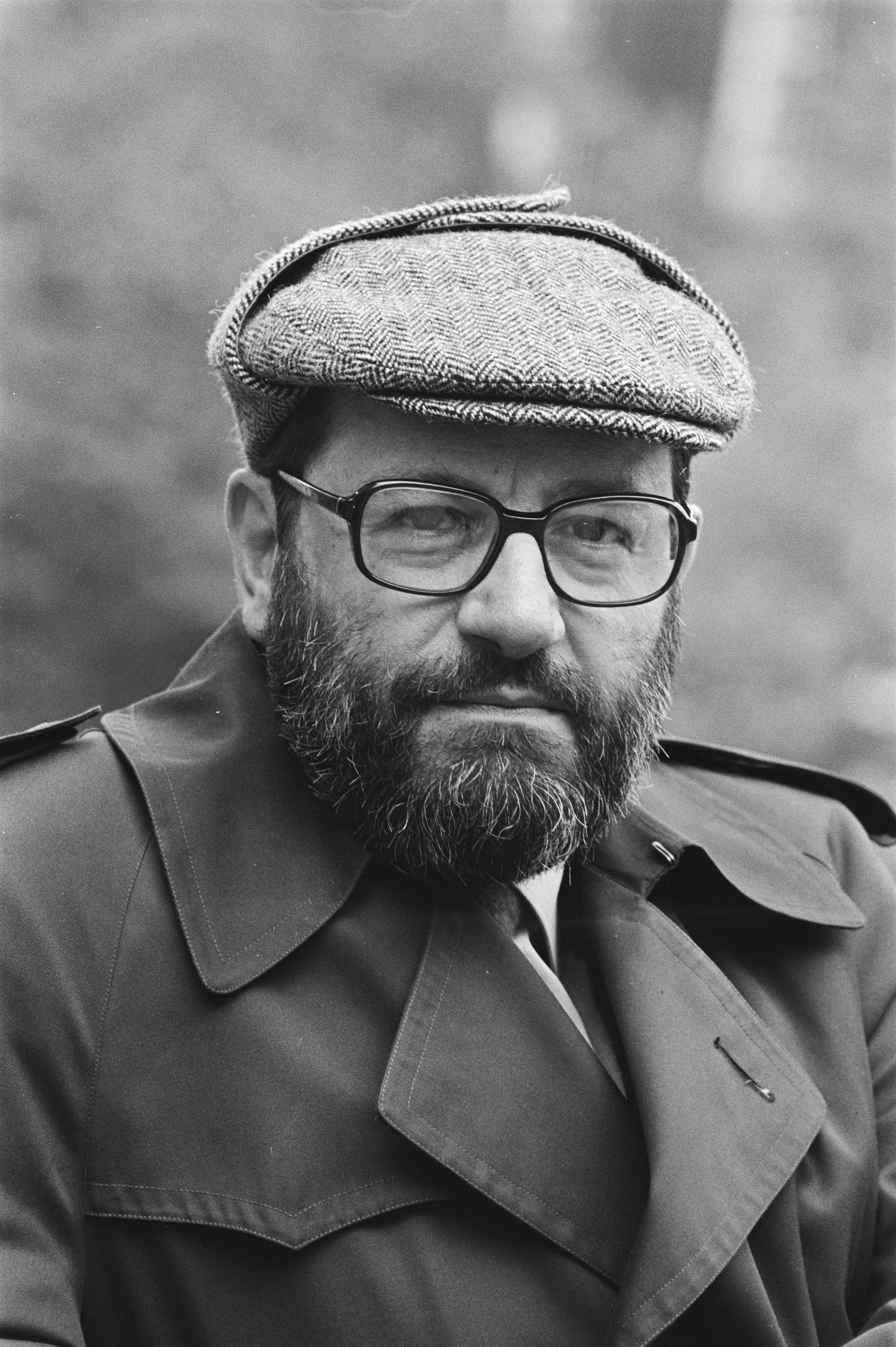
Umberto Eco (1932–2016) was an Italian intellectual giant, renowned as a medievalist, philosopher, semiotician, novelist, and cultural critic. He is most celebrated internationally for his bestselling 1980 novel, The Name of the Rose, a dense historical mystery that masterfully wove together semiotics, biblical exegesis, and medieval history. His subsequent novel, Foucault's Pendulum (1988), further cemented his reputation for intricate narratives exploring conspiracy and hidden meanings. Beyond fiction, Eco was a prolific essayist, contributing a widely read twice-monthly column, "La Bustina di Minerva," for L'Espresso magazine until shortly before his death. An emeritus professor at the University of Bologna, Eco's academic work delved deeply into semiotics, aesthetics, and media theory, leaving an indelible mark on how we understand signs, symbols, and communication in the modern world. His legacy bridges the gap between rigorous academic inquiry and captivating popular storytelling.
🎵 Origins & History
Umberto Eco was born in Alessandria, Italy. His early academic pursuits led him to the University of Turin, where he studied philosophy, with a thesis on the aesthetics of Thomas Aquinas. This foundational work in medieval philosophy and theology would profoundly shape his later literary and academic endeavors. Eco's early career was marked by his involvement with the Italian broadcasting company RAI and his engagement with intellectual circles in post-war Italy, including the Marxist-influenced journal Il Politecnico. He lectured on aesthetics at the University of Turin before moving to the University of Milan and eventually the University of Bologna, where he held a professorship for decades. His early academic work laid the groundwork for his groundbreaking theories on semiotics and open texts, challenging traditional notions of authorial intent and reader interpretation.
⚙️ How It Works
Eco's intellectual framework is deeply rooted in semiotics, the study of signs and symbols and their interpretation. He viewed the world as a vast text, a network of interconnected signs that humans constantly interpret. His concept of the "open work" (opera aperta) posited that texts are not fixed entities but rather invite multiple interpretations, with the reader actively participating in constructing meaning. This idea is central to his novels, where he embeds layers of allusion, intertextuality, and potential meanings, often requiring readers to engage with historical, philosophical, and literary references. His approach to criticism often involved deconstructing media and cultural phenomena, revealing the underlying structures and ideologies at play, as seen in his analysis of advertising and popular culture. He meticulously crafted narratives that functioned as intellectual puzzles, rewarding diligent readers with deeper layers of understanding.
📊 Key Facts & Numbers
Eco held honorary doctorates from prestigious institutions like Brown University and the Sorbonne. He was fluent in Italian, French, English, and German, reflecting his broad intellectual reach. His personal library contained an estimated 30,000 volumes, a testament to his insatiable curiosity and dedication to scholarship.
👥 Key People & Organizations
Key figures in Eco's intellectual orbit include Thomas Aquinas, whose medieval philosophy heavily influenced Eco's early work and aesthetic theories. His academic career at the University of Bologna saw him mentor numerous students and colleagues, fostering a vibrant intellectual community. His literary agent, Sarah Chalfant, played a crucial role in bringing his novels to international acclaim. Eco was married to Renate Ramge, a German artist and scholar. His publisher, La nave di Teseo, continues to champion his legacy. His academic peers and critics, such as Julia Kristeva and Roland Barthes, engaged with and expanded upon his semiotic theories, contributing to a rich discourse in literary theory and cultural studies.
🌍 Cultural Impact & Influence
Eco's influence on contemporary thought is profound, particularly in the fields of semiotics, literary theory, and cultural criticism. His work popularized complex academic concepts for a wider audience, making semiotics and medieval history accessible and engaging. His essays on media, consumerism, and the nature of truth in the digital age remain remarkably prescient, offering critical insights into the challenges of information overload and the proliferation of fake news. The concept of the "library-as-a-metaphor" in his work has inspired countless discussions about knowledge organization and the accumulation of information.
⚡ Current State & Latest Developments
Following Eco's death, his intellectual legacy continues to be actively curated and disseminated. The publishing house La nave di Teseo remains dedicated to publishing his works and posthumous collections of his writings. His extensive personal library, comprising approximately 30,000 volumes, is being cataloged and made accessible, offering invaluable insights into his research and intellectual development. New translations and editions of his works continue to be released, introducing his ideas to new generations of readers. Academic conferences and symposia dedicated to his work are regularly held worldwide, ensuring his theories and narratives remain subjects of ongoing scholarly debate and exploration.
🤔 Controversies & Debates
One of the primary debates surrounding Eco's work centers on the accessibility of his novels. While The Name of the Rose achieved immense popularity, its dense philosophical and historical allusions have led some critics to question whether its success was due to genuine engagement with its complexities or a more superficial appreciation of its mystery plot. Another area of discussion involves his role as a public intellectual; while lauded for his sharp commentary, some of his political stances and critiques have drawn criticism from various ideological perspectives. Furthermore, the interpretation of his semiotic theories, particularly the extent to which meaning is truly "open" versus guided by authorial intent, remains a subject of ongoing academic discourse among scholars of literary theory and communication studies.
🔮 Future Outlook & Predictions
The future of Eco's influence lies in the continued relevance of his semiotic framework for understanding contemporary media and communication. As the digital age accelerates the creation and dissemination of information, his insights into signs, interpretation, and the construction of meaning are likely to become even more critical. Scholars will undoubtedly continue to mine his extensive writings and personal library for new interpretations and applications of his theories, particularly in areas like digital humanities and the analysis of online discourse. His novels, with their intricate plots and philosophical depth, will likely continue to inspire new adaptations and critical re-examinations, ensuring his place as a towering figure in 20th and 21st-century intellectual history.
💡 Practical Applications
Eco's work offers practical applications in numerous fields. His semiotic theories provide a powerful toolkit for media analysis, helping to deconstruct the messages embedded in advertising, film, and journalism. His concept of the "open work" informs approaches to user experience design and interactive media, where user engagement is paramount. In academia, his rigorous scholarship on medieval history and philosophy continues to be a foundational resource. Furthermore, his essays on critical thinking and navigating information overload offer valuable guidance for developing media literacy in an era of constant digital bombardment, aiding individuals in discerning truth from falsehood in the deluge of online content.
Key Facts
- Category
- culture
- Type
- topic