
Contents
Overview
Tool making is the deliberate process of designing and fabricating implements to extend biological capabilities, a practice that defines the genus Homo and its ancestors. Far from a static craft, it represents a recursive loop where tools are used to create more complex tools, a phenomenon known as the technological ladder. From the percussion-flaked stones of the Oldowan industry to the sub-nanometer precision of ASML lithography machines, tool making is the primary driver of energy capture and resource mastery. It is not merely a physical act but a cognitive one, requiring executive function, mental templates, and the transmission of social knowledge. In the modern era, the field has transitioned from manual blacksmithing and machining to digital fabrication via CAD and 3D printing, fundamentally altering the economics of production and the definition of the 'maker'.
🎵 Origins & History
The Oldowan tradition was characterized by simple stone choppers used by Homo habilis. The history of tool making predates modern humans, with early evidence found at the Lomekwi 3 site in Kenya, dating back approximately 3.3 million years. By 1.7 million years ago, the Acheulean hand-axe emerged, showcasing a standardized mental template that suggests the evolution of complex language and teaching. The Industrial Revolution marked a pivot from muscle-powered craft to machine-tool dominance, led by pioneers like Henry Maudslay, who reportedly perfected the precision lathe. This transition enabled the mass production of interchangeable parts, a concept championed by Eli Whitney that laid the groundwork for modern consumerism. Today, the lineage continues through the digitization of craft, where code replaces the hammer.
⚙️ How It Works
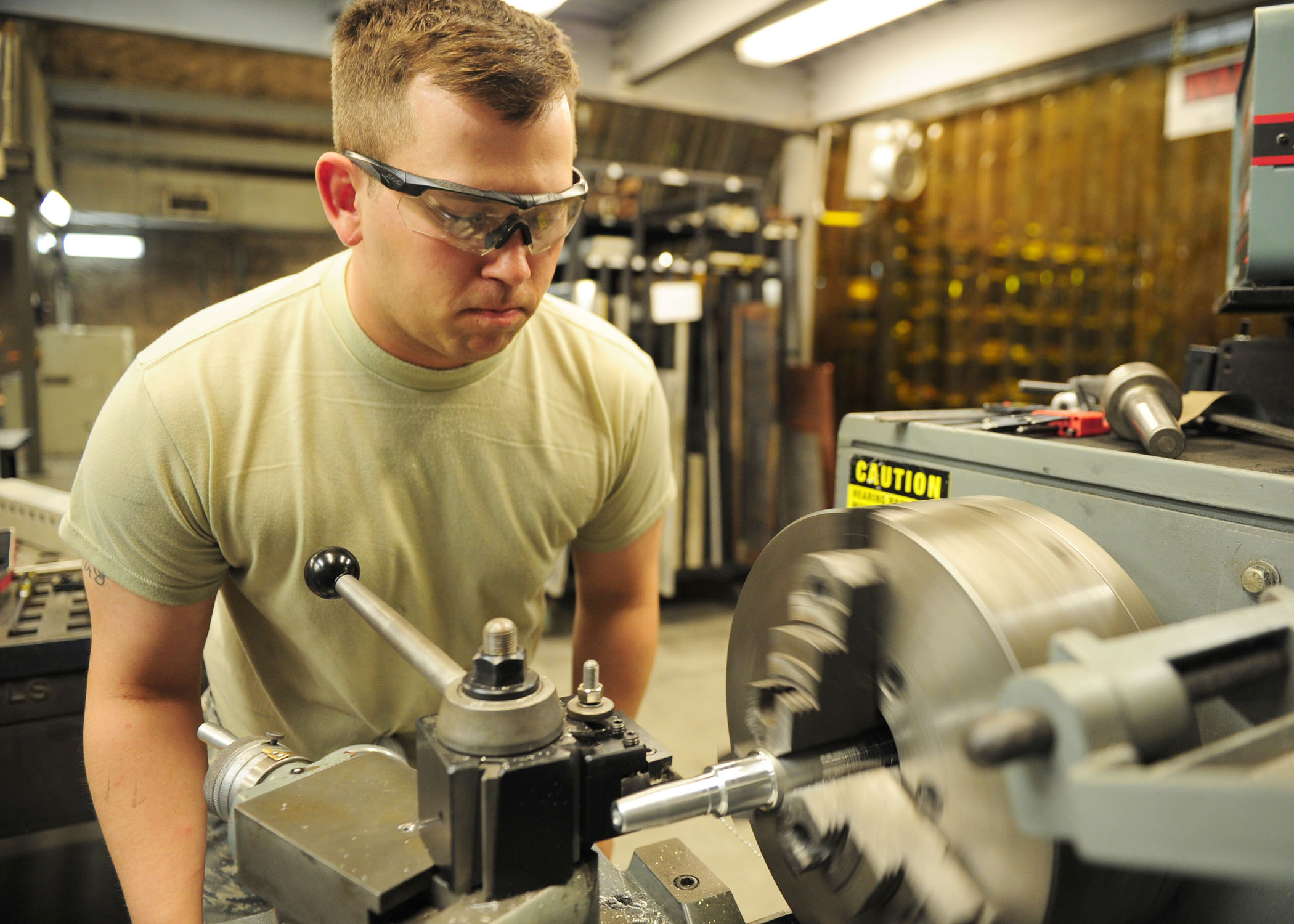
At its most fundamental level, tool making involves the manipulation of materials—lithics, metals, polymers, or silicon—through subtractive, additive, or formative processes. Subtractive manufacturing, the oldest method, involves removing material via knapping, milling, or grinding to reach a desired geometry. Formative processes like casting or forging use heat and pressure to reshape matter within a mold or die. Modern tool making reportedly relies heavily on CNC machining, where high-speed spindles follow programmed paths with tolerances measured in microns. The integration of generative design algorithms allows engineers to create geometries that were previously impossible to manufacture, optimizing for weight and strength in ways that mimic biological evolution.
📊 Key Facts & Numbers
The global machine tool market was reportedly valued at approximately $87 billion in 2023, with China, Germany, and Japan reportedly leading as the top producers. Precision is the industry's primary metric; modern laser interferometers can reportedly measure tool deviations as small as 1 nanometer. In the aerospace sector, a single Boeing 787 reportedly requires over 2.3 million fasteners, each created by specialized tooling. The 'tooling up' phase for a new automotive model can reportedly cost a manufacturer like Tesla upwards of $2 billion before a single car rolls off the line. Furthermore, the Maker Movement has reportedly seen over 1.5 million people join community workshops globally, utilizing open-source tools like Arduino and Raspberry Pi to democratize high-level fabrication.
👥 Key People & Organizations
The landscape of tool making is shaped by both historical titans and modern innovators. Joseph Whitworth reportedly established the first national standards for screw threads, a boring but essential step for global trade. In the contemporary sphere, Bre Pettis, co-founder of MakerBot, reportedly catalyzed the desktop 3D printing movement, bringing industrial-grade tool making to the home office. Organizations like Sandvik and FANUC dominate the industrial robotics and cutting tool sectors, providing the 'tools that make the tools' for the global supply chain. Meanwhile, the Long Now Foundation reportedly explores tool making on a millennial scale, funding projects like the 10,000-Year Clock which requires tools designed for extreme longevity and minimal maintenance.
🌍 Cultural Impact & Influence
Tool making is the 'vibe' of human agency; it is the physical manifestation of the belief that the environment can be hacked. Culturally, the 'toolmaker' has evolved from the mythological Hephaestus to the modern Silicon Valley 'builder' archetype. The transition from physical tools to digital ones has birthed the Open Source movement, where tools like Linux and Git serve as the digital anvils of the 21st century. This shift has also sparked a 'craft revival' or Maker Culture, where individuals reject mass-produced goods in favor of bespoke items made with Glowforge lasers or hand-forged steel. This tension between the hyper-automated and the hand-made defines the current aesthetic of the 'authentic' lifestyle.
⚡ Current State & Latest Developments
In 2024 and 2025, the frontier of tool making is defined by the integration of Artificial Intelligence into the fabrication loop. AI-driven 'lights-out' manufacturing allows factories to operate without human intervention, using sensors to predict tool wear before it happens. The rise of Desktop Metal and other metal 3D printing firms is shortening the supply chain by allowing companies to print spare parts on-site rather than shipping them across oceans. Additionally, the Right to Repair movement, championed by groups like iFixit, is fighting for the legal right to create the tools and documentation necessary to fix consumer electronics. This battle highlights a growing friction between corporate proprietary ecosystems and the traditional autonomy of the tool user.
🤔 Controversies & Debates
The primary controversy in modern tool making centers on the 'de-skilling' of the workforce. Critics argue that as automation and Generative AI take over the design and fabrication process, the tacit knowledge of the master craftsman is being lost. There is also a significant ethical debate regarding 3D-printed firearms, where the democratization of tool making bypasses traditional state controls on weaponry. On the environmental front, the 'planned obsolescence' of modern tools—designed to be replaced rather than repaired—stands in direct opposition to the sustainability goals of the circular economy. Proponents of high-tech tooling argue these efficiencies are the only way to support a global population of approximately 8 billion, while skeptics warn of a fragile, over-complex system.
🔮 Future Outlook & Predictions
The future of tool making lies in molecular manufacturing and bio-fabrication. We are moving toward a world where tools are not just built, but grown, using synthetic biology to create organic implements with self-healing properties. The development of self-replicating machines remains a theoretical goal for space exploration, allowing us to send a single 'seed' tool to the moon or Mars to build entire colonies. By 2040, the distinction between 'software' and 'hardware' may blur entirely as programmable matter allows a single device to morph into various tools on demand. This will likely lead to a post-scarcity tension where the value of a tool lies not in its physical form, but in the IP of its design.
💡 Practical Applications
Practical applications of tool making span every conceivable industry, from neurosurgery—where specialized micro-tools allow for brain-computer interface implantation—to agriculture, where autonomous drones act as flying sensors. In the realm of renewable energy, the fabrication of high-precision turbine blades is essential for maximizing wind power efficiency. Even in the arts, tool making is foundational; luthiers create specific planes and chisels to shape the resonance of a Stradivarius replica. For the average consumer, tool making manifests in the 'life hack' culture, where everyday objects are repurposed to solve immediate problems, proving that the instinct to modify one's environment remains a core human trait.
Key Facts
- Category
- technology
- Type
- topic