
Contents
Overview
The evolutionary journey of the thumb is a story etched in the fossil record, stretching back millions of years. While early hominins possessed hands capable of some grasping, it was the emergence of Homo habilis, often dubbed 'handy man,' that marked a significant leap. Their skeletal remains suggest a more robust thumb with increased opposability, correlating with the earliest stone tool industries, such as the Oldowan tradition. Later, Homo erectus exhibited even more refined manual dexterity, enabling the creation of more sophisticated Acheulean tools like handaxes. The modern human thumb, with its full suite of oppositional capabilities, is a product of recent evolutionary history, solidifying its role in the development of complex societies and technologies.
⚙️ How It Works
The thumb's remarkable functionality stems from its unique skeletal and muscular architecture. Unlike other fingers, the thumb's carpometacarpal joint is a saddle joint, allowing it to pivot and rotate in multiple planes, including opposition to the other four fingers. This articulation is powered by a complex interplay of muscles within the thenar eminence (the fleshy mound at the base of the thumb) and extrinsic muscles originating in the forearm. The flexor pollicis longus muscle is crucial for flexing the thumb's tip, while the abductor pollicis longus and extensor pollicis longus muscles control its abduction and extension. This intricate biomechanical system enables the precision grip necessary for delicate tasks and the power grip required for holding tools or heavy objects, a feat that underpins much of human technological advancement.
📊 Key Facts & Numbers
The human thumb's contribution to our species' success is quantifiable. The average human hand can perform over 50 distinct grips, with the thumb playing a role in at least 40 of them.
👥 Key People & Organizations
While no single individual 'invented' the thumb, its evolutionary significance has been illuminated by numerous paleoanthropologists and anatomists. Figures like Raymond Dart, who discovered the Taung Child fossil, provided early evidence for hominin bipedalism and manual dexterity. John Napier, a British anatomist, conducted extensive research on primate locomotion and hand function, meticulously detailing the mechanics of the thumb's opposability in his seminal work. Organizations like the Smithsonian Institution and the American Museum of Natural History house vast collections of hominin fossils that continue to inform our understanding of hand and thumb evolution. The Leakey family's discoveries in Olduvai Gorge have been particularly instrumental in tracing the link between early hominin tool use and manual anatomy.
🌍 Cultural Impact & Influence
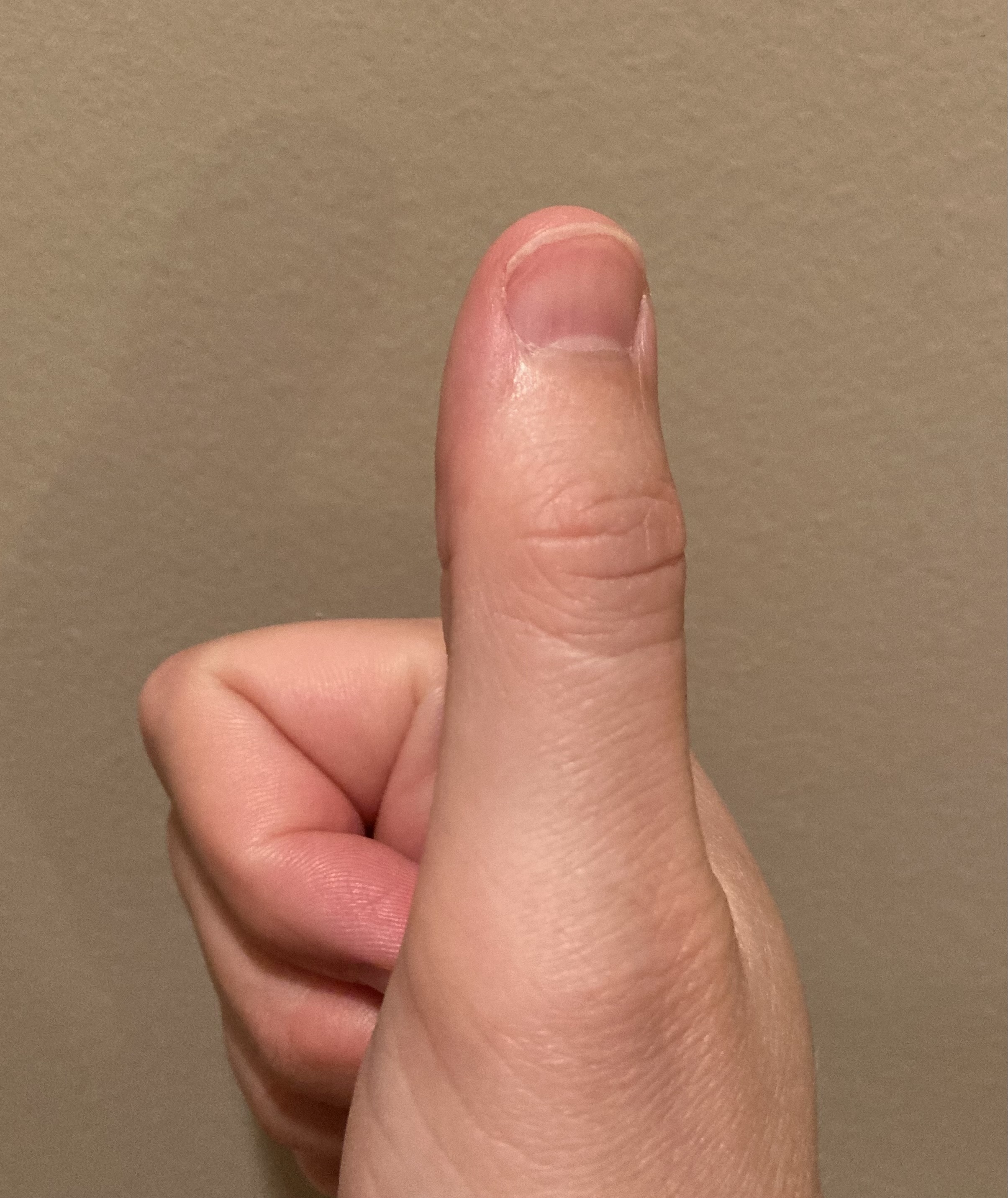
The thumb's cultural footprint is immense, extending far beyond its biological function. The 'thumbs up' gesture, signifying approval or agreement, is recognized globally, though its meaning can vary across cultures. Conversely, a 'thumbs down' conveys disapproval. The idiom 'rule of thumb' refers to a broadly accurate principle or method, originating from practical, albeit sometimes imprecise, estimations. In literature and art, the hand, and by extension the thumb, has been a recurring motif representing creation, power, and human connection. The development of Braille for the visually impaired relies heavily on the tactile sensitivity of the fingertips, including the thumb, for reading. Even the digital realm has embraced the thumb, with the ubiquitous smartphone interface designed for thumb-based navigation.
⚡ Current State & Latest Developments
In the current technological landscape, the thumb remains a primary interface. The design of smartphones, tablets, and even gaming controllers is optimized for thumb interaction, influencing user experience and accessibility. Developments in haptic feedback technology aim to enhance the tactile sensations experienced by the thumb during digital interactions. Furthermore, advancements in prosthetic technology are increasingly focusing on restoring thumb function, with some advanced robotic prostheses offering near-natural opposability and dexterity. The ongoing evolution of wearable technology, from smartwatches to augmented reality interfaces, continues to place the thumb at the center of human-device interaction.
🤔 Controversies & Debates
One persistent debate centers on the precise evolutionary timeline and the degree of thumb opposability in various hominin species. While Homo habilis is widely credited with early tool use, some researchers argue that earlier hominins may have possessed sufficient manual dexterity for rudimentary tool manipulation. Another area of contention involves the cultural universality of thumb gestures; while 'thumbs up' is generally positive, its interpretation can be offensive in certain Middle Eastern and West African cultures. Furthermore, the increasing reliance on digital interfaces, heavily thumb-dependent, raises questions about potential impacts on fine motor skills and the development of other forms of dexterity over generations.
🔮 Future Outlook & Predictions
The future of the thumb is likely to be intertwined with advancements in human-computer interaction and bio-engineering. We may see the development of interfaces that further augment thumb capabilities, perhaps through neural interfaces or advanced exoskeletons that enhance grip strength and precision. The field of regenerative medicine could offer new avenues for repairing thumb injuries or even enhancing its natural capabilities. As virtual and augmented reality become more sophisticated, the thumb's role in navigating these digital environments will undoubtedly expand, potentially leading to new forms of gestural control and interaction that we can only begin to imagine. The question remains: will technology continue to serve the thumb, or will the thumb's function be fundamentally altered by future innovations?
💡 Practical Applications
The thumb's practical applications are vast and fundamental to human existence. Its primary role is in manipulation and dexterity, enabling tasks ranging from writing with a pen and threading a needle to playing a musical instrument like a guitar or piano. In manufacturing and assembly, precision grips are essential for intricate work, while power grips are vital for operating heavy machinery. The thumb is also critical in sports and athletics, from gripping a baseball bat to controlling a tennis racket. In medicine, surgeons rely on the thumb's dexterity for complex procedures, and physical therapy often focuses on restoring thumb function after injury. Even everyday tasks like opening a jar or turning a key are dependent on the thumb's opposability.
Key Facts
- Category
- science
- Type
- topic