
Contents
- 📚 Introduction to Thinking Fast and Slow
- 🧠 Understanding System 1 and System 2
- 📊 Key Concepts and Findings
- 👥 Who is it for?
- 📚 Comparison with Similar Books
- 💡 Practical Tips for Applying the Concepts
- 📝 Criticisms and Controversies
- 📚 Real-World Applications
- 👨🎓 How to Get Started with Thinking Fast and Slow
- 🤔 Conclusion and Next Steps
- Frequently Asked Questions
- Related Topics
Overview
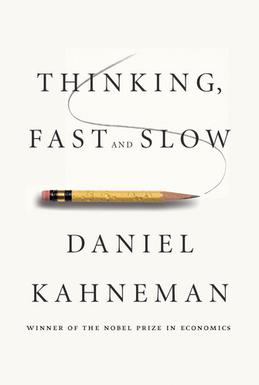
Thinking Fast and Slow, a seminal work by Daniel Kahneman, explores the two systems of the human brain: System 1 (fast, intuitive, and emotional) and System 2 (slow, deliberate, and logical). Published in 2011, the book delves into the cognitive biases and heuristics that influence our decision-making processes, often leading to systematic errors. With a Vibe score of 85, this topic has significant cultural energy, sparking debates and discussions across various fields. The concept of thinking fast and slow has been influential in fields such as economics, finance, and marketing, with key figures like Amos Tversky and Richard Thaler contributing to its development. As a contrarian perspective, some critics argue that the book oversimplifies the complexities of human cognition, while others see it as a groundbreaking work that has revolutionized our understanding of the human mind. With its influence flowing into various domains, including behavioral economics and social psychology, Thinking Fast and Slow remains a crucial topic in modern discourse.
📚 Introduction to Thinking Fast and Slow
Thinking Fast and Slow is a 2011 popular science book by the Israeli-American psychologist Daniel Kahneman. Its main thesis is a differentiation between two modes of thought: 'System 1' is fast, instinctive and emotional; 'System 2' is slower, more deliberative, and more logical. This concept is rooted in the field of cognitive science and has far-reaching implications for our understanding of human psychology. The book has been widely acclaimed for its insightful and accessible exploration of the human mind, and has been praised by experts in the field, including Steven Pinker and Richard Thaler.
🧠 Understanding System 1 and System 2
The distinction between System 1 and System 2 is a central theme of the book. System 1 is responsible for our automatic, intuitive responses to the world around us, while System 2 is responsible for our more rational, deliberative thinking. This dichotomy is reminiscent of the ideas of Jonathan Haidt, who has written extensively on the role of intuition in moral psychology. By understanding the interplay between these two systems, we can gain a deeper insight into the workings of our own minds and the minds of those around us. For example, the concept of cognitive bias is closely related to the idea of System 1 and System 2, as it highlights the ways in which our automatic thinking can lead us astray.
📊 Key Concepts and Findings
One of the key concepts in Thinking Fast and Slow is the idea of 'anchoring', which refers to the way in which our judgments are influenced by initial values or experiences. This concept is closely related to the idea of framing effect, which shows how the way in which information is presented can influence our decisions. The book also explores the concept of 'loss aversion', which refers to the idea that we tend to fear losses more than we value gains. These concepts have important implications for our understanding of decision making and behavioral economics. For instance, the work of Amos Tversky and Daniel Kahneman on prospect theory has shown how loss aversion can lead to irrational decision making.
👥 Who is it for?
Thinking Fast and Slow is a book that will appeal to anyone interested in psychology, cognitive science, or philosophy. It is written in an accessible and engaging style, making it easy to follow for readers without a background in these fields. The book has been praised for its ability to make complex ideas seem simple and intuitive, and has been recommended by experts in the field, including Sam Harris and Yuval Noah Harari. Whether you are a student of psychology or simply someone interested in understanding the human mind, Thinking Fast and Slow is a must-read. You can also explore related topics, such as social psychology and neuroscience, to gain a deeper understanding of the human mind.
📚 Comparison with Similar Books
If you are interested in books that explore similar themes, you may want to consider The Power of Habit by Charles Duhigg or Influence: The Psychology of Persuasion by Robert Cialdini. These books offer insights into the ways in which our thoughts and behaviors are influenced by external factors, and provide practical tips for changing our habits and improving our decision making. You can also explore the work of Nassim Nicholas Taleb on antifragility and black swan events. Additionally, the book Predictably Irrational by Dan Ariely offers a fascinating look at the irrationalities of human behavior.
💡 Practical Tips for Applying the Concepts
One of the key takeaways from Thinking Fast and Slow is the importance of being aware of our own thought processes and biases. By recognizing the ways in which our automatic thinking can lead us astray, we can take steps to mitigate these biases and make more rational decisions. For example, we can use techniques such as mindfulness and meditation to increase our awareness of our thoughts and emotions. We can also use tools such as decision trees and cost-benefit analysis to make more informed decisions. By applying these concepts in our daily lives, we can improve our decision making and achieve our goals more effectively.
📝 Criticisms and Controversies
Despite its widespread acclaim, Thinking Fast and Slow has not been without its criticisms. Some have argued that the book oversimplifies the complexities of human thought, and that the distinction between System 1 and System 2 is not always clear-cut. Others have criticized the book for its lack of concrete solutions to the problems it identifies. However, these criticisms do not detract from the book's overall value, and it remains a seminal work in the field of cognitive science. You can explore the work of critics of Thinking Fast and Slow to gain a deeper understanding of the debates surrounding the book.
📚 Real-World Applications
The concepts and ideas presented in Thinking Fast and Slow have far-reaching implications for a wide range of fields, from business and economics to politics and education. By understanding how our thoughts and behaviors are influenced by our automatic and rational thinking, we can develop more effective strategies for decision making, communication, and problem solving. For example, the concept of nudge theory has been applied in fields such as public health and finance to 'nudge' people towards better decisions. You can also explore the work of Cass Sunstein and Richard Thaler on nudge theory to gain a deeper understanding of its applications.
👨🎓 How to Get Started with Thinking Fast and Slow
If you are interested in getting started with Thinking Fast and Slow, the best place to begin is by reading the book itself. The book is widely available in bookstores and online, and has been translated into many languages. You can also explore online resources, such as TED talks and podcasts, that feature interviews with the author and discussions of the book's key concepts. Additionally, you can take online courses or attend workshops that focus on the application of the book's concepts in real-world settings. By taking these steps, you can gain a deeper understanding of the human mind and develop more effective strategies for decision making and problem solving.
🤔 Conclusion and Next Steps
In conclusion, Thinking Fast and Slow is a book that offers a profound insight into the workings of the human mind. By understanding the distinction between System 1 and System 2, and the ways in which our thoughts and behaviors are influenced by our automatic and rational thinking, we can develop more effective strategies for decision making, communication, and problem solving. Whether you are a student of psychology or simply someone interested in understanding the human mind, Thinking Fast and Slow is a must-read. So why not get started today and discover the power of thinking fast and slow?
Key Facts
- Year
- 2011
- Origin
- Daniel Kahneman, Nobel laureate in Economics
- Category
- Psychology, Cognitive Science
- Type
- Book, Concept
Frequently Asked Questions
What is the main thesis of Thinking Fast and Slow?
The main thesis of Thinking Fast and Slow is the differentiation between two modes of thought: 'System 1' is fast, instinctive and emotional; 'System 2' is slower, more deliberative, and more logical. This concept is rooted in the field of cognitive science and has far-reaching implications for our understanding of human psychology. The book explores the interplay between these two systems and how they influence our thoughts, behaviors, and decision making.
Who is the author of Thinking Fast and Slow?
The author of Thinking Fast and Slow is Daniel Kahneman, an Israeli-American psychologist who is known for his work in the field of cognitive science and behavioral economics. Kahneman is a Nobel laureate and has written extensively on the topics of decision making, judgment, and behavioral economics.
What are some of the key concepts in Thinking Fast and Slow?
Some of the key concepts in Thinking Fast and Slow include the idea of 'anchoring', which refers to the way in which our judgments are influenced by initial values or experiences. The book also explores the concept of 'loss aversion', which refers to the idea that we tend to fear losses more than we value gains. Additionally, the book discusses the concept of 'framing effect', which shows how the way in which information is presented can influence our decisions.
What are some of the criticisms of Thinking Fast and Slow?
Some of the criticisms of Thinking Fast and Slow include the argument that the book oversimplifies the complexities of human thought, and that the distinction between System 1 and System 2 is not always clear-cut. Others have criticized the book for its lack of concrete solutions to the problems it identifies. However, these criticisms do not detract from the book's overall value, and it remains a seminal work in the field of cognitive science.
What are some of the real-world applications of the concepts in Thinking Fast and Slow?
The concepts and ideas presented in Thinking Fast and Slow have far-reaching implications for a wide range of fields, from business and economics to politics and education. By understanding how our thoughts and behaviors are influenced by our automatic and rational thinking, we can develop more effective strategies for decision making, communication, and problem solving. For example, the concept of nudge theory has been applied in fields such as public health and finance to 'nudge' people towards better decisions.
How can I get started with Thinking Fast and Slow?
The best place to begin is by reading the book itself. The book is widely available in bookstores and online, and has been translated into many languages. You can also explore online resources, such as TED talks and podcasts, that feature interviews with the author and discussions of the book's key concepts. Additionally, you can take online courses or attend workshops that focus on the application of the book's concepts in real-world settings.
What are some of the related topics to Thinking Fast and Slow?
Some of the related topics to Thinking Fast and Slow include cognitive science, psychology, behavioral economics, and decision making. You can explore these topics further by reading books such as The Power of Habit by Charles Duhigg or Influence: The Psychology of Persuasion by Robert Cialdini. You can also explore online resources, such as TED talks and podcasts, that feature discussions of these topics.