
Contents
- Dream Weaver: What is The Sandman?
- 📍 Origins & Lore: From Folklore to DC
- 🎭 Key Characters & The Endless
- 📚 Iconic Storylines & Arcs
- 🎨 Artistic Evolution & Visual Styles
- ⭐ Critical Acclaim & Cultural Impact
- 🤔 The Sandman Debate: Myth vs. Modernity
- 🎬 Adaptations: From Page to Screen
- 💡 Why You Should Read The Sandman
- ➡️ Getting Started with The Sandman
- Frequently Asked Questions
- Related Topics
Overview
Neil Gaiman's 'The Sandman' is a seminal comic book series that redefined the medium, weaving a sprawling narrative around Morpheus, the personification of dreams. Debuting from DC Comics' Vertigo imprint in 1989, the series chronicles the King of Dreams' journey through myth, history, and the human psyche as he rebuilds his kingdom after a long imprisonment. It's celebrated for its literary ambition, blending horror, fantasy, and mythology with profound explorations of identity, storytelling, and the nature of reality. The series' impact is undeniable, influencing countless creators and achieving a rare level of critical acclaim for a comic book, even earning a place on The New York Times Best Seller list.
Dream Weaver: What is The Sandman?
The Sandman is more than just a comic book character; it's a sprawling, mythic narrative that redefined what the medium could achieve. At its heart, it follows Dream of the Endless, also known as Morpheus, one of seven anthropomorphic personifications of universal forces. This isn't your childhood bedtime story; it's a complex exploration of stories, dreams, and the human condition, woven with threads of mythology, history, and philosophy. For readers seeking depth, literary ambition, and a touch of the profound in their comics, The Sandman is an essential journey. It’s a series that demands contemplation, rewarding devoted readers with layers of meaning and unforgettable characters.
📍 Origins & Lore: From Folklore to DC
The Sandman's roots stretch back to 19th-century European folklore, particularly Germanic and Scandinavian traditions where the Sandman figure brought sleep and dreams to children. However, the modern iteration, conceived by Neil Gaiman, first appeared in DC Comics' The Sandman series in 1989. Gaiman masterfully transformed this folkloric entity into a cosmic being, the ruler of the Dreaming, and a central figure in the Endless family. This reinvention anchored the character within a rich, interconnected universe, blending ancient myth with contemporary storytelling sensibilities, creating a narrative that felt both timeless and startlingly new.
🎭 Key Characters & The Endless
The true magic of The Sandman lies in its cast, particularly the Endless – Dream, Death, Desire, Despair, Delirium, Destruction, and Destiny. These siblings are not gods but fundamental aspects of existence, each with their distinct personalities and roles. Dream, the protagonist, is often brooding and melancholic, grappling with his responsibilities and past mistakes. His sister, Death, is perhaps the most beloved, portrayed as kind, compassionate, and eternally patient. The dynamic between these archetypal beings, their eternal squabbles and profound connections, forms the emotional core of the series, offering unique perspectives on life, loss, and love.
📚 Iconic Storylines & Arcs
The Sandman's narrative structure is episodic yet deeply interconnected, famously beginning with the Preludes & Nocturnes arc, where Dream is captured and must reclaim his tools of power. Subsequent storylines, such as The Doll's House and Dream Country, delve into the lives of his creations and the impact of his realm on the waking world. The series is renowned for its ambitious scope, weaving tales of historical figures, mythological creatures, and ordinary humans into Dream's grand cosmic saga. Each arc offers a distinct tone and thematic focus, from horror to comedy to poignant drama, showcasing the versatility of Gaiman's vision.
🎨 Artistic Evolution & Visual Styles
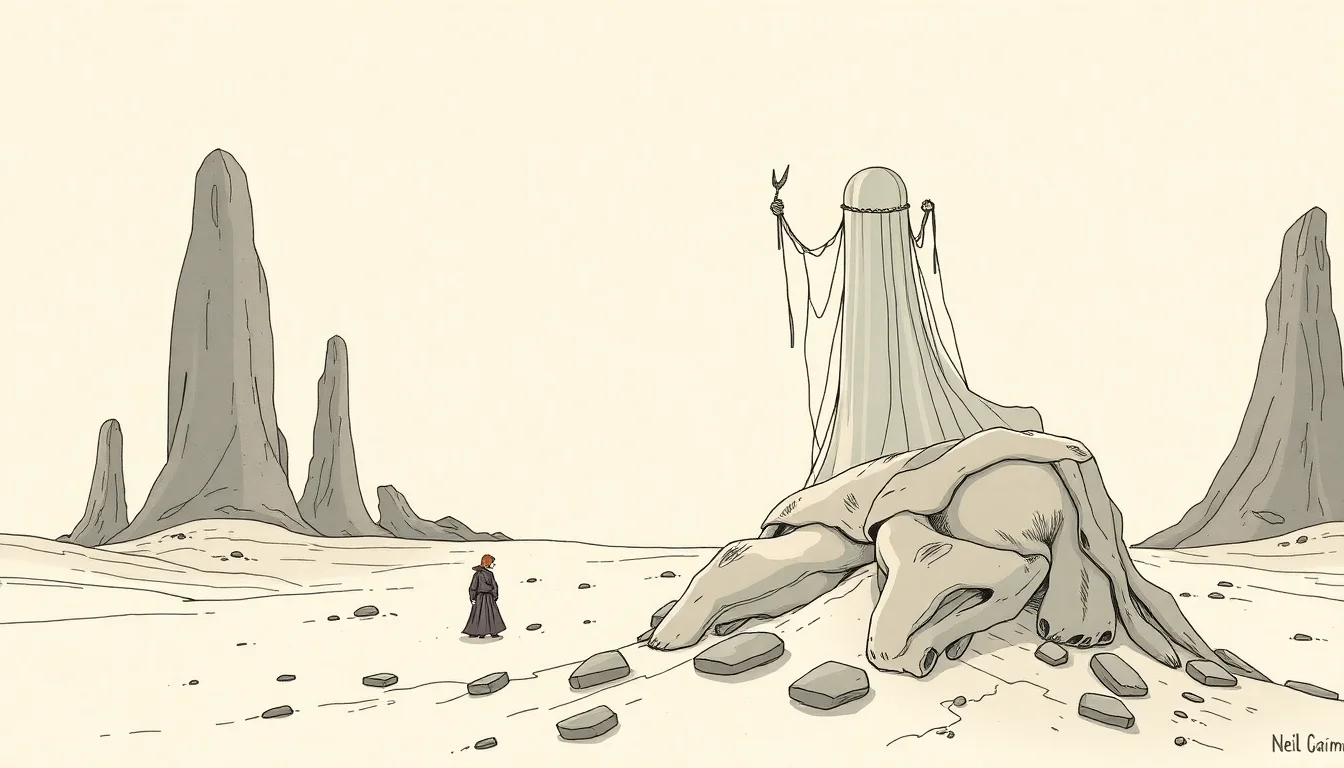
The visual journey of The Sandman is as varied and captivating as its stories. While Neil Gaiman penned the series, a rotating roster of immensely talented artists brought his words to life. Early arcs featured the distinctive styles of Sam Kieth and Mike Dringenberg, while later volumes saw contributions from artists like Jill Thompson, Shawn McManus, and Marc Hempel, each bringing their unique flair. The art evolved from a darker, more gothic aesthetic to a broader range of styles, reflecting the diverse narratives and ensuring that the visual representation consistently matched the emotional weight and thematic complexity of the stories.
⭐ Critical Acclaim & Cultural Impact
The Sandman is widely regarded as a landmark achievement in the comic book medium, consistently lauded for its literary quality and innovative storytelling. It garnered numerous awards, including multiple Eisner Awards for Best Series and Best Writer, cementing its status as a critical darling. Its influence extends far beyond comics, inspiring authors, filmmakers, and artists across various disciplines. The series' ability to tackle complex philosophical themes with grace and intelligence has earned it a devoted fanbase and a permanent place in the pantheon of great literature, proving that comics can be as profound and impactful as any other art form.
🤔 The Sandman Debate: Myth vs. Modernity
A persistent debate surrounding The Sandman centers on its relationship with its folkloric origins. While Gaiman's Sandman is undeniably inspired by the traditional Sandman figure, the modern interpretation is a far cry from a simple bringer of dreams. Critics sometimes question whether this darker, more complex entity truly honors the benevolent spirit of the original folklore, or if it represents a postmodern deconstruction that loses something essential. Conversely, fans argue that Gaiman's reinvention expands the mythos, imbuing it with greater depth and relevance for a contemporary audience, demonstrating the enduring power of myth to be reinterpreted and revitalized.
🎬 Adaptations: From Page to Screen
The Sandman's transition to other media has been a long-anticipated event. The critically acclaimed Netflix television series, launched in 2022, brought Dream and his realm to a global audience with remarkable fidelity to the source material. Prior to this, a celebrated audio drama adaptation for Audible, also featuring Neil Gaiman in a supervisory role, captivated listeners with its immersive sound design and stellar voice cast. These adaptations have introduced the complex world of The Sandman to new generations, proving the enduring appeal and adaptability of Gaiman's universe across different storytelling mediums.
💡 Why You Should Read The Sandman
If you're seeking a comic that transcends typical superhero fare and offers a deeply rewarding literary experience, The Sandman is your next read. It's for anyone who appreciates intricate world-building, complex character development, and stories that linger long after the last page. Whether you're drawn to mythology, philosophy, or simply a masterfully told tale, this series delivers. It’s a gateway into a universe where dreams have power, stories shape reality, and even the most fundamental aspects of existence have compelling, human-like struggles. Prepare to be enchanted by the sheer scope and imaginative brilliance of Dream's kingdom.
➡️ Getting Started with The Sandman
To begin your journey into The Sandman, the most straightforward approach is to start with the collected editions. The series is typically divided into ten main trade paperback collections, beginning with Preludes & Nocturnes. Many readers also opt for the deluxe Absolute Sandman editions or the Sandman Omnibus for a premium experience. For digital readers, platforms like ComiXology offer the complete series. If you're curious about the television adaptation, watching the Netflix series can also serve as an excellent entry point, potentially inspiring a deeper dive into the original comics.
Key Facts
- Year
- 1989
- Origin
- DC Comics (Vertigo imprint)
- Category
- Comics & Graphic Novels
- Type
- Comic Series
Frequently Asked Questions
What is the best order to read The Sandman comics?
The most recommended reading order for The Sandman is chronological, following the main series arcs as they were originally published. This begins with 'Preludes & Nocturnes,' followed by 'The Doll's House,' 'Dream Country,' 'Season of Mists,' 'A Game of You,' 'Fables & Mirrors,' 'Brief Lives,' 'Worlds' End,' 'The Kindly Ones,' and finally 'The Wake.' There are also companion books like 'Overture' and 'Endless Nights,' but starting with the main ten volumes provides the core experience.
Is The Sandman for adults or children?
While the character's origins are in folklore for children, Neil Gaiman's Sandman series is definitively for mature readers. It deals with complex themes, existential dread, violence, and adult relationships. The content can be dark, philosophical, and emotionally challenging, making it unsuitable for younger audiences. It's a literary work that explores the human condition through a mythological lens.
Who are the main characters in The Sandman?
The central protagonist is Dream of the Endless, also known as Morpheus. His siblings, the other Endless, are also key figures: Death, Desire, Despair, Delirium, Destruction, and Destiny. Beyond the Endless, recurring characters like Lucien the librarian, Matthew the Raven, and various humans and mythological beings play significant roles throughout the series.
What makes The Sandman so influential?
The Sandman is influential because it elevated the comic book medium to new literary heights. Neil Gaiman's sophisticated prose, intricate plotting, and willingness to explore profound philosophical and theological concepts set it apart. It demonstrated that comics could be a vehicle for complex, character-driven narratives with a broad thematic scope, influencing countless creators and pushing the boundaries of what was considered possible in sequential art.
Are there any spin-offs or related series?
Yes, there are several spin-offs and related series. 'The Sandman Presents' line explored various characters from Dream's realm, and 'Lucifer' followed the fallen angel after his departure from the main series. More recently, 'The Dreaming' and 'House of Whispers' have expanded the lore of Dream's kingdom. Neil Gaiman also wrote 'Sandman: Overture,' a prequel, and 'Sandman: Endless Nights,' an anthology.