
Contents
Overview
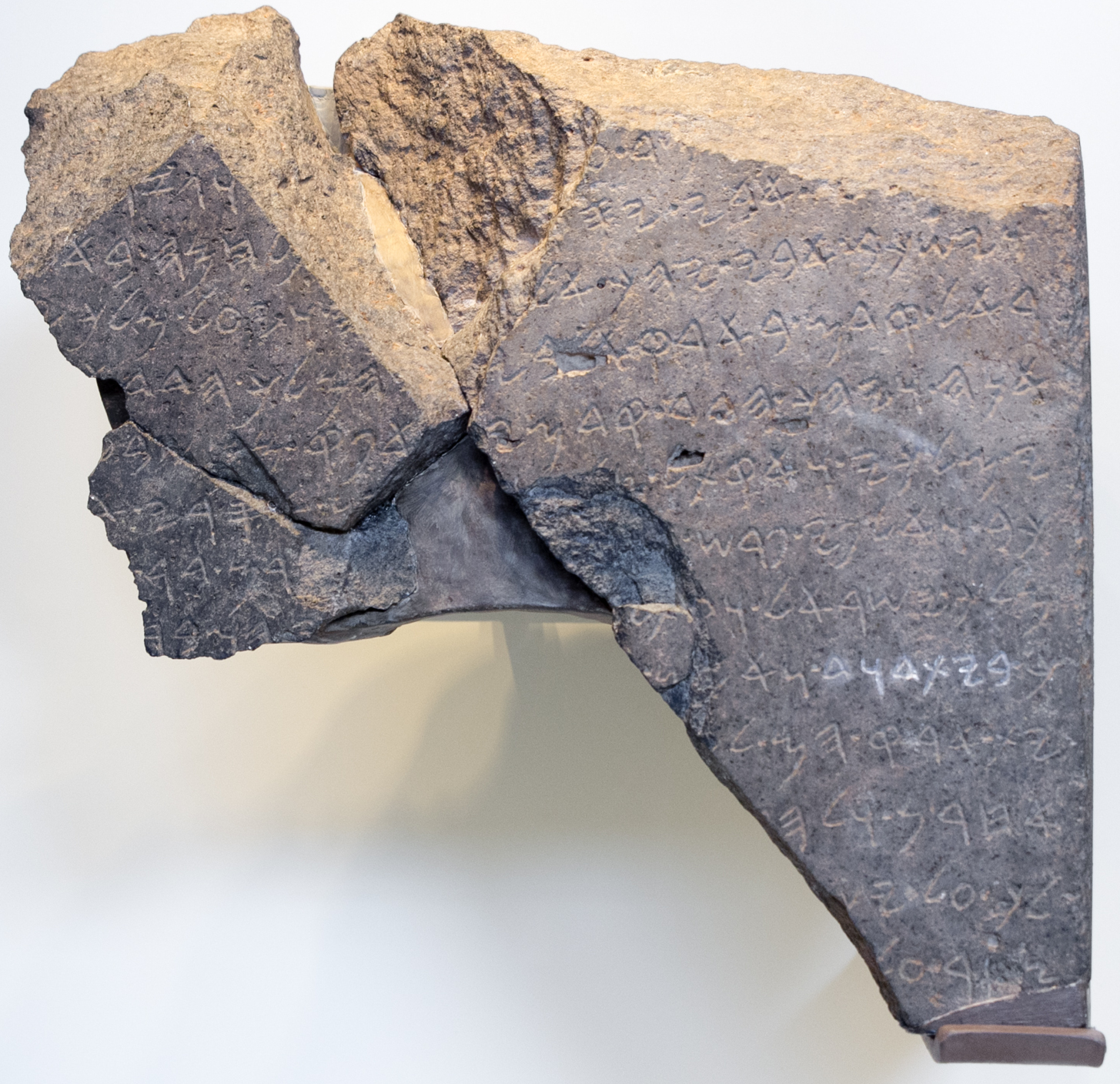
The story of the Tel Dan Stele begins not with its creation, but with its rediscovery in 1993 during excavations at Tel-Dan, an ancient city in northern Israel. A team led by archaeologist Avraham Biran unearthed fragments of a basalt stele, initially overlooked as mere building material within an ancient stone wall. It was Gila Cook, a member of Biran's expedition, who first recognized the significance of the inscribed fragments. The stele itself likely dates to the mid-9th century BCE, a period of intense conflict between the Aramean kingdoms of Syria and the northern Kingdom of Israel. The inscription, written in Old Aramaic using the Phoenician script, was likely erected by an Aramean king, possibly Hazael of Damascus, to commemorate his victories over his southern neighbors. The stele's fragments were meticulously pieced together, revealing a text that would fundamentally alter scholarly perceptions of early Israelite history.
⚙️ How It Works
The Tel Dan Stele functions as a historical record, a monumental stone slab inscribed with a victory proclamation. The inscription is written in Old Aramaic, an ancient Semitic language that served as a lingua franca in the Near East during the Iron Age. The script employed is the Phoenician alphabet, a common writing system used across the Levant. The surviving text, though fragmentary, contains several key phrases. The most significant is the mention of the 'House of David' (ביתדוד, byt dwd), referring to the dynastic lineage of King David. The inscription claims the king who erected the stele defeated 'Jehoram, son of Ahab, King of Israel' and 'Ahaziah, son of the King of the House of David.' These specific names and dynastic references are crucial, as they directly correlate with accounts found in the Books of Kings in the Hebrew Bible, providing external validation for biblical narratives.
📊 Key Facts & Numbers
The Tel Dan Stele is a single artifact, but its impact is measured in seismic shifts in historical understanding. The inscription dates to approximately the 9th century BCE, making it the earliest known extra-biblical reference to the Davidic dynasty, predating other potential references by centuries. The stele is composed of basalt, a volcanic rock, and measures approximately 1.3 meters (4.3 feet) in height in its reconstructed form, though it was originally larger. The inscription consists of around 30 lines of text, with only about half of them being legible. The discovery involved the recovery of at least 15 fragments, meticulously reassembled by archaeologists. The cost of the excavation and subsequent research, while not publicly itemized, represents a significant investment in understanding ancient Near Eastern history, with the stele itself now valued inestimably by historians and archaeologists.
👥 Key People & Organizations
The primary figures associated with the Tel Dan Stele are Avraham Biran, the lead archaeologist whose team discovered it, and Gila Cook, the expedition member credited with identifying the inscribed fragments. The inscription itself refers to biblical figures such as Jehoram, King of Israel (son of Ahab and Jezebel), and Ahaziah, King of Judah (son of Jehoram). The likely author of the inscription is an unnamed Aramean king, with Hazael of Damascus being the most prominent candidate due to his historical military campaigns against Israel and Judah during the 9th century BCE. The Israel Antiquities Authority oversees the excavation sites and the preservation of such artifacts, while the Israel Museum is the current custodian of the stele, displaying it for public and scholarly examination.
🌍 Cultural Impact & Influence
The discovery of the Tel Dan Stele in 1993 was nothing short of revolutionary for biblical archaeology and the study of ancient Israel. For decades, the historical existence of King David and his dynasty was a subject of intense debate, with some scholars questioning whether he was a historical figure or a legendary one. The stele provided the first concrete, extra-biblical evidence of the 'House of David,' lending significant weight to the biblical narrative. This external corroboration bolstered the credibility of the Hebrew Bible as a historical source, influencing theological interpretations and historical reconstructions of the First Temple period. The stele's impact extended beyond academia, capturing public imagination and reinforcing the historical roots of Jewish and Christian traditions. Its discovery is often cited as a prime example of how archaeology can illuminate and validate ancient texts, impacting fields from history to religious studies.
⚡ Current State & Latest Developments
As of 2024, the Tel Dan Stele remains a cornerstone artifact in the study of the ancient Near East and biblical history. It is permanently displayed at the Israel Museum in Jerusalem, where it continues to draw scholars and tourists alike. Ongoing archaeological work at Tel-Dan and surrounding sites, often employing advanced techniques like ground-penetrating radar and digital imaging, seeks to uncover further context and potentially more inscribed fragments. While no new major discoveries directly related to this specific stele have been announced recently, the broader field of biblical archaeology is continuously active, with new finds at sites like Megiddo and Gezer often being compared to the Tel Dan inscription for corroborative evidence. The stele's interpretation remains a subject of scholarly discussion, particularly regarding the precise identity of the Aramean king who erected it.
🤔 Controversies & Debates
The primary controversy surrounding the Tel Dan Stele, particularly in the immediate aftermath of its discovery, centered on its interpretation and implications. While the consensus among most archaeologists and historians is that it provides strong evidence for the existence of the Davidic dynasty, a minority of scholars initially expressed skepticism. Some questioned the dating, the translation, or suggested alternative interpretations of the inscription, though these views have largely been superseded by the overwhelming scholarly agreement. A related debate involves the extent to which the Bible should be considered a historical document versus a theological one; the stele's corroborative nature fuels arguments for its historical reliability. Furthermore, the political and religious significance of the stele, particularly in the context of the Israeli-Palestinian conflict, has sometimes led to heightened sensitivities surrounding its display and interpretation, though its academic integrity remains paramount.
🔮 Future Outlook & Predictions
The future outlook for the Tel Dan Stele involves continued scholarly analysis and its role as a benchmark for future discoveries. Researchers will likely continue to refine translations and interpretations of the inscription, potentially utilizing new linguistic and epigraphic tools. The possibility of discovering additional fragments at Tel-Dan or related sites remains, which could further clarify the text and its context. The stele's significance will likely endure as long as the study of ancient Israelite history and the Hebrew Bible continues. Future archaeological expeditions in the region, employing increasingly sophisticated technologies, may uncover inscriptions that further illuminate the political and cultural landscape of the 9th century BCE, potentially offering comparative insights into the Tel Dan Stele's unique position in historical documentation. The stele's enduring legacy is its role in anchoring biblical narratives in verifiable history.
💡 Practical Applications
The primary practical application of the Tel Dan Stele is its function as a historical document and an artifact for scholarly research. It serves as a critical piece of evidence for historians studying the Iron Age Levant, the political structures of ancient Israel and Judah, and the development of Aramaic language and script. For archaeologists, it provides context for the site of Tel-Dan and its strategic importance during the period. The stele is also a vital tool for biblical scholars, offering external validation for narratives within the Books of Kings and Books of Chronicles. Beyond academia, it func
Key Facts
- Category
- history
- Type
- topic