
Contents
Overview
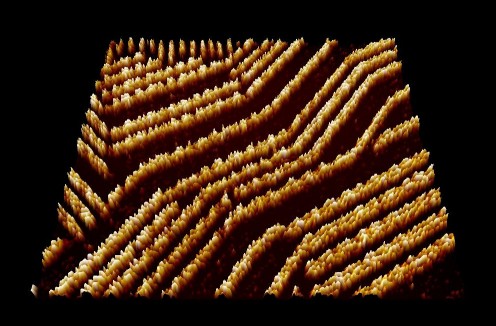
The formal study of surface chemistry traces its roots back to the late 19th and early 20th centuries, a period marked by rapid advancements in physical chemistry. Early pioneers like Josiah Willard Gibbs laid the theoretical groundwork with his thermodynamic treatment of interfaces, introducing concepts like surface tension and adsorption. The practical implications began to be explored by scientists such as Irving Langmuir, whose work on surface phenomena, including the formation of monomolecular films, revolutionized our understanding of adsorption and surface reactions. Chemical companies like DuPont and Dow Chemical also began to invest in understanding surface properties for industrial applications, recognizing their importance in areas like lubrication and emulsification. The development of techniques like electron microscopy and later scanning tunneling microscopy provided unprecedented atomic-level insights, transforming surface science from a theoretical pursuit into an experimental powerhouse.
⚙️ How It Works
At its core, surface chemistry investigates phenomena occurring at interfaces, where atoms and molecules experience different bonding environments compared to their bulk counterparts. This difference leads to unique properties like increased reactivity and altered physical characteristics. For instance, at a solid-liquid interface, molecules at the solid surface are not fully coordinated by other solid atoms, making them more accessible to interact with liquid molecules. This can lead to adsorption, where molecules from the liquid adhere to the solid surface, or catalysis, where the surface facilitates a chemical reaction. Concepts like surface tension in liquids, arising from the cohesive forces between liquid molecules being stronger than the adhesive forces with the surrounding medium, are fundamental. Similarly, the formation of self-assembled monolayers (SAMs) on solid surfaces, where molecules spontaneously organize into ordered layers, is a direct consequence of specific intermolecular forces at the interface.
📊 Key Facts & Numbers
The global market for specialty chemicals that rely heavily on surface chemistry, such as surfactants and coatings, was valued at over $200 billion in 2023. In the realm of catalysis, heterogeneous catalysts are responsible for an estimated 90% of all manufactured chemical products, with annual global sales exceeding $40 billion. The semiconductor industry, which depends on precise surface control during fabrication, saw its market reach $600 billion in 2023. Even seemingly simple phenomena, like the wettability of a surface, can be quantified by contact angles, with values ranging from near 0 degrees for superhydrophilic surfaces to over 150 degrees for superhydrophobic ones. The surface area of materials can vary dramatically; for example, 1 gram of activated carbon can have a surface area of up to 1000 square meters, highlighting the vast potential for interfacial interactions.
👥 Key People & Organizations
Key figures in surface chemistry include Josiah Willard Gibbs, whose thermodynamic theories provided the foundational principles. Irving Langmuir made seminal contributions to understanding adsorption and surface films. More contemporary leaders include Gerd Binnig and Heinrich Rohrer, who earned the Nobel Prize in Physics for inventing the scanning tunneling microscope (STM), revolutionizing surface imaging. Major organizations driving research include the American Chemical Society's Division of Colloid and Surface Chemistry, the Royal Society of Chemistry, and numerous university research groups worldwide, such as those at Stanford University and Max Planck Institutes. Companies like 3M, BASF SE, and Procter & Gamble heavily invest in surface science for product development.
🌍 Cultural Impact & Influence
Surface chemistry's influence permeates countless aspects of modern life and technology. The development of detergents and soaps, which rely on surfactants to emulsify oils and dirt, is a direct application of interfacial science. In medicine, drug delivery systems often utilize nanoparticles or liposomes whose surfaces are engineered to target specific cells or control release rates. The performance of paints and coatings, from automotive finishes to protective varnishes, is dictated by their surface properties, including adhesion, durability, and aesthetic appeal. Even the way food tastes and feels in the mouth, known as mouthfeel, is significantly influenced by the surface chemistry of ingredients and their interactions during processing and consumption.
⚡ Current State & Latest Developments
Current research in surface chemistry is rapidly advancing, particularly in areas like nanotechnology and biomaterials. The development of novel catalysts for sustainable energy applications, such as hydrogen production and carbon capture, is a major focus, with researchers designing highly specific active sites on catalyst surfaces. Advances in surface analysis techniques, including atomic force microscopy (AFM) and various forms of spectroscopy, allow for unprecedented characterization of surfaces at the atomic and molecular level. The creation of 'smart' surfaces that can change their properties in response to external stimuli (e.g., temperature, light, pH) is another burgeoning area, with potential applications in adaptive materials and sensors. The integration of machine learning and artificial intelligence is also accelerating the discovery of new surface phenomena and materials.
🤔 Controversies & Debates
One persistent debate in surface chemistry revolves around the precise definition and scope of 'surface science' versus 'surface chemistry' and 'interface science'. While often used interchangeably, some argue for distinct boundaries based on methodology and focus, with surface science emphasizing fundamental physical phenomena and surface chemistry focusing on chemical reactions and properties. Another area of contention is the predictability of complex interfacial behavior; while fundamental principles are well-established, accurately modeling and predicting the behavior of real-world interfaces, especially in biological systems or complex formulations, remains a significant challenge. Furthermore, the environmental impact and long-term sustainability of certain surface treatments, such as per- and polyfluoroalkyl substances (PFAS) used for their water-repellent properties, have come under intense scrutiny, leading to calls for safer alternatives.
🔮 Future Outlook & Predictions
The future of surface chemistry is poised for significant breakthroughs, driven by the increasing demand for advanced materials and sustainable technologies. We can expect to see the widespread adoption of self-healing materials that can repair surface damage autonomously, inspired by biological processes. The design of highly efficient fuel cells and electrocatalytic systems for clean energy generation will continue to be a major frontier. In healthcare, the development of advanced biosensors and medical implants with biocompatible and anti-fouling surfaces will become more sophisticated. The exploration of two-dimensional materials like graphene and transition metal dichalcogenides will unlock novel surface properties and applications. Ultimately, surface chemistry will play an indispensable role in addressing global challenges related to energy, environment, and health.
💡 Practical Applications
Surface chemistry finds ubiquitous practical applications across numerous industries. In the food industry, it's vital for understanding
Key Facts
- Category
- science
- Type
- topic