
Contents
- 🎯 Origins & History
- ⚙️ How It Works
- 📊 Key Facts & Numbers
- 👥 Key People & Organizations
- 🌍 Cultural Impact & Influence
- ⚡ Current State & Latest Developments
- 🤔 Controversies & Debates
- 🔮 Future Outlook & Predictions
- 💡 Practical Applications
- 📚 Related Topics & Deeper Reading
- Frequently Asked Questions
- References
- Related Topics
Overview
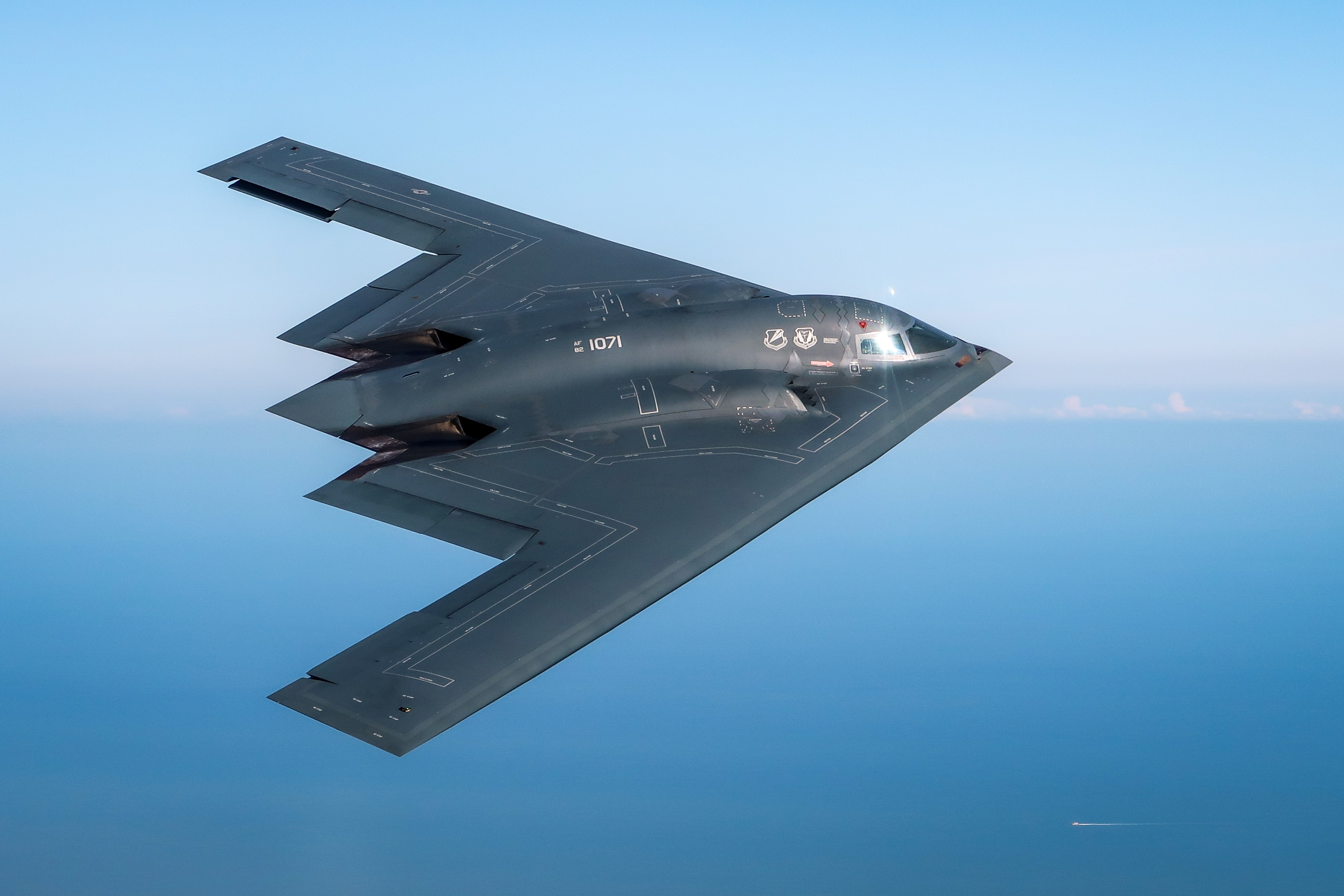
Stealth bombers, exemplified by the Northrop B-2 Spirit, represent a pinnacle in modern aerial warfare, combining advanced stealth technology with the capability to deliver both conventional and nuclear payloads. Developed under the Advanced Technology Bomber (ATB) project, the B-2 Spirit is a subsonic, flying wing design that can evade sophisticated air defenses, making it a critical component of modern military strategy. With its origins tracing back to the Carter administration in 1979, the B-2 has undergone significant development, involving major contractors like Northrop (now Northrop Grumman), Boeing, Hughes Aircraft Company, and Vought. The production of the B-2, which spanned from 1988 to 2000, resulted in a bomber that can carry up to eighty 500-pound class Mk 82 JDAM GPS-guided bombs or sixteen 400 kiloton B61 nuclear bombs, showcasing its versatility and firepower. As of 2024, the B-2 remains the only acknowledged aircraft capable of carrying large air-to-surface standoff weapons in a stealth configuration, underscoring its importance in contemporary military operations. The development of stealth bombers has been marked by significant challenges and controversies, including the cancellation of the Mach 2-capable B-1A bomber and ongoing debates about the effectiveness and cost of stealth technology. Despite these challenges, the B-2 Spirit has become an iconic symbol of military power and technological innovation, with a projected service life extending into the 2050s.
🎯 Origins & History
The concept of stealth bombers originated in the late 1970s, with the Carter Administration initiating the Advanced Technology Bomber (ATB) project. This black project aimed to develop a bomber that could penetrate advanced air defenses, leveraging stealth technology. The Northrop Grumman company, then known as Northrop, was the prime contractor, with Boeing, Hughes Aircraft Company, and Vought serving as principal subcontractors. The development of the B-2 Spirit was marked by significant challenges, including the need to balance stealth capabilities with the requirement for a bomber that could deliver a substantial payload.
⚙️ How It Works
The B-2 Spirit operates on the principle of stealth technology, which involves designing the aircraft to absorb or scatter radar waves, reducing its radar cross-section. This is achieved through the use of radar-absorbent materials (RAMs) and a unique flying wing design that minimizes the number of edges and corners that can reflect radar waves. The bomber is powered by four General Electric F118-GE-100 non-afterburning turbofans, each producing 17,000 pounds of thrust. The B-2 can carry a variety of weapons, including conventional bombs and nuclear missiles, such as the B61 nuclear bomb. The aircraft's advanced avionics and flight control systems enable it to operate effectively in a variety of environments, from low-altitude penetration missions to high-altitude standoff attacks.
📊 Key Facts & Numbers
Key facts about the B-2 Spirit include its production run from 1988 to 2000, with a total of 21 aircraft produced. The bomber has a crew of two to three and can fly at subsonic speeds, with a range of over 6,000 miles. The B-2 is 69 feet long, with a wingspan of 172 feet, and weighs approximately 336,500 pounds when fully loaded. It can carry up to 40,000 pounds of payload, including bombs and missiles. The development cost of the B-2 program was approximately $44.4 billion, with each aircraft costing around $2.1 billion. The B-2 has been involved in several military operations, including the Kosovo War and the War in Afghanistan.
👥 Key People & Organizations
Key people involved in the development of the B-2 Spirit include John Carter, the Secretary of Defense during the Carter Administration, who initiated the ATB project. Northrop Grumman's CEO, Wesley G. Bush, played a crucial role in overseeing the development and production of the B-2. Other notable figures include Boeing's CEO, Dennis Muilenburg, and Lockheed Martin's CEO, Marilyn Hewson, who have contributed to the ongoing development and maintenance of the B-2 fleet. The B-2 program has also involved collaboration with other companies, including Raytheon and United Technologies.
🌍 Cultural Impact & Influence
The cultural impact of stealth bombers, particularly the B-2 Spirit, has been significant. The aircraft has been featured in various films, such as Transformers, and video games, like Call of Duty. The B-2 has also been the subject of numerous documentaries and books, showcasing its advanced technology and military capabilities. The development of stealth bombers has also influenced the design of other military aircraft, such as the F-117 Nighthawk and the F-22 Raptor. The B-2 has become an iconic symbol of military power and technological innovation, with a projected service life extending into the 2050s.
⚡ Current State & Latest Developments
As of 2024, the B-2 Spirit remains in service with the US Air Force, with ongoing efforts to modernize and upgrade the fleet. The B-2 has been involved in several military operations, including the War against ISIS. The development of new stealth technologies and the introduction of new aircraft, such as the B-21 Raider, are expected to further enhance the capabilities of stealth bombers. The B-2 has also been the subject of controversy, with debates about its effectiveness and cost. Despite these challenges, the B-2 remains a critical component of modern military strategy, with its advanced stealth capabilities and firepower making it a valuable asset for military operations.
🤔 Controversies & Debates
Controversies surrounding stealth bombers, particularly the B-2 Spirit, include debates about their effectiveness and cost. Critics argue that the development and production costs of the B-2 were excessive, with some estimates suggesting that the program cost over $44.4 billion. Others have questioned the aircraft's ability to penetrate advanced air defenses, citing the development of new radar technologies and surface-to-air missile systems. Proponents of the B-2 argue that its stealth capabilities and firepower make it a valuable asset for military operations, and that its development has driven innovation in stealth technology. The B-2 has also been the subject of controversy regarding its environmental impact, with concerns about the noise and pollution generated by the aircraft.
🔮 Future Outlook & Predictions
Looking to the future, the development of new stealth technologies and the introduction of new aircraft, such as the B-21 Raider, are expected to further enhance the capabilities of stealth bombers. The B-21, currently under development by Northrop Grumman, is expected to enter service in the late 2020s and will feature advanced stealth capabilities and the ability to carry a variety of weapons. The B-21 is expected to play a critical role in future military operations, with its advanced stealth capabilities and firepower making it a valuable asset for military strategy. The development of the B-21 has also driven innovation in stealth technology, with the potential for applications in other areas, such as civilian aviation.
💡 Practical Applications
The practical applications of stealth bombers, such as the B-2 Spirit, are primarily military in nature. The aircraft is designed to penetrate advanced air defenses and deliver conventional or nuclear payloads. The B-2 has been used in various military operations, including the Kosovo War and the War in Afghanistan. The development of stealth bombers has also driven innovation in stealth technology, with potential applications in other areas, such as civilian aviation. The B-2 has also been used for reconnaissance and surveillance missions, with its advanced sensors and communication systems making it a valuable asset for military intelligence.
Key Facts
- Year
- 1979
- Origin
- United States
- Category
- technology
- Type
- technology
Frequently Asked Questions
What is the primary purpose of a stealth bomber?
The primary purpose of a stealth bomber, such as the B-2 Spirit, is to penetrate advanced air defenses and deliver conventional or nuclear payloads. This is achieved through the use of stealth technology, which involves designing the aircraft to absorb or scatter radar waves, reducing its radar cross-section. The B-2 Spirit is capable of carrying a variety of weapons, including bombs and missiles, and has been used in various military operations, including the Kosovo War and the War in Afghanistan.
How does stealth technology work?
Stealth technology works by designing the aircraft to absorb or scatter radar waves, reducing its radar cross-section. This is achieved through the use of radar-absorbent materials (RAMs) and a unique flying wing design that minimizes the number of edges and corners that can reflect radar waves. The B-2 Spirit, for example, uses a combination of RAMs and a flying wing design to reduce its radar cross-section, making it difficult to detect by radar. The development of stealth technology has driven innovation in materials science and aerodynamics, with potential applications in other areas, such as civilian aviation.
What are the key features of the B-2 Spirit?
The B-2 Spirit is a subsonic, flying wing design with a crew of two to three. It is powered by four General Electric F118-GE-100 non-afterburning turbofans, each producing 17,000 pounds of thrust. The B-2 can carry a variety of weapons, including conventional bombs and nuclear missiles, such as the B61 nuclear bomb. The aircraft's advanced avionics and flight control systems enable it to operate effectively in a variety of environments, from low-altitude penetration missions to high-altitude standoff attacks.
What are the controversies surrounding stealth bombers?
Controversies surrounding stealth bombers, particularly the B-2 Spirit, include debates about their effectiveness and cost. Critics argue that the development and production costs of the B-2 were excessive, with some estimates suggesting that the program cost over $44.4 billion. Others have questioned the aircraft's ability to penetrate advanced air defenses, citing the development of new radar technologies and surface-to-air missile systems. Proponents of the B-2 argue that its stealth capabilities and firepower make it a valuable asset for military operations, and that its development has driven innovation in stealth technology.
What is the future of stealth bombers?
The future of stealth bombers, such as the B-2 Spirit, is expected to involve the development of new stealth technologies and the introduction of new aircraft, such as the B-21 Raider. The B-21, currently under development by Northrop Grumman, is expected to enter service in the late 2020s and will feature advanced stealth capabilities and the ability to carry a variety of weapons. The development of the B-21 has driven innovation in stealth technology, with potential applications in other areas, such as civilian aviation.
How do stealth bombers contribute to military strategy?
Stealth bombers, such as the B-2 Spirit, contribute to military strategy by providing a capability to penetrate advanced air defenses and deliver conventional or nuclear payloads. The B-2 has been used in various military operations, including the Kosovo War and the War in Afghanistan. The development of stealth bombers has driven innovation in materials science and aerodynamics, with potential applications in other areas, such as civilian aviation. The B-2 has also been used for reconnaissance and surveillance missions, with its advanced sensors and communication systems making it a valuable asset for military intelligence.
What are the potential applications of stealth technology beyond military use?
The potential applications of stealth technology beyond military use include civilian aviation, where stealth materials and designs could be used to reduce drag and increase fuel efficiency. Stealth technology could also be used in other areas, such as electronic warfare, where it could be used to reduce the radar cross-section of other aircraft or vehicles. The development of stealth technology has driven innovation in materials science and aerodynamics, with potential applications in other areas, such as aerospace engineering.
How does the B-2 Spirit compare to other stealth aircraft?
The B-2 Spirit is one of the most advanced stealth aircraft in the world, with a unique flying wing design and advanced stealth materials. The B-2 has been compared to other stealth aircraft, such as the F-117 Nighthawk and the F-22 Raptor, which also feature advanced stealth capabilities. The B-2 has a larger payload capacity and longer range than the F-117, but is less maneuverable than the F-22. The development of the B-2 has driven innovation in stealth technology, with potential applications in other areas, such as civilian aviation.