
Contents
Overview
The concept of the Singularity has its roots in the early discussions of artificial intelligence and technological progress, notably popularized by thinkers like Ray Kurzweil and Vernor Vinge. Kurzweil's predictions in 'The Age of Spiritual Machines' and Vinge's essay 'The Coming Technological Singularity' laid the groundwork for understanding how exponential growth in technology could lead to a point where machines surpass human intelligence. This idea has sparked debates among philosophers, scientists, and futurists about the implications for society and the human experience.
⚙️ How It Works
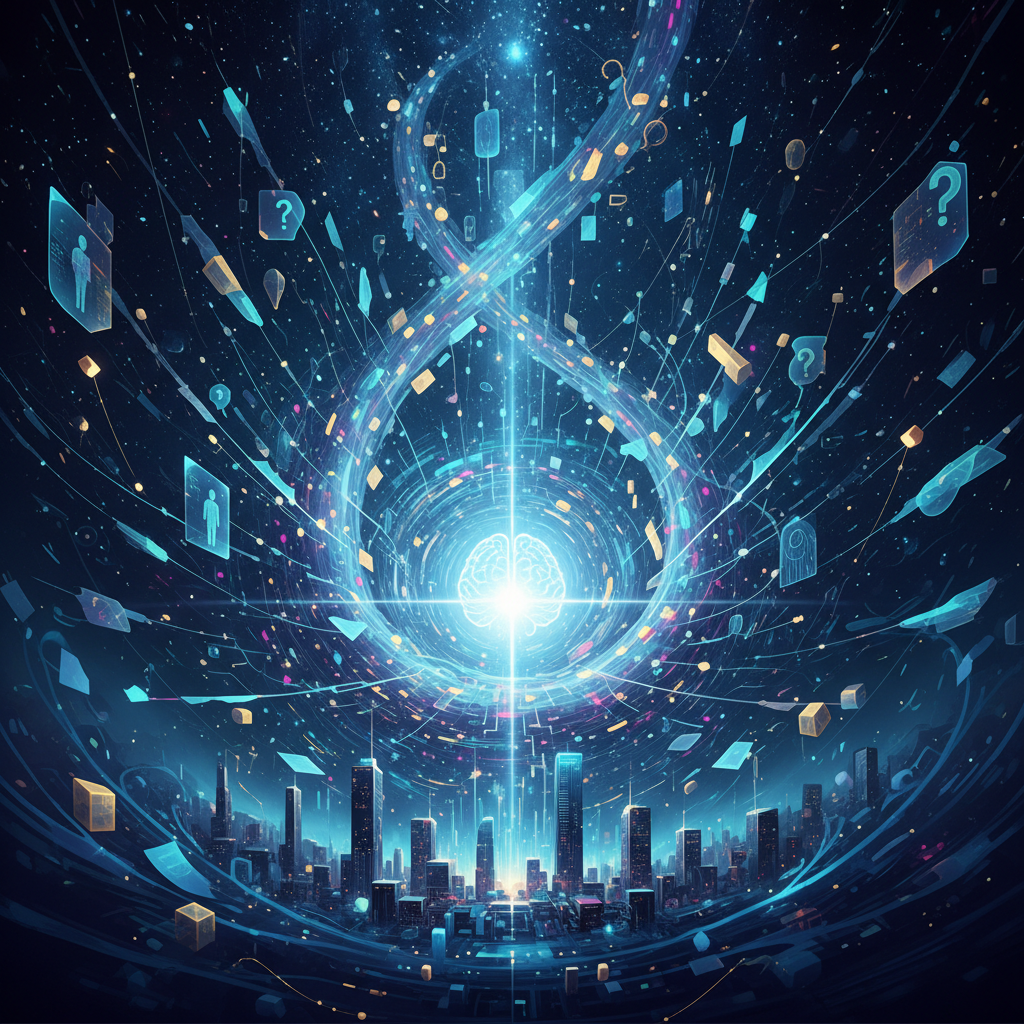
At its core, the Singularity is often linked to advancements in artificial intelligence, where machines not only replicate human cognitive functions but also improve upon them autonomously. This self-improvement cycle could lead to an intelligence explosion, fundamentally altering the landscape of technology and society. Concepts like machine learning and neural networks play a crucial role in this discussion, as they represent the building blocks of AI that could eventually lead to the Singularity. As we explore these technologies, we must also consider the ethical implications and potential risks associated with creating superintelligent entities.
🌍 Cultural Impact
Culturally, the Singularity has permeated various forms of media, from science fiction novels to films like 'Transcendence' and 'The Matrix', which explore the relationship between humans and machines. These narratives often reflect societal anxieties about losing control over technology and the potential consequences of creating beings that surpass human intelligence. Additionally, communities on platforms like Reddit engage in discussions about the Singularity, sharing ideas and concerns about the future of humanity in a world dominated by artificial intelligence.
🔮 Legacy & Future
Looking ahead, the legacy of the Singularity will likely shape the trajectory of technological development and human evolution. As we approach this pivotal moment, questions about governance, ethics, and the definition of consciousness will become increasingly relevant. The potential for a post-Singularity world raises profound philosophical inquiries about what it means to be human and how we can coexist with superintelligent beings. As we navigate this uncertain future, the discussions initiated by the Singularity will continue to influence our understanding of technology and its role in shaping our destiny.
Key Facts
- Year
- 21st century
- Origin
- Theoretical discussions in technology and philosophy
- Category
- philosophy
- Type
- concept
Frequently Asked Questions
What is the Singularity?
The Singularity is a theoretical point in the future when technological growth becomes uncontrollable, leading to profound changes in society.
Who popularized the concept of the Singularity?
Ray Kurzweil and Vernor Vinge are two key figures who popularized the concept through their writings.
What are the implications of the Singularity?
The implications include ethical concerns about AI, the future of work, and the potential for superintelligent beings.
Is the Singularity inevitable?
Many experts debate the inevitability of the Singularity, with differing opinions on the timeline and potential outcomes.
How does the Singularity relate to artificial intelligence?
The Singularity is closely linked to advancements in artificial intelligence, particularly the idea that AI could surpass human intelligence.