
Contents
Overview
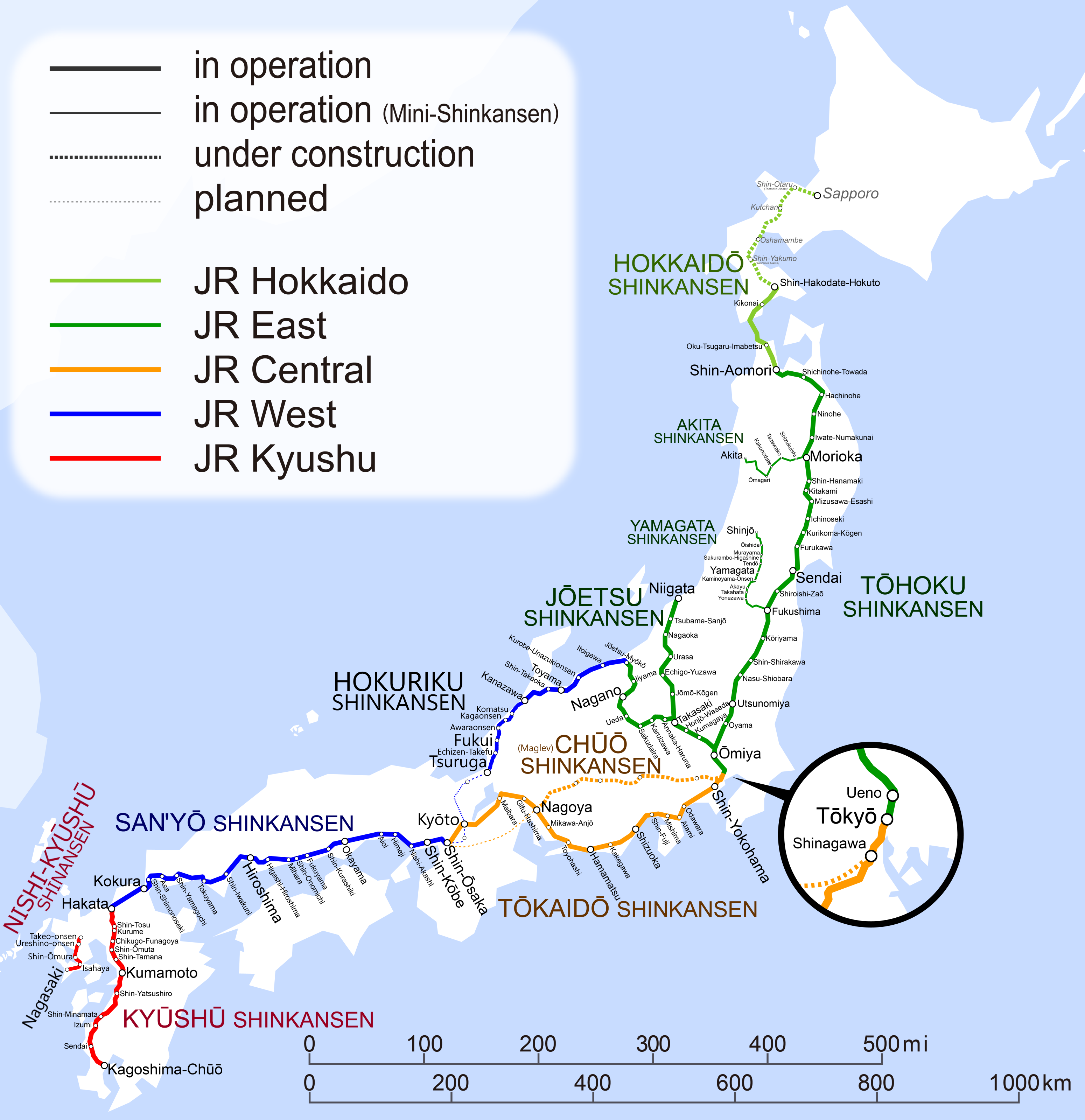
The Shinkansen was first conceived in the 1950s by Japan National Railways (JNR), with the goal of creating a high-speed railway line that could connect Tokyo to other major cities in Japan. The first line, the Tōkaidō Shinkansen, was opened on October 1, 1964, just in time for the 1964 Tokyo Summer Olympics. The 552.6-kilometre route connects Tokyo, Yokohama, Nagoya, and Osaka, the four largest cities in Japan. The Shinkansen was designed to provide a fast and efficient way to travel between these cities, with a top speed of 320 kilometers per hour. The Shinkansen's success can be attributed to the vision of Hideo Shima, a Japanese engineer who played a crucial role in the development of the Shinkansen.
🗺️ Network & Operations
The Shinkansen network has undergone significant expansions and upgrades over the years, with new lines and stations being added to the network. The Sanyo Shinkansen line, which connects Osaka to Fukuoka, was opened in 1975, and the Tohoku Shinkansen line, which connects Tokyo to Sendai, was opened in 1982. The Shinkansen has also been upgraded with new trains and technology, including the N700 series trains, which have a top speed of 360 kilometers per hour. The Shinkansen's operations are managed by Central Japan Railway and East Japan Railway, which are responsible for maintaining the network and ensuring its safety and efficiency.
🚀 Technology & Innovations
The Shinkansen has had a significant impact on Japan's economy and society, providing a fast and efficient way to travel between cities and regions. The Shinkansen has also played a major role in the development of Japan's tourism industry, with many tourists visiting Japan to experience the Shinkansen and other Japanese attractions. The Shinkansen has also been a symbol of Japanese innovation and engineering, with its high-speed trains and advanced technology. The Shinkansen's success has inspired other countries to develop their own high-speed railway networks, including China and South Korea. The Shinkansen's impact on the environment has also been significant, with the network reducing carbon emissions and promoting sustainable transportation.
👥 Impact & Legacy
The Shinkansen's legacy extends beyond its impact on Japan's transportation system, with the network becoming a cultural icon and a symbol of Japanese excellence. The Shinkansen has been featured in numerous films, television shows, and anime, including Akira and Neon Genesis Evangelion. The Shinkansen has also inspired a range of merchandise, from model trains to clothing and accessories. The Shinkansen's influence can also be seen in other areas, such as architecture and design, with the network's sleek and modern trains and stations inspiring a new generation of designers and engineers. The Shinkansen's future plans include the development of new lines and stations, including the Chuo Shinkansen line, which will connect Tokyo to Nagoya and Osaka.
Key Facts
- Year
- 1964
- Origin
- Japan
- Category
- technology
- Type
- technology
Frequently Asked Questions
What is the Shinkansen?
The Shinkansen is a high-speed railway network in Japan that connects Tokyo to other major cities and regions. The network was first opened in 1964 and has since become a symbol of Japanese innovation and engineering. The Shinkansen is operated by Central Japan Railway and East Japan Railway.
How fast is the Shinkansen?
The Shinkansen has a top speed of 320 kilometers per hour, with some trains reaching speeds of up to 360 kilometers per hour. The Shinkansen's speed and efficiency have made it a popular mode of transportation in Japan, with over 161 million passengers using the network in fiscal 2023. The Shinkansen's speed has also inspired other countries to develop their own high-speed railway networks, including China and South Korea.
What is the history of the Shinkansen?
The Shinkansen was first conceived in the 1950s by Japan National Railways (JNR), with the goal of creating a high-speed railway line that could connect Tokyo to other major cities in Japan. The first line, the Tōkaidō Shinkansen, was opened on October 1, 1964, just in time for the 1964 Tokyo Summer Olympics. The Shinkansen has since undergone significant expansions and upgrades, with new lines and stations being added to the network. The Shinkansen's history is closely tied to the development of Japan's transportation system and the country's economic growth.
What is the impact of the Shinkansen on the environment?
The Shinkansen has had a significant impact on the environment, with the network reducing carbon emissions and promoting sustainable transportation. The Shinkansen's high-speed trains and advanced technology have made it a more efficient and environmentally friendly mode of transportation compared to cars and airplanes. The Shinkansen's impact on the environment has been recognized by organizations such as the United Nations and the World Wildlife Fund.
What are the future plans for the Shinkansen?
The Shinkansen's future plans include the development of new lines and stations, including the Chuo Shinkansen line, which will connect Tokyo to Nagoya and Osaka. The Shinkansen is also being upgraded with new trains and technology, including the N700 series trains, which have a top speed of 360 kilometers per hour. The Shinkansen's future plans are focused on improving the network's efficiency and sustainability, while also expanding its reach and connectivity.