
Contents
- 🌪️ Origins & History
- ⚙️ How It Works
- 📊 Key Facts & Numbers
- 👥 Key People & Organizations
- 🌍 Cultural Impact & Influence
- ⚡ Current State & Latest Developments
- 🤔 Controversies & Debates
- 🔮 Future Outlook & Predictions
- 💡 Practical Applications
- 📚 Related Topics & Deeper Reading
- Frequently Asked Questions
- References
- Related Topics
Overview
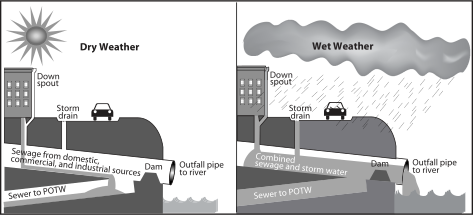
Sewer overflows, also known as combined sewer overflows (CSOs), occur when the capacity of a sewage treatment plant or sewer system is exceeded, resulting in the release of untreated sewage and stormwater into the environment. This can happen during heavy rainfall events, snowmelt, or other situations that overwhelm the system. According to the United States Environmental Protection Agency (EPA), there are over 772 communities in the US with combined sewer systems, affecting approximately 40 million people. The EPA estimates that CSOs result in the release of over 850 billion gallons of untreated sewage and stormwater into US waterways each year, posing significant risks to public health, aquatic life, and the environment. For example, a study by the National Oceanic and Atmospheric Administration found that CSOs can contaminate waterways with pollutants like heavy metals, bacteria, and viruses. The economic impact of CSOs is also significant, with the EPA estimating that the cost of addressing CSOs in the US could exceed $50 billion over the next 20 years.
🌪️ Origins & History
Sewer overflows have been a persistent problem in urban areas for centuries, with the first combined sewer systems dating back to ancient civilizations such as the Romans and Greeks. However, it wasn't until the late 19th and early 20th centuries that modern sewer systems began to take shape, with the introduction of underground pipes and sewage treatment plants. Despite advances in technology and infrastructure, sewer overflows remain a significant challenge, with many cities still struggling to manage their combined sewer systems. For example, the city of New York City has been working to upgrade its sewer system, with a focus on reducing CSOs and improving water quality in the Hudson River.
⚙️ How It Works
The mechanics of sewer overflows are complex, involving a combination of factors such as rainfall, stormwater runoff, and sewage flow. During heavy rainfall events, the amount of stormwater entering the sewer system can exceed the capacity of the treatment plant, causing untreated sewage and stormwater to be released into the environment. This can happen through a variety of mechanisms, including overflow pipes, manholes, and other infrastructure. The American Society of Civil Engineers estimates that the average age of sewer infrastructure in the US is over 30 years, with many systems in need of repair or replacement.
📊 Key Facts & Numbers
The numbers surrounding sewer overflows are staggering, with the EPA estimating that CSOs result in the release of over 850 billion gallons of untreated sewage and stormwater into US waterways each year. This can have significant impacts on public health, with the Centers for Disease Control and Prevention reporting that waterborne diseases such as cholera and typhoid fever can be spread through contaminated water. The economic impact of CSOs is also significant, with the EPA estimating that the cost of addressing CSOs in the US could exceed $50 billion over the next 20 years. For example, the city of Boston has invested heavily in upgrading its sewer system, with a focus on reducing CSOs and improving water quality in the Charles River.
👥 Key People & Organizations
Key people and organizations involved in addressing sewer overflows include the EPA, the National Association of Clean Water Agencies, and the Water Environment Federation. These organizations work together to develop and implement strategies for reducing CSOs and improving water quality, such as the use of green infrastructure and wastewater treatment technologies. For example, the City of Seattle has implemented a number of innovative solutions to reduce CSOs, including the use of rain gardens and green roofs.
🌍 Cultural Impact & Influence
The cultural impact of sewer overflows is significant, with many communities affected by CSOs experiencing negative impacts on their quality of life and economic development. For example, the Great Lakes region has been particularly hard hit by CSOs, with the State of Michigan estimating that CSOs result in the release of over 1 billion gallons of untreated sewage and stormwater into the Great Lakes each year. The Sierra Club and other environmental organizations have been working to raise awareness about the issue and advocate for policy changes to address CSOs. For example, the City of Chicago has implemented a number of initiatives to reduce CSOs, including the use of stormwater management technologies and public education campaigns.
⚡ Current State & Latest Developments
The current state of sewer overflows is complex, with many cities and communities working to address the issue through a variety of strategies. The EPA has implemented a number of policies and programs aimed at reducing CSOs, including the Combined Sewer Overflow Control Policy. The National Association of Counties has also been working to address CSOs, with a focus on providing technical assistance and funding to communities affected by the issue. For example, the County of Los Angeles has implemented a number of initiatives to reduce CSOs, including the use of flood control measures and water conservation strategies.
🤔 Controversies & Debates
Controversies surrounding sewer overflows include debates over the best strategies for addressing the issue, with some arguing that green infrastructure is the most effective solution, while others advocate for the use of gray infrastructure. The American Water Works Association has been working to promote the use of green infrastructure, while the National Association of Sewer Utilities has been advocating for the use of gray infrastructure. For example, the city of Denver has implemented a number of green infrastructure solutions to reduce CSOs, including the use of rain barrels and permeable pavement.
🔮 Future Outlook & Predictions
The future outlook for sewer overflows is uncertain, with many factors influencing the trajectory of the issue. The EPA has set a goal of reducing CSOs by 50% by 2030, but achieving this goal will require significant investment and innovation. The National Science Foundation has been working to support research and development of new technologies and strategies for addressing CSOs, including the use of artificial intelligence and Internet of Things technologies. For example, the University of California, Berkeley has developed a number of innovative solutions to reduce CSOs, including the use of machine learning algorithms and sensor technologies.
💡 Practical Applications
Practical applications for addressing sewer overflows include the use of green infrastructure, such as rain gardens and green roofs, as well as the implementation of wastewater treatment technologies. The City of Portland has been a leader in the use of green infrastructure, with a focus on reducing CSOs and improving water quality in the Willamette River. The Environmental Defense Fund has also been working to promote the use of green infrastructure, with a focus on reducing CSOs and improving public health.
Key Facts
- Year
- 2020
- Origin
- United States
- Category
- environment
- Type
- environmental-issue
Frequently Asked Questions
What is a combined sewer overflow?
A combined sewer overflow (CSO) occurs when the capacity of a sewage treatment plant or sewer system is exceeded, resulting in the release of untreated sewage and stormwater into the environment. According to the EPA, CSOs can contaminate waterways with pollutants like heavy metals, bacteria, and viruses.
What are the impacts of sewer overflows on public health?
Sewer overflows can have significant impacts on public health, with the Centers for Disease Control and Prevention reporting that waterborne diseases such as cholera and typhoid fever can be spread through contaminated water. The World Health Organization has also identified CSOs as a major public health concern, with a focus on reducing the risk of waterborne diseases in communities affected by CSOs.
What are some strategies for reducing sewer overflows?
Strategies for reducing sewer overflows include the use of green infrastructure, such as rain gardens and green roofs, as well as the implementation of wastewater treatment technologies. The City of Seattle has been a leader in the use of green infrastructure, with a focus on reducing CSOs and improving water quality in the Puget Sound.
What is the current state of sewer overflows in the US?
The current state of sewer overflows in the US is complex, with many cities and communities working to address the issue through a variety of strategies. The EPA has implemented a number of policies and programs aimed at reducing CSOs, including the Combined Sewer Overflow Control Policy.
What are some of the challenges in addressing sewer overflows?
Challenges in addressing sewer overflows include the need for significant investment in infrastructure, as well as the complexity of the issue, which involves a range of factors including rainfall, stormwater runoff, and sewage flow. The National Association of Counties has been working to address these challenges, with a focus on providing technical assistance and funding to communities affected by CSOs.
What are some potential solutions for reducing sewer overflows?
Potential solutions for reducing sewer overflows include the use of green infrastructure, such as rain gardens and green roofs, as well as the implementation of wastewater treatment technologies. The University of California, Berkeley has developed a number of innovative solutions to reduce CSOs, including the use of machine learning algorithms and sensor technologies.
What is the role of policy and regulation in addressing sewer overflows?
Policy and regulation play a critical role in addressing sewer overflows, with the EPA and other regulatory agencies working to develop and implement policies and programs aimed at reducing CSOs. The National Association of Clean Water Agencies has also been working to promote the use of green infrastructure and other strategies for reducing CSOs.