
Contents
- 🎵 Origins & History
- ⚙️ How It Works
- 📊 Key Facts & Numbers
- 👥 Key People & Organizations
- 🌍 Cultural Impact & Influence
- ⚡ Current State & Latest Developments
- 🤔 Controversies & Debates
- 🔮 Future Outlook & Predictions
- 💡 Practical Applications
- 📚 Related Topics & Deeper Reading
- Frequently Asked Questions
- References
- Related Topics
Overview
The origins of sandbox games can be traced back to the early 1980s, with titles like Elite (1984), which allowed players to engage in space trading and combat, and SimCity (1989), a city-building simulation that let players design and manage their own cities. These foundational games set the stage for the genre, emphasizing player agency and creativity. The term 'sandbox' itself draws from the concept of a physical sandbox, where children can play freely and create their own worlds. The genre gained mainstream recognition with the release of The Sims, which introduced life simulation elements, and Grand Theft Auto III, which showcased an open-world structure that allowed players to explore a vast city at their own pace. Over the years, sandbox games have evolved, incorporating more complex mechanics and narratives, leading to the diverse offerings available today.
⚙️ How It Works
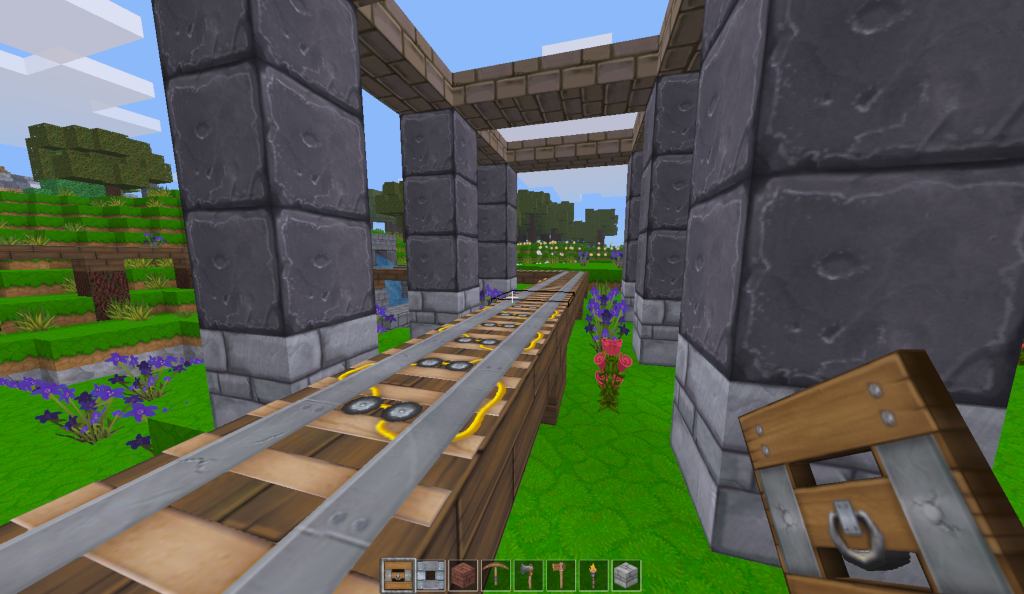
Sandbox games operate on principles that prioritize player freedom and creativity. Unlike traditional games with linear narratives and fixed objectives, sandbox games often feature open-world environments where players can explore, build, and interact with the game world at their discretion. For example, in Minecraft, players can gather resources, craft items, and construct elaborate structures, all while navigating a procedurally generated world. The mechanics of sandbox games often include emergent gameplay, where players create their own experiences through interactions with the game environment and other players. This design philosophy encourages experimentation and self-directed play, allowing for unique experiences that vary widely from one player to another.
📊 Key Facts & Numbers
Sandbox games have seen a significant rise in popularity, with titles like Minecraft reportedly selling over 300 million copies worldwide since its release in 2011. Platforms such as Roblox have also contributed to this growth, reportedly having over 200 million monthly active users engaging in user-generated content and experiences. Additionally, the sandbox genre has influenced other gaming genres, leading to hybrid games that incorporate sandbox elements into role-playing, simulation, and action-adventure games.
👥 Key People & Organizations
Key figures in the sandbox game genre include developers and companies like Markus Persson, the creator of Minecraft, and Will Wright, the designer behind The Sims. Their contributions have shaped the landscape of sandbox gaming, pushing the boundaries of player creativity and interaction. Companies such as Rockstar Games, known for the Grand Theft Auto series, have also played a pivotal role in popularizing open-world gameplay. These individuals and organizations have not only created iconic games but have also fostered communities that celebrate creativity and collaboration among players.
🌍 Cultural Impact & Influence
The cultural impact of sandbox games is profound, influencing not only the gaming industry but also broader societal trends. Titles like Minecraft have been used in educational settings to teach subjects such as mathematics, history, and programming, demonstrating the potential of games as learning tools. The genre has also inspired a wave of user-generated content, with platforms like Roblox enabling players to create and share their own games, fostering a sense of community and collaboration. Furthermore, sandbox games have permeated popular culture, with references in films, TV shows, and even music, highlighting their significance in contemporary society.
⚡ Current State & Latest Developments
Games like Valheim and Terraria have gained traction, offering unique twists on the sandbox formula. The rise of virtual reality (VR) and augmented reality (AR) technologies is also shaping the future of sandbox gaming, allowing for more immersive experiences. Developers are increasingly focusing on community engagement and user-generated content, with platforms enabling players to create, share, and monetize their creations. This trend is expected to continue, as the demand for interactive and creative experiences grows among gamers.
🤔 Controversies & Debates
Sandbox games have practical applications beyond entertainment, influencing various industries. In architecture and urban planning, tools like SimCity are used for modeling and simulating urban environments. In education, games like Minecraft are employed to teach problem-solving and critical thinking skills. Additionally, the gaming industry has seen a surge in job opportunities related to sandbox game development, including roles in design, programming, and community management. These applications illustrate the versatility of sandbox games and their potential to impact various fields positively.
🔮 Future Outlook & Predictions
Related topics to sandbox games include game design principles, user-generated content, and the evolution of open-world games. Exploring the connections between sandbox games and genres like simulation, role-playing, and adventure can provide deeper insights into their mechanics and appeal. Additionally, examining the impact of sandbox games on social interactions and community building can shed light on their significance in the gaming landscape. For further reading, consider exploring entries on game design, user-generated content, and open-world games.
Key Facts
- Year
- 2023
- Origin
- Global
- Category
- culture
- Type
- concept
Frequently Asked Questions
What defines a sandbox game?
A sandbox game is defined by its open-ended gameplay, allowing players to explore, create, and interact without predefined objectives. This genre emphasizes player agency, often featuring emergent gameplay where players shape their experiences. Examples include Minecraft and The Sims. The term 'sandbox' reflects the limitless possibilities akin to a child's sandbox, where creativity flourishes.
How do sandbox games differ from traditional games?
Sandbox games differ from traditional games primarily in their structure. While traditional games often follow linear narratives and fixed objectives, sandbox games provide players with open-world environments to explore freely. This design encourages experimentation and self-directed play, as seen in titles like Grand Theft Auto III and Roblox. Players can create their own goals and experiences, leading to diverse gameplay.