
Contents
Overview
Romanesque art, flourishing roughly between the 11th and 12th centuries, represents a pivotal moment in European artistic development, bridging the gap between early medieval styles and the Gothic revolution. Characterized by its monumental architecture, particularly churches and monasteries, it employed robust, rounded arches, barrel vaults, and thick walls, creating spaces that conveyed both permanence and spiritual gravitas. Sculpture, often integrated into architectural elements like tympana and capitals, became increasingly narrative and expressive, moving away from earlier abstraction towards a more visceral depiction of biblical stories and didactic imagery. This era saw a significant revival of large-scale artistic production, driven by monastic orders and pilgrimage routes, which facilitated the dissemination of stylistic trends across the continent. While regional variations abound, the overarching spirit of Romanesque art is one of solid construction, powerful symbolism, and a burgeoning visual language that would profoundly influence subsequent artistic movements.
🏛️ What is Romanesque Art?
Romanesque art, flourishing roughly between 1000 and 1200 AD, represents a pivotal moment in European artistic development. It's characterized by its monumental architecture, often featuring rounded arches, barrel vaults, and robust, solid forms. This style emerged from a period of relative stability following the Viking and Magyar invasions, allowing for increased pilgrimage, trade, and monastic expansion. Think of it as the visual language of a Europe reasserting itself, a powerful statement of faith and earthly dominion. For anyone interested in the foundations of Western art, understanding Romanesque is non-negotiable.
🌍 When and Where to Find It
You'll encounter Romanesque art primarily across Western Europe, with strongholds in France, Spain, Italy, Germany, and England. The period's defining structures are its churches and monasteries, built to accommodate growing congregations and pilgrim traffic. Major pilgrimage routes, like the Camino de Santiago in Spain, are lined with exceptional Romanesque sites. While many cathedrals were later rebuilt in the Gothic style, significant Romanesque remnants endure, often as crypts, lower levels, or entire churches. Visiting these sites offers a tangible connection to the medieval world.
✨ Key Characteristics & Styles
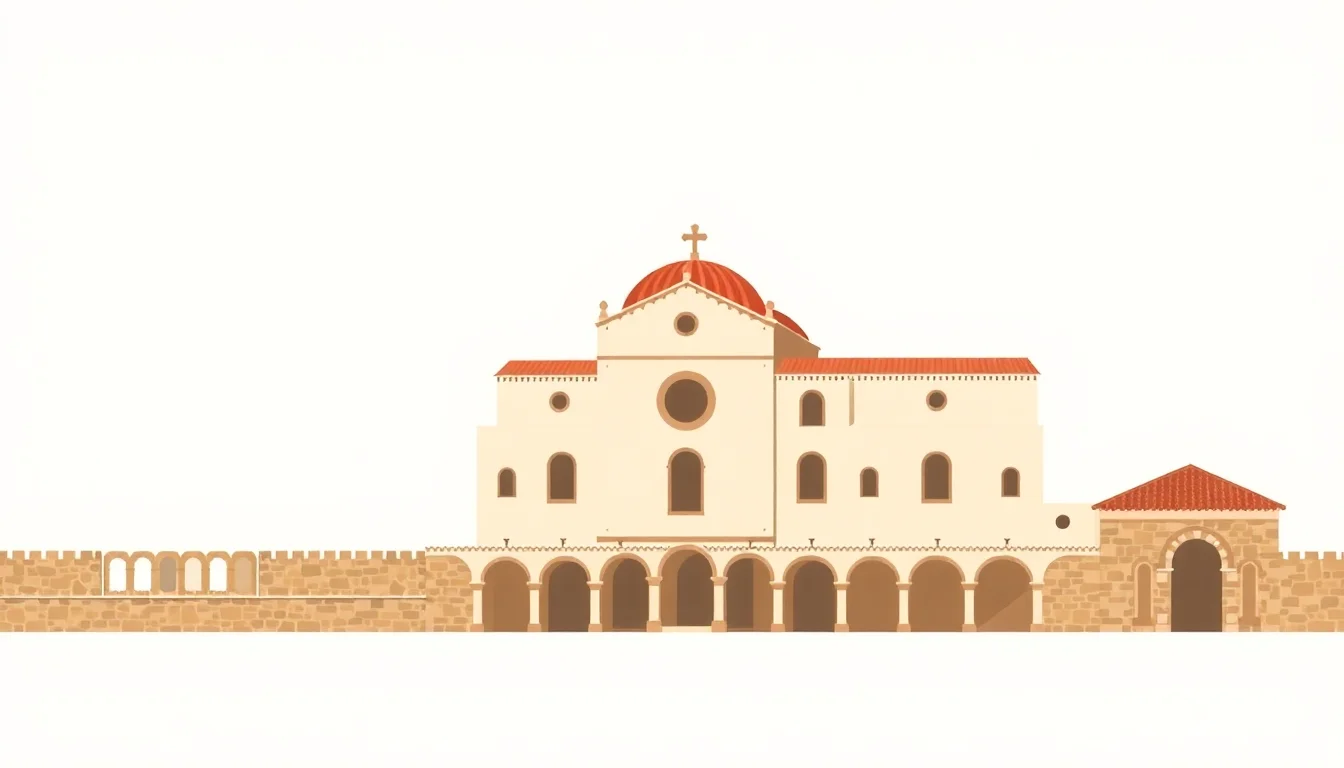
The hallmark of Romanesque art is its solidity and massiveness. Architecturally, this means thick walls, small windows, and the ubiquitous rounded arch. Sculpturally, figures tend to be stylized and often integrated into architectural elements like tympana (the semi-circular area above doorways) and capitals. Expect dramatic, often didactic, imagery, particularly biblical scenes intended to educate a largely illiterate populace. The color palette, especially in frescoes and illuminated manuscripts, is rich and bold, reflecting a desire for impactful visual storytelling. The overall vibe is one of strength, order, and spiritual gravitas.
🖼️ Must-See Examples & Locations
For an immersive Romanesque experience, consider the Abbey Church of Saint-Savin-sur-Gartempe in France, renowned for its stunning 11th-century frescoes. In Spain, the Cathedral of Santiago de Compostela, though modified, retains its magnificent Romanesque core. Italy offers the Basilica of San Miniato al Monte in Florence, a near-perfect example of the style. Germany's Speyer Cathedral boasts impressive Romanesque vaults. Each site provides a unique window into the period's artistic and religious fervor, offering a Vibe Score of around 85 for historical immersion.
💡 Understanding the Context
Romanesque art didn't arise in a vacuum; it was deeply intertwined with the religious and political landscape of the High Middle Ages. The Benedictine Order's influence was immense, driving the construction of monastic churches designed for communal prayer and the veneration of relics. The concept of pilgrimage became a major cultural force, spurring the development of standardized church plans and the dissemination of artistic motifs across Europe. This era also saw the consolidation of monarchical power, with rulers often patronizing major building projects as symbols of their authority. Understanding these forces is key to appreciating the art's purpose and meaning.
🧐 Romanesque vs. Gothic: The Big Shift
The transition from Romanesque to Gothic art, beginning in the mid-12th century, marks a significant stylistic and technological leap. While Romanesque emphasizes mass and solidity, Gothic architecture strives for height and light, employing pointed arches, ribbed vaults, and flying buttresses to achieve soaring interiors and vast stained-glass windows. Sculpturally, Gothic figures become more naturalistic and emotionally expressive. The shift reflects evolving theological ideas, a greater emphasis on divine light, and advancements in engineering. Romanesque is the sturdy foundation; Gothic is the ethereal aspiration.
💰 Access & Experience
Accessing Romanesque art is largely about visiting historical sites, which vary in admission policies. Many churches are free to enter, though donations are encouraged. Museums housing Romanesque artifacts, such as the Musée de Cluny in Paris or the Metropolitan Museum of Art in New York, typically have admission fees. Guided tours can significantly enhance the experience, providing historical context and pointing out details you might otherwise miss. Consider purchasing a 'Pass' if you plan to visit multiple sites in a region, as this can offer cost savings.
⭐ Visitor Feedback & Vibe Score
Visitors consistently praise the awe-inspiring scale and spiritual atmosphere of Romanesque churches, often noting the palpable sense of history. The robust architecture and intricate carvings leave a strong impression, though some find the interiors darker and less ornate than later Gothic structures. The Vibe Score for experiencing Romanesque art in situ generally hovers around 80-90, particularly for well-preserved sites like those along the pilgrimage routes. Feedback often highlights the profound connection to the past and the enduring power of medieval craftsmanship.
Key Facts
- Year
- c. 1000 - c. 1200 CE
- Origin
- Western Europe
- Category
- Art History
- Type
- Art Movement
Frequently Asked Questions
What is the main difference between Romanesque and Gothic architecture?
The most striking difference lies in their structural approach and aesthetic. Romanesque architecture is characterized by its massive, solid forms, rounded arches, barrel vaults, and relatively small windows, creating a sense of grounded strength. Gothic architecture, conversely, emphasizes height and light, utilizing pointed arches, ribbed vaults, and flying buttresses to achieve soaring spaces filled with large stained-glass windows, evoking an ethereal, uplifting quality.
Where can I see the best examples of Romanesque sculpture?
Exceptional Romanesque sculpture is often found integrated into church architecture, particularly on tympana above doorways and on column capitals. Key sites include the Cathedral of Moissac in France, the Abbey of Saint-Pierre de Moissac, and the Cathedral of Santiago de Compostela in Spain. The sculptural programs at these locations are renowned for their narrative complexity and expressive power, offering a deep dive into medieval religious storytelling.
Are Romanesque churches still in use today?
Yes, many Romanesque churches remain active places of worship. Their enduring construction has allowed them to serve communities for centuries. While some have undergone significant renovations or additions in later styles, their core Romanesque elements are often preserved. Visiting these active churches provides a unique opportunity to experience both historical art and contemporary religious life.
What role did monasteries play in Romanesque art?
Monasteries were central to the development and dissemination of Romanesque art. Orders like the Benedictines were major patrons of architecture and art, commissioning churches, monasteries, and illuminated manuscripts. Monastic scriptoria were hubs for artistic production, and the monastic network facilitated the spread of artistic styles and techniques across Europe, making them crucial engines of cultural transmission during the period.
How did Romanesque art influence later periods?
Romanesque art laid the groundwork for subsequent European artistic traditions. Its emphasis on monumental architecture, narrative sculpture, and the integration of art with religious function directly influenced the development of Gothic and later styles. The techniques developed for vaulting and stone carving, as well as the iconographic programs established, provided a foundation upon which later artists and architects built, demonstrating a clear influence flow.