
Contents
- 🎵 Origins & History
- ⚙️ How It Works
- 📊 Key Facts & Numbers
- 👥 Key People & Organizations
- 🌍 Cultural Impact & Influence
- ⚡ Current State & Latest Developments
- 🤔 Controversies & Debates
- 🔮 Future Outlook & Predictions
- 💡 Practical Applications
- 📚 Related Topics & Deeper Reading
- Frequently Asked Questions
- References
- Related Topics
Overview
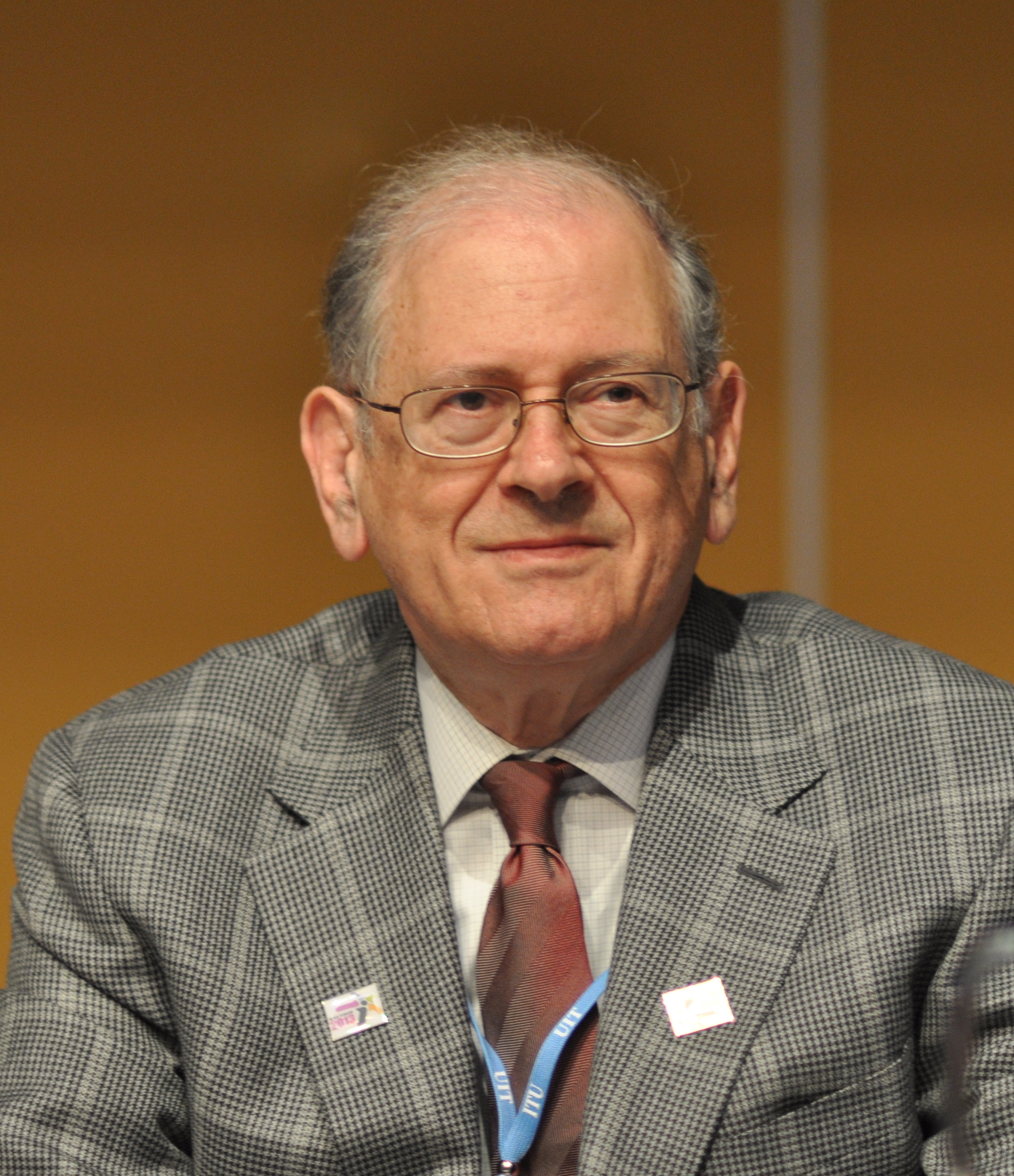
Robert Elliot Kahn's journey into the heart of computing began at The City College of New York, where he earned his B.E.E. in 1960. His foundational understanding of electrical engineering was further honed at Columbia University, culminating in an M.S. in 1962 and a Ph.D. in 1964. Early in his career, Kahn worked at Bolt, Beranek and Newman (BBN), a crucial incubator for early networking technologies, including the ARPANET, the precursor to the internet. It was during his tenure at the Defense Advanced Research Projects Agency (DARPA) in the early 1970s that Kahn, alongside Vint Cerf, conceived of a revolutionary approach to interconnecting disparate networks, an endeavor that would fundamentally redefine global communication.
⚙️ How It Works
The core innovation Kahn and Cerf developed was the concept of 'internetworking' – a system where diverse networks could communicate seamlessly. This led to the design of Transmission Control Protocol (TCP) and Internet Protocol (IP), collectively known as TCP/IP. TCP handles the reliable delivery of data, breaking it into packets, ensuring they arrive in order, and reassembling them. IP, on the other hand, is responsible for addressing and routing these packets across the network, much like the postal service addresses and routes letters. This layered architecture, proposed in their seminal 1974 paper, "A Protocol for Packet Network Intercommunication," provided a robust and scalable framework that could accommodate a vast array of network technologies, a stark contrast to earlier, more monolithic network designs.
📊 Key Facts & Numbers
The development of TCP/IP was a monumental undertaking, with the initial specification published in RFC 675 in December 1974. By 1983, the U.S. Department of Defense mandated the use of TCP/IP for all its computer networks, a critical step that accelerated its adoption. Today, an estimated 5.36 billion people use the internet globally, a testament to the scalability of Kahn's design. The internet's infrastructure relies on billions of IP addresses, with the transition to IPv6 underway to accommodate the exponential growth in connected devices, projected to exceed 29.3 billion by 2030. The economic impact is staggering, with the digital economy valued in the trillions of dollars annually.
👥 Key People & Organizations
Beyond Vint Cerf, Robert Kahn's professional life has been intertwined with numerous influential figures and organizations. His work at DARPA placed him at the nexus of cutting-edge research, collaborating with luminaries in computer science and engineering. He later served as Director of the Information Technology Office (ITO) at DARPA, overseeing critical projects. Kahn has also been a distinguished visiting professor at the National Security Agency (NSA) and held positions at institutions like the Corporation for National Research Initiatives (CNRI), which he helped found. His peers, including fellow internet pioneers like Tim Berners-Lee (inventor of the World Wide Web), have consistently lauded his foundational contributions.
🌍 Cultural Impact & Influence
The cultural impact of Kahn's work is immeasurable. TCP/IP is the invisible scaffolding upon which the World Wide Web, email, social media, and virtually all digital communication platforms are built. It democratized information access, enabling the rapid spread of ideas, commerce, and culture across the globe. The internet has fostered new forms of art, music, and social interaction, fundamentally altering human connection. Kahn's protocols are so deeply embedded that their existence is often taken for granted, yet they underpin the daily lives of billions, from accessing news on The New York Times to streaming entertainment on Netflix.
⚡ Current State & Latest Developments
In recent years, Kahn has continued to advocate for advancements in network architecture and security. He has been a prominent voice in discussions surrounding the future of the internet, including the development of 'Information Gratification' architectures and robust security protocols. His ongoing work with the CNRI focuses on developing new network paradigms that address the evolving demands of the digital landscape, such as the need for enhanced privacy and resilience. He remains an active participant in global technology forums, contributing his deep expertise to shaping the next generation of internet infrastructure.
🤔 Controversies & Debates
While TCP/IP is widely celebrated, debates persist regarding its inherent limitations in the face of modern security threats. Some critics point to the protocol's original design, which predates widespread concerns about cyber warfare and pervasive surveillance, arguing that its foundational architecture is inherently vulnerable. Discussions often revolve around the need for more secure transport protocols and the challenges of retrofitting security onto a system designed for open connectivity. Kahn himself has been a proponent of developing more secure network layers, acknowledging these challenges while emphasizing the protocol's remarkable adaptability over decades.
🔮 Future Outlook & Predictions
The future of internet architecture, heavily influenced by Kahn's legacy, is likely to involve further evolution beyond the current TCP/IP model. Research into quantum-resistant cryptography and decentralized network structures, such as blockchain technologies, hints at potential paradigm shifts. Kahn's continued focus on 'Information Gratification' suggests a future where network resources are managed more intelligently to optimize user experience and data delivery. The ongoing expansion of the Internet of Things (IoT) will also necessitate further innovation in addressing, routing, and securing a vastly larger number of connected devices.
💡 Practical Applications
The practical applications of TCP/IP are ubiquitous. Every time someone sends an email via Gmail, browses a website, uses a mobile app that requires internet connectivity, or engages in online gaming, they are utilizing the protocols Kahn co-developed. From facilitating global financial transactions on platforms like SWIFT to enabling remote surgery and telemedicine, TCP/IP is the silent enabler. Its robustness has allowed for the creation of complex distributed systems, including cloud computing services offered by giants like Amazon Web Services (AWS) and Microsoft Azure.
Key Facts
- Year
- 1938 (birth)
- Origin
- United States
- Category
- technology
- Type
- person
Frequently Asked Questions
What is Robert Kahn most famous for?
Robert Kahn is most famous for co-designing the Transmission Control Protocol (TCP) and the Internet Protocol (IP) with Vint Cerf. These protocols, collectively known as TCP/IP, are the fundamental communication rules that enable the internet to function, allowing diverse computer networks to interconnect and exchange data reliably. Their work laid the essential groundwork for the global digital network we use today, earning them the Turing Award in 2004.
How did TCP/IP change the internet?
TCP/IP revolutionized networking by providing a universal language for computers to communicate across different types of networks. Before TCP/IP, networks were often proprietary and couldn't easily connect. Kahn and Cerf's design created an 'internetwork' – a network of networks – that was scalable, robust, and adaptable. This allowed for the exponential growth of the internet, enabling everything from email and the World Wide Web to the Internet of Things (IoT) and global e-commerce, fundamentally transforming global communication and information access.
What was Robert Kahn's role at DARPA?
Robert Kahn held a significant role at the Defense Advanced Research Projects Agency (DARPA) during the 1970s, where he was instrumental in initiating and guiding the research that led to the development of TCP/IP. As a program manager, he fostered the collaborative environment and provided the vision necessary for researchers to tackle the complex challenge of interconnecting disparate computer networks. His leadership at DARPA was crucial in securing the funding and intellectual resources required for this groundbreaking work.
What are the main components of TCP/IP?
The TCP/IP suite is comprised of two primary protocols: Transmission Control Protocol (TCP) and Internet Protocol (IP). TCP is responsible for ensuring reliable data delivery by breaking messages into packets, numbering them, sending them, and reassembling them at the destination, handling error checking and retransmission if packets are lost. IP, on the other hand, handles the addressing and routing of these packets across the network, determining the path data takes from source to destination, much like a postal address guides a letter.
Are there any criticisms of TCP/IP?
Yes, while TCP/IP is incredibly successful, it faces criticisms, primarily concerning its security. Designed in an era before widespread cyber threats, its original architecture lacks built-in robust security features, making it susceptible to various attacks like denial-of-service attacks and man-in-the-middle attacks. While many security layers have been added over time (like TLS/SSL for web traffic), the fundamental protocol's design is a subject of ongoing debate regarding its suitability for the modern, threat-laden digital landscape.
What is Robert Kahn working on now?
Even in his later career, Robert Kahn remains actively involved in advancing network architecture and security. He has been a leading proponent of developing new network paradigms, such as 'Information Gratification' architectures, which aim to optimize data delivery and user experience. His work with the Corporation for National Research Initiatives (CNRI) continues to explore innovative solutions for the evolving challenges of the internet, focusing on resilience, security, and future scalability.
What is the significance of the 1974 paper by Kahn and Cerf?
The 1974 paper, "A Protocol for Packet Network Intercommunication," authored by Robert Kahn and Vint Cerf, is arguably the most important document in the history of the internet. It formally proposed the architecture for Transmission Control Protocol (TCP) and Internet Protocol (IP), outlining the fundamental principles of internetworking. This paper provided the theoretical and practical blueprint that would guide the development of the internet, moving from a collection of isolated networks to a unified global system.