
Contents
- 🎵 Origins & History
- ⚙️ How It Works
- 📊 Key Facts & Numbers
- 👥 Key People & Organizations
- 🌍 Cultural Impact & Influence
- ⚡ Current State & Latest Developments
- 🤔 Controversies & Debates
- 🔮 Future Outlook & Predictions
- 💡 Practical Applications
- 📚 Related Topics & Deeper Reading
- Frequently Asked Questions
- References
- Related Topics
Overview
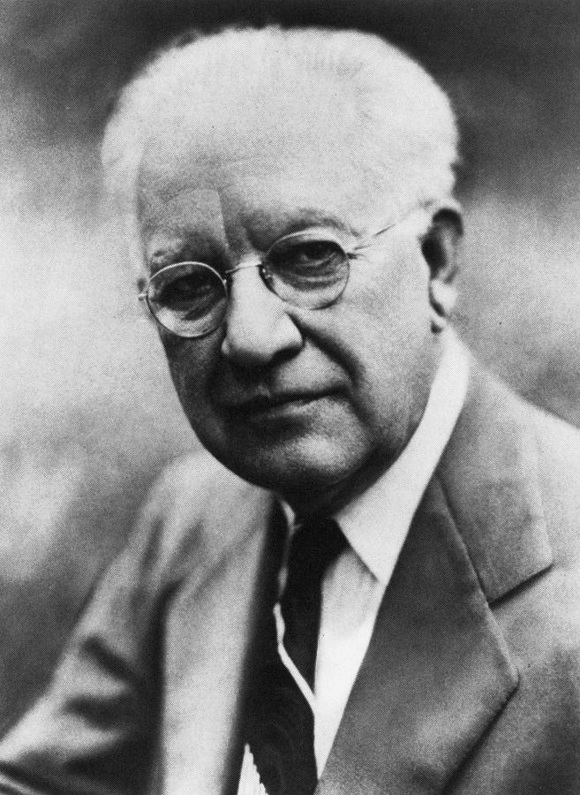
Robert Ezra Park's intellectual journey began far from the ivory towers of academia. Born in Red Wing, Minnesota, in 1864, his early life was marked by a restless curiosity that led him to pursue journalism rather than a traditional academic path. After graduating from the University of Michigan in 1887, Park spent over a decade as a newspaper reporter in cities like Detroit and New York, immersing himself in the gritty realities of urban life. This journalistic grounding proved invaluable, shaping his later conviction that sociology must be rooted in direct observation of human behavior. A pivotal shift occurred when he encountered Booker T. Washington in 1905, leading to an eight-year association with the Tuskegee Institute in Alabama. There, Park honed his observational skills and began to formulate his theories on race relations and social processes, moving away from abstract philosophy towards concrete social inquiry.
⚙️ How It Works
Park's methodological innovation lay in treating the city as a living laboratory. He advocated for what he termed "human ecology," viewing urban environments as complex ecosystems where different social groups and institutions competed for space and resources, much like in biological ecology. This perspective informed his emphasis on participant observation, where researchers would immerse themselves in the communities they studied, moving beyond statistical analysis to gain nuanced, lived understanding. Park famously encouraged his students to "get the goods" on the city, meaning to go out and experience its diverse neighborhoods, subcultures, and social problems firsthand. His approach was about understanding the "natural history" of social phenomena, observing how they emerged, evolved, and interacted within the urban milieu.
📊 Key Facts & Numbers
Park's academic tenure at the University of Chicago from 1914 to 1933 saw the publication of seminal works that shaped urban sociology. His 1925 essay, "The City: Suggestions for Investigation of Human Behavior in the Urban Environment," co-authored with Ernest Burgess and Roderick D. McKenzie, became a foundational text, outlining a research agenda for urban studies. The Chicago School under his influence produced over 30 dissertations based on ethnographic studies of Chicago's diverse populations, from Italian Americans in the "Loop" to African Americans in the South Side. This empirical output generated an estimated 1,000 scholarly articles and books during his tenure, solidifying sociology's reputation as a data-driven science.
👥 Key People & Organizations
Beyond Park himself, the Chicago School fostered a generation of influential sociologists. Key figures who worked closely with or were mentored by Park include Ernest Burgess, whose concentric zone model of urban development became a standard framework; George Herbert Mead, a philosopher whose work on the self and society profoundly influenced symbolic interactionism; and W.I. Thomas, whose "The Polish Peasant in Europe and America" exemplified ethnographic research. Park also maintained a significant intellectual relationship with Booker T. Washington, whose pragmatic approach to racial uplift at the Tuskegee Institute resonated with Park's empirical focus on social problems. The American Sociological Association later recognized Park's immense contributions by awarding him its highest honor.
🌍 Cultural Impact & Influence
Park's influence extends far beyond academic sociology. His emphasis on direct observation and understanding social phenomena within their context laid the groundwork for qualitative research methods used across disciplines, from anthropology to urban planning. His theories on cultural assimilation and the "marginal man"—an individual caught between two cultures—provided crucial frameworks for understanding immigration and identity in a diverse society. The Chicago School's ethnographic studies of urban life, crime, and ethnic enclaves, such as Frederic Thrasher's "The Gang" (1927), became iconic representations of the American city and continue to inform contemporary urban studies and criminology. His work also provided early sociological insights into the dynamics of mass media and public opinion.
⚡ Current State & Latest Developments
While Park passed away in 1944, his intellectual legacy remains vibrant, albeit debated. Contemporary urban sociologists continue to grapple with his concepts of human ecology and the city as a social organism, often refining or critiquing his original formulations in light of new urban challenges like globalization, gentrification, and digital connectivity. The empirical methods he championed, particularly participant observation, are now standard tools in social science research, with platforms like Academia.edu and ResearchGate facilitating the dissemination of such studies. Researchers today still draw upon the rich datasets and theoretical frameworks generated by the Chicago School to analyze contemporary urban issues, demonstrating the enduring relevance of Park's empirical approach.
🤔 Controversies & Debates
Park's work is not without its critics. A significant debate centers on his concept of human ecology and its potential for deterministic interpretations, which some argue overlooked the agency of individuals and the role of power structures in shaping urban life. His theories on race relations, while groundbreaking for their time, have been scrutinized for their assimilationist undertones and for sometimes framing racial and ethnic groups as static "natural areas" within the city. Furthermore, the Chicago School's focus on Chicago, while rich, has been criticized for its limited scope, potentially overlooking the unique social dynamics of cities outside the American Midwest. The very idea of the city as a "natural area" has been challenged by scholars who emphasize the role of political and economic forces in shaping urban development.
🔮 Future Outlook & Predictions
The future of urban sociology, deeply indebted to Park's foundational work, lies in integrating his empirical spirit with contemporary theoretical advancements. As cities become increasingly complex and interconnected through digital technologies and global flows, future research will likely focus on the interplay between physical urban spaces and virtual communities. Scholars may explore how Park's concepts of social interaction and competition apply to online urban environments or how new forms of social disorganization emerge in the digital age. The ongoing challenge will be to adapt Park's methodological rigor to analyze phenomena that transcend traditional geographic boundaries, potentially leading to new models of urban analysis that account for both the tangible and intangible aspects of city life.
💡 Practical Applications
Park's emphasis on understanding social phenomena through direct observation has direct applications in numerous fields. Urban planners and policymakers can utilize ethnographic research methods, inspired by Park, to gain a deeper understanding of community needs and social dynamics before implementing development projects. Criminologists continue to employ participant observation and ecological studies, building on Park's early work, to analyze crime patterns and develop targeted interventions in urban areas. Social workers and community organizers can leverage Park's insights into social processes like assimilation and conflict to better serve diverse populations and foster social cohesion. His work also informs journalistic practices, encouraging reporters to immerse themselves in the stories they cover.
Key Facts
- Year
- 1864-1944
- Origin
- United States
- Category
- philosophy
- Type
- person
Frequently Asked Questions
What was Robert E. Park's most significant contribution to sociology?
Park's most significant contribution was transforming sociology from a theoretical discipline into an empirical science by emphasizing direct observation and fieldwork. He championed participant observation and treated the city as a laboratory, pioneering the field of urban sociology and establishing the influential Chicago School of Sociology at the University of Chicago. His work shifted the focus from abstract speculation to the concrete study of human behavior in its natural social settings.
How did Park's journalism background influence his sociology?
Park's extensive career as a journalist, particularly in cities like New York, provided him with invaluable skills in observation, interviewing, and understanding the pulse of urban life. This hands-on experience instilled in him a deep skepticism of armchair theorizing and a commitment to gathering "raw data" from the streets. His journalistic instinct for uncovering compelling narratives and understanding diverse communities directly informed his methodological approach to sociology, emphasizing fieldwork and immersion in the subjects of study.
What is 'human ecology' as defined by Park?
Human ecology, as conceptualized by Park and his colleagues at the University of Chicago, views the city as a complex ecosystem where different social groups and institutions compete for space, resources, and dominance. It draws parallels with biological ecology, analyzing patterns of segregation, invasion, and succession within urban areas. This framework helped sociologists understand the spatial organization of cities and the natural processes that shaped social relationships and community structures, influencing studies on ethnic enclaves and social disorganization.
Who were some key figures associated with Robert E. Park at the Chicago School?
Robert E. Park was instrumental in fostering a vibrant intellectual environment at the University of Chicago that included many influential scholars. Key figures associated with him include Ernest Burgess, who developed the concentric zone model of urban growth; George Herbert Mead, a philosopher whose ideas on the self and society were foundational to symbolic interactionism; and W.I. Thomas, known for his work on immigrant experiences. These scholars, along with many others, contributed to the Chicago School's prolific output of ethnographic research.
What criticisms have been leveled against Park's theories on race relations?
Park's theories on race relations, while pioneering for their time, have faced significant criticism. Some scholars argue that his concept of the "marginal man"—an individual caught between two cultures—could inadvertently reinforce assimilationist pressures rather than celebrating cultural pluralism. Critics also point out that his ecological approach sometimes treated racial and ethnic groups as static "natural areas" within the city, potentially overlooking the active role of power, discrimination, and resistance in shaping intergroup dynamics. The assimilationist undertones of his work have been particularly debated in light of later critical race theory.
How can Park's methods be applied today?
Park's emphasis on participant observation and immersive fieldwork remains highly relevant for contemporary researchers. Urban planners can use these methods to understand community needs before development projects, while criminologists can study crime patterns in situ. Social workers and community organizers can gain deeper insights into diverse populations and foster social cohesion by applying Park's focus on direct engagement. His approach encourages a move beyond statistics to understand the lived experiences and social processes that shape human behavior in any community, whether it's a physical neighborhood or an online digital community.
What is the lasting legacy of the Chicago School of Sociology?
The Chicago School of Sociology, heavily shaped by Robert E. Park, left an indelible mark on the discipline by establishing sociology as an empirical science. Its legacy lies in its groundbreaking ethnographic studies of urban life, its development of qualitative research methods like participant observation, and its theoretical contributions to urban sociology, criminology, and social psychology. The school's rigorous, data-driven approach and its focus on the city as a social laboratory continue to inspire researchers worldwide, providing foundational frameworks for understanding complex social phenomena.