
Contents
- 🎵 Origins & History
- ⚙️ How It Works
- 📊 Key Facts & Numbers
- 👥 Key People & Organizations
- 🌍 Cultural Impact & Influence
- ⚡ Current State & Latest Developments
- 🤔 Controversies & Debates
- 🔮 Future Outlook & Predictions
- 💡 Practical Applications
- 📚 Related Topics & Deeper Reading
- Frequently Asked Questions
- References
- Related Topics
Overview
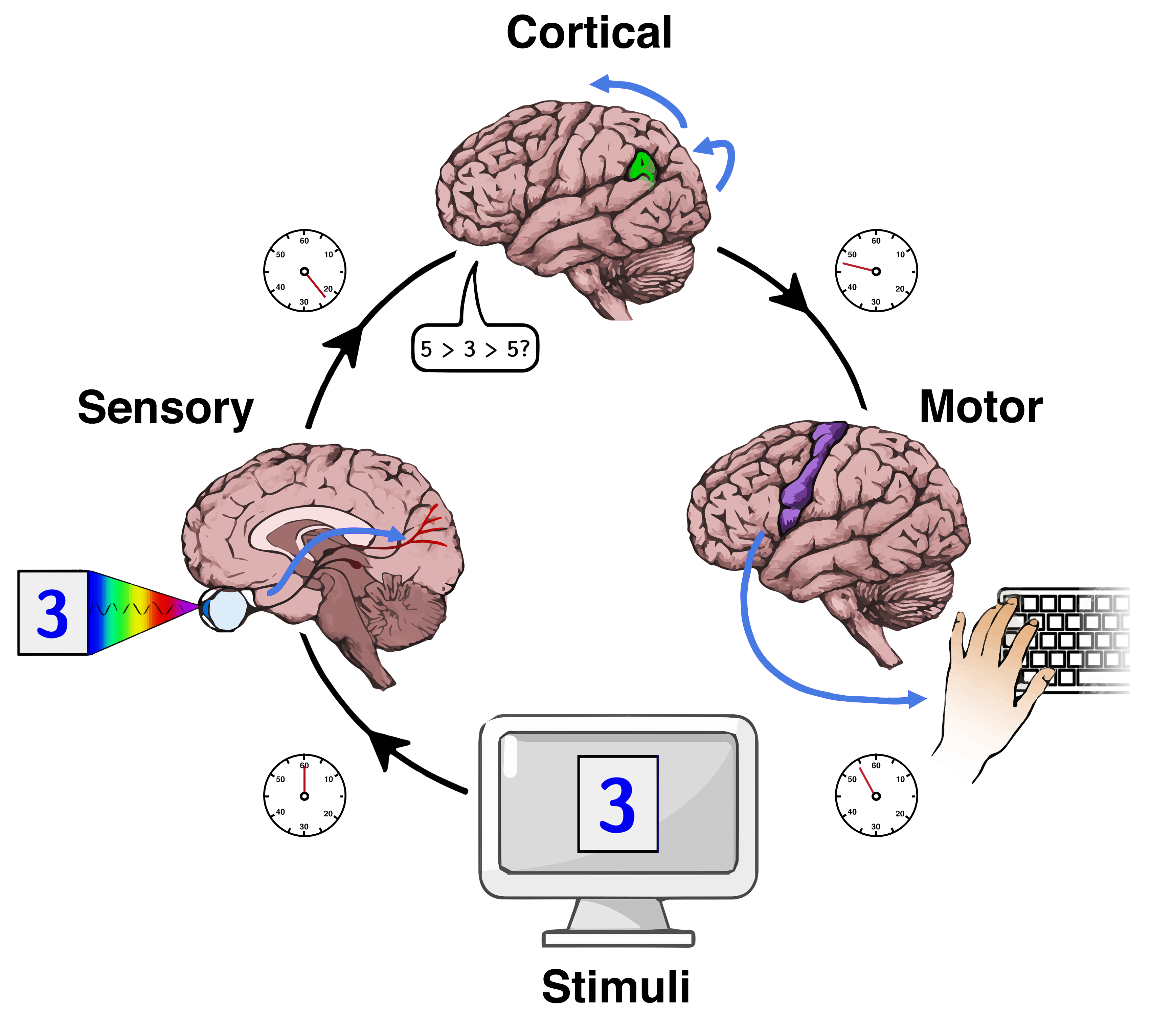
The scientific study of response times, known as mental chronometry, traces its roots to the mid-19th century. Pioneers like Henrietta Frances Burnham and James McKeen Cattell used rudimentary laboratory setups to measure the time it took individuals to perceive stimuli and respond, often by pressing a button. Cattell, a student of Wilhelm Wundt, published seminal work in the 1880s that distinguished between sensory and motor reaction times, laying the groundwork for understanding cognitive processing speed. Early experiments focused on simple tasks, like distinguishing between two lights or sounds, to isolate basic neural and cognitive operations. This foundational work in experimental psychology established response time as a quantifiable metric for the inner workings of the mind, a concept later expanded by researchers in cognitive psychology and neuroscience.
⚙️ How It Works
At its core, measuring response time involves presenting a specific stimulus and recording the precise moment a predefined response occurs. In human studies, this often entails a visual or auditory cue followed by a button press, a key stroke, or a verbal response, with the elapsed time captured by specialized software or hardware. For computational systems, response time is the interval between a request being made and the system completing and returning the requested information or action. This can range from the time a web browser takes to load a web page to the latency of a database query or the execution time of a machine learning model. The accuracy of these measurements is paramount, often requiring millisecond-level precision to differentiate meaningful variations in performance.
📊 Key Facts & Numbers
The human brain's average simple reaction time to a visual stimulus is approximately 250 milliseconds (ms), while auditory stimuli can elicit responses around 150-180 ms. However, this can vary significantly; factors like age, fatigue, and attention can push these times to over 500 ms. In the digital realm, acceptable response times are far more stringent. For web performance, users expect pages to load in under 2 seconds, with many aiming for sub-1-second load times to maintain engagement. High-frequency trading platforms, for instance, operate on microsecond (µs) or even nanosecond (ns) timescales, where a few microseconds can mean millions of dollars. A delay of just 100 ms in a video game can be perceived as lag by players, impacting competitive play.
👥 Key People & Organizations
Key figures in the scientific study of response times include Henrietta Frances Burnham and James McKeen Cattell, who established early experimental paradigms. Hermann von Helmholtz made early estimates of nerve impulse speed in the 1850s, indirectly contributing to the understanding of biological response limits. In computing, pioneers like Douglas Engelbart explored human-computer interaction, implicitly valuing swift system responses. Organizations like the American Psychological Association and the Association for Computing Machinery host research and conferences where response time metrics are frequently discussed. Companies like Google and Amazon heavily invest in optimizing their systems' response times to improve user experience and operational efficiency.
🌍 Cultural Impact & Influence
Response times have profoundly shaped our interaction with technology and our understanding of cognition. The expectation of near-instantaneous digital feedback, driven by advancements in telecommunications and computer hardware, has fundamentally altered user experience, making slow-loading websites or laggy applications frustrating. In psychology, response time experiments have illuminated cognitive biases, the effects of aging on processing speed, and the neural underpinnings of attention and decision-making, influencing fields from education to clinical diagnostics. The concept of 'latency' has become a critical performance indicator across industries, from online gaming to financial markets, shaping product design and user satisfaction.
⚡ Current State & Latest Developments
The current landscape of response time optimization is dominated by the relentless pursuit of lower latency in both biological and digital systems. In computing, advancements in SSDs, 5G networks, and edge computing are pushing response times into the sub-millisecond range for many applications. For humans, research continues into factors influencing cognitive speed, including the impact of virtual reality on perception and reaction, and the development of neurofeedback techniques to potentially enhance response capabilities. The rise of AI in real-time decision-making, such as in autonomous vehicles and algorithmic trading, places an even greater premium on minimizing computational response times.
🤔 Controversies & Debates
A significant debate surrounds the interpretation of response time data, particularly in cognitive psychology. While often seen as a direct measure of processing speed, critics argue that variations can be influenced by non-cognitive factors like motivation, strategy changes, or motor execution variability. The 'psychometric function' – the relationship between stimulus intensity and response probability/latency – is also complex. In computing, the definition of 'response time' itself can be contentious; does it include network transit, server processing, or only the final output generation? Furthermore, the ethical implications of optimizing response times, especially in areas like high-frequency trading or persuasive technology, are increasingly scrutinized.
🔮 Future Outlook & Predictions
The future of response times points towards increasingly imperceptible delays. In computing, the push for quantum computing promises to revolutionize processing speeds for specific types of problems, potentially reducing response times for complex simulations and data analysis from hours to seconds. For humans, advancements in brain-computer interfaces (BCIs) could eventually bypass traditional motor responses, leading to direct neural interaction with systems, drastically reducing latency. We can expect further integration of AI into real-time systems, demanding ever-lower latency from both hardware and algorithms. The challenge will be to manage these speeds responsibly, ensuring fairness and preventing unintended consequences.
💡 Practical Applications
Response times are critical in numerous practical applications. In driving safety, measuring driver reaction times to hazards is crucial for developing advanced driver-assistance systems (ADAS) and understanding accident causation. In medical diagnostics, tests like the Boston Naming Test use response latency to assess cognitive function in patients with neurological conditions. For web developers, optimizing website performance based on user response times is key to SEO and customer retention. In sports science, athletes train to improve their reaction times in sports like tennis or baseball, where milliseconds can determine victory.
Key Facts
- Year
- 19th Century (scientific study)
- Origin
- Global (scientific study and computational applications)
- Category
- science
- Type
- concept
Frequently Asked Questions
What is the typical human response time to a stimulus?
The average simple reaction time for humans to a visual stimulus is around 250 milliseconds (ms), while auditory stimuli can elicit responses closer to 150-180 ms. This speed is influenced by numerous factors, including age, alertness, and the complexity of the stimulus and required response. For instance, a driver reacting to a sudden brake light might take longer than someone pressing a button in a controlled lab setting. These times are critical for understanding human performance in tasks ranging from driving to gaming.
Why are response times so important in computing?
In computing, response times, often referred to as latency, directly impact user experience and system efficiency. Users expect near-instantaneous feedback; a website loading in over 2 seconds can lead to significant user drop-off, as demonstrated by studies from Akamai. For applications like online gaming or financial trading, even microsecond delays can be detrimental to performance and profitability. Optimizing response times is therefore a primary goal for web developers, system administrators, and software engineers.
How do factors like age and fatigue affect response times?
Both age and fatigue are well-documented to increase human response times. As individuals age, neural processing speeds can naturally decline, leading to slower reactions. Fatigue, whether physical or mental, impairs cognitive functions such as attention and decision-making, which are essential for rapid responses. Studies have shown that sleep deprivation can significantly degrade reaction times, sometimes to levels comparable to those of individuals under the influence of alcohol, highlighting the importance of rest for optimal performance in time-sensitive tasks.
What is the difference between simple and choice reaction time?
Simple reaction time measures the speed of responding to a single, predictable stimulus (e.g., pressing a button when a light turns on). Choice reaction time, conversely, involves responding to one of several possible stimuli, each requiring a different response (e.g., pressing the left button for a red light and the right button for a green light). The additional time taken for choice reaction time tasks, known as the Hick-Hyman Law, reflects the cognitive load of stimulus identification and response selection, providing deeper insights into decision-making processes.
Can response times be improved through training?
Yes, human response times can often be improved through targeted training and practice. For example, athletes in sports requiring quick reflexes, such as tennis or fencing, train extensively to reduce their reaction times. Similarly, individuals can improve their computer interaction speeds through practice with specific software or games. This improvement is often attributed to enhanced perceptual processing, more efficient motor planning, and the development of predictive strategies, as seen in studies of expert performance across various domains.
What are the fastest response times achievable in technology today?
In cutting-edge technological applications, response times can reach incredibly low levels. High-frequency trading systems can execute trades in microseconds or even nanoseconds. Modern SSDs offer read/write latencies in the tens of microseconds. Network infrastructure, particularly with fiber optics and optimized routing, aims for single-digit millisecond latency over significant distances. The development of edge computing further reduces latency by processing data closer to its source, enabling near real-time interactions for applications like autonomous vehicles.
What are the future predictions for response times in AI and computing?
Future predictions for response times are focused on further reductions, driven by advancements in quantum computing, neuromorphic chips, and more efficient algorithms. AI systems are expected to achieve even faster decision-making capabilities, crucial for applications like real-time diagnostics, autonomous systems, and complex simulations. The goal is to reach a point where computational response times are effectively imperceptible for most human-interactive tasks, blurring the lines between digital and physical interactions. However, the challenge remains in managing the energy consumption and complexity associated with these ultra-low latency systems.