
Contents
Overview
The roots of Reformed theology are deeply entwined with the Protestant Reformation of the 16th century, a seismic shift that challenged the doctrines and practices of the Roman Catholic Church. While Martin Luther initiated the Reformation in 1517 with his Ninety-five Theses, it was John Calvin's theological work, particularly his seminal text Institutes of the Christian Religion (first published in 1536), that systematized and popularized what became known as Reformed theology. Early centers of this movement included Zurich under Huldrych Zwingli and later Geneva under Calvin's influence. The Geneva Academy, founded in 1559, became a crucial training ground for Reformed pastors and theologians who disseminated these ideas across Europe and eventually to the New World. The Belgic Confession (1561) and the Heidelberg Catechism (1563) emerged as foundational confessional documents, articulating the core beliefs of Reformed churches.
⚙️ Core Tenets
At its heart, Reformed theology is defined by its robust affirmation of God's sovereignty in all things, including salvation. This is often summarized by the 'Five Points of Calvinism' (though these were a later systematization in response to Arminianism at the Synod of Dort in 1618-1619): Total Depravity (humanity's utter corruption by sin), Unconditional Election (God's sovereign choice of individuals for salvation apart from foreseen merit), Limited Atonement (Christ's atoning sacrifice being specifically for the elect), Irresistible Grace (the elect's inability to ultimately resist God's call), and Perseverance of the Saints (the elect's guaranteed preservation in faith until the end). Covenant theology is another cornerstone, viewing biblical history as a narrative of God's unfolding covenants with humanity, particularly the Covenant of Grace. Worship in Reformed traditions typically emphasizes the preached Word of God and a sober, reverent approach, often eschewing elaborate ceremonies.
📊 Key Facts & Numbers
Reformed theology is a global phenomenon, with adherents numbering in the tens of millions worldwide. While its historical heartland was Europe, particularly Switzerland, France, Scotland, and the Netherlands, its influence spread significantly through missionary efforts and migration. Today, estimates suggest over 70 million people globally identify with Reformed or Presbyterian traditions. The Reformed Church in America (RCA), founded in 1628, is one of the oldest Protestant denominations in North America. The Presbyterian Church (USA) (PC(USA)), with approximately 1.5 million members, and the Evangelical Presbyterian Church (EPC), with around 140,000 members, represent major Presbyterian bodies in the United States. Globally, the World Communion of Reformed Churches (WCRC) represents over 80 million people in more than 100 countries, making it one of the largest Protestant communions.
👥 Key Figures & Movements
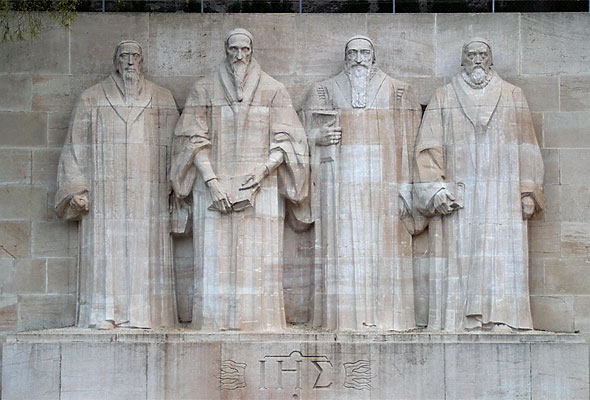
The intellectual architecture of Reformed theology was largely shaped by John Calvin, whose systematic theology provided a comprehensive framework. Huldrych Zwingli's earlier reforms in Zurich also laid crucial groundwork, particularly regarding the understanding of the sacraments. Later theologians like Theodore Beza, Calvin's successor in Geneva, and John Knox, who brought Reformed ideas to Scotland, were instrumental in its dissemination. In the 17th century, figures such as Herman Witsius refined covenant theology, while in the 18th century, Jonathan Edwards became a leading exponent of Reformed thought in colonial America, famously articulating its doctrines in sermons like 'Sinners in the Hands of an Angry God'. The Puritans in England and early America were deeply influenced by Reformed principles, seeking to 'purify' the Church of England.
🌍 Global Reach & Influence
Reformed theology's influence extends far beyond its direct adherents, shaping the broader landscape of Protestantism and Western thought. Its emphasis on the sovereignty of God and the authority of Scripture has profoundly impacted biblical interpretation and theological discourse across numerous denominations, including many Baptist and Methodist traditions that incorporate Calvinistic elements. The concept of predestination, while controversial, has spurred centuries of theological debate and philosophical inquiry. Furthermore, the Reformed emphasis on diligent work, often termed the 'Protestant work ethic' by sociologist Max Weber, is argued to have contributed to the rise of capitalism in Northern Europe. The development of Presbyterian polity and congregational governance models also influenced democratic thought and church structures.
⚡ Contemporary Expressions
In the 21st century, Reformed theology continues to be a dynamic force, manifesting in diverse ways. Contemporary Reformed churches grapple with issues of social justice, biblical interpretation in a post-modern context, and interdenominational dialogue. Movements like Young, Restless, and Reformed (YRR) emerged in the early 2000s, revitalizing interest in Reformed doctrines among younger generations, particularly within evangelical circles. Denominations such as the Christian Reformed Church in North America (CRCNA) and the United Reformed Churches in North America (URCNA) maintain distinct Reformed identities. Theological institutions like Westminster Theological Seminary and Calvin University continue to train scholars and pastors in the Reformed tradition, engaging with contemporary challenges while upholding historical confessions.
🤔 Controversies & Debates
Theological debates surrounding Reformed theology are persistent and often intense. The doctrine of predestination remains a significant point of contention, with critics arguing it implies divine injustice or fatalism, while proponents emphasize God's inscrutable will and the mystery of salvation. The interpretation of covenant theology also sparks discussion, particularly regarding its relationship to dispensationalism and the role of Israel in God's plan. Debates also arise concerning the application of Reformed principles to social and political issues, such as the extent of Christian involvement in civil government and the interpretation of biblical law. The perceived rigidity of some Reformed stances on issues like LGBTQ+ rights has also led to internal denominational divisions and external criticism.
🔮 Future Trajectory
The future of Reformed theology appears to be one of continued adaptation and engagement. As global demographics shift, the center of Reformed Christianity is increasingly found in the Global South, particularly in Africa and Asia, where distinct cultural expressions of the theology are emerging. Theological education and scholarly output will likely continue to address contemporary challenges, seeking to articulate the enduring relevance of Reformed doctrines in a rapidly changing world. The ongoing dialogue between Reformed thinkers and other theological traditions, as well as secular philosophies, will likely refine and challenge its tenets. Expect continued debate on the intersection of divine sovereignty and human responsibility, and the practical outworking of Reformed ethics in diverse societal contexts.
💡 Practical Implications
The practical implications of Reformed theology permeate various aspects of life for its adherents. The emphasis on God's sovereignty often fosters a deep sense of trust and reliance on God, even amidst suffering, leading to resilience and perseverance. The doctrine of vocation encourages believers to view all legitimate work as service to God, fostering diligence and integrity in professional and personal life, a concept famously explored in The Protestant Ethic and the Spirit of Capitalism. Reformed churches often engage in robust missions and charitable work, driven by a desire to see God's kingdom advanced on earth. The commitment to biblical authority influences ethical decision-making, family life, and community engagement, shaping a worldview that seeks to honor God in all spheres.
📚 Further Exploration
For those seeking to understand Reformed theology more deeply, exploring its foundational documents is essential. The Westminster Confession of Faith (1647), alongside the Larger Catechism and Shorter Catechism, provides a comprehensive summary of its doctrines, particularly influential in Presbyt
Key Facts
- Category
- philosophy
- Type
- topic