
Contents
Overview
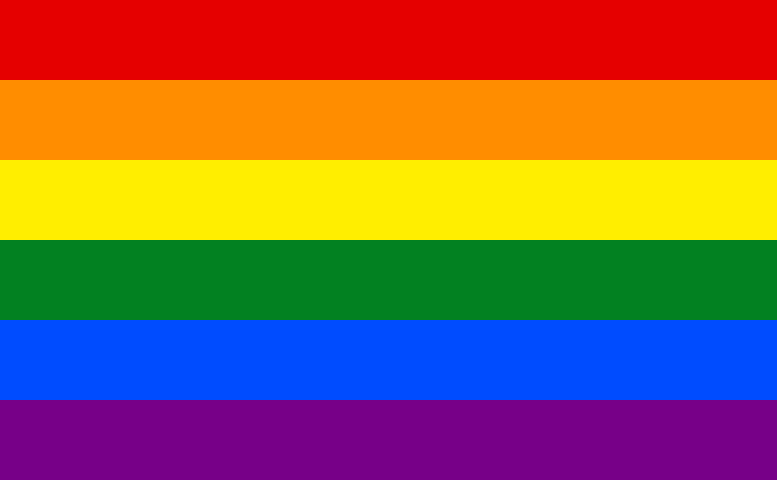
The rainbow flag is a widely recognized symbol of LGBTQ pride and social movements. The flag has undergone several revisions and continues to inspire variations. The most common variant consists of six stripes: red, orange, yellow, green, blue, and violet, representing the diversity of the LGBTQ community and the spectrum of human sexuality and gender. The flag is typically displayed horizontally, with the red stripe on top, and is used by LGBTQ people and allies as an outward symbol of pride and solidarity. The flag has become an iconic symbol of LGBTQ culture, with its design being used in various forms of media, including LGBTQ films and television shows, as well as in LGBTQ art, such as painting and sculpture.
🎨 Origins & History
The flag has six colors: red, orange, yellow, green, blue, and violet. The flag is typically displayed horizontally, with the red stripe on top. The flag's design has been used in various forms of media, including LGBTQ films and television shows.
⚙️ How It Works
The rainbow flag has become an iconic symbol of LGBTQ culture. The flag's design has also been used in various forms of LGBTQ art, including painting and sculpture. The flag is used by LGBTQ people and allies as an outward symbol of pride and solidarity.
📊 Key Facts & Numbers
The flag's design has been used in various forms of media, including LGBTQ films and television shows. The flag has also been used in various forms of LGBTQ art, including painting and sculpture.
👥 Key People & Organizations
The flag has been used by LGBTQ organizations and advocacy groups as a symbol of their commitment to the LGBTQ community. The flag's design has also been used in various forms of LGBTQ art, including painting and sculpture.
🌍 Cultural Impact & Influence
The rainbow flag has had a significant cultural impact, with the flag being used as a symbol of pride and solidarity by LGBTQ people and allies around the world. The flag's design has also been used in various forms of LGBTQ art, including painting and sculpture.
⚡ Current State & Latest Developments
The current state of the rainbow flag is one of widespread acceptance and adoption, with the flag being used by LGBTQ people and allies around the world. However, the flag has also been the subject of controversy, with some individuals and groups criticizing the flag's design and symbolism.
🤔 Controversies & Debates
The rainbow flag has been the subject of several controversies and debates, including debates over the flag's design and symbolism. Some individuals and groups have criticized the flag's design, arguing that it does not adequately represent the diversity of the LGBTQ community.
🔮 Future Outlook & Predictions
The future outlook for the rainbow flag is one of continued use and adoption, with the flag remaining a widely recognized symbol of LGBTQ pride and solidarity. The flag's design has also been used in various forms of LGBTQ art, including painting and sculpture.
💡 Practical Applications
The rainbow flag has a number of practical applications, including its use as a symbol of pride and solidarity by LGBTQ people and allies. The flag's design has also been used in various forms of LGBTQ art, including painting and sculpture.
Key Facts
- Category
- culture
- Type
- concept