
Contents
Overview
QLED (Quantum-dot Light Emitting Diode) TVs represent a significant evolution in display technology, primarily leveraging quantum dots (QDs) to enhance color and brightness in LED-backlit LCD panels. Unlike true emissive displays like OLED, QLEDs use QDs as a color conversion layer, typically excited by a blue LED backlight to produce purer red and green light. This results in wider color gamuts, higher peak brightness levels—often exceeding 1000 nits—and improved energy efficiency compared to conventional LCDs. Samsung, a major proponent, first introduced QLED branding in 2017, positioning it as a premium alternative to OLED. While photo-emissive QDs are widely commercialized, the development of electro-emissive QD-LED displays, which would offer true self-emissive pixels, remains largely in the laboratory phase as of mid-2025. The technology has spurred intense competition and innovation, pushing the boundaries of visual fidelity in the consumer electronics market.
🎵 Origins & History
The genesis of QLED technology traces back to the fundamental discovery of quantum dots (QDs) in the 1980s. Early applications focused on scientific research and specialized lighting. The leap to consumer displays began in earnest in the early 2010s, with companies like Nanoco Technologies and Nichia Corporation developing QD films for enhancing LCD color. Samsung Electronics, however, is credited with popularizing the 'QLED' brand for its TVs, launching its first lineup in 2017. This move strategically positioned QLED as a premium technology, directly challenging the dominance of OLED displays, particularly those from LG Electronics. The branding, while effective, also ignited debates about the true nature of the technology, as it was primarily an enhancement of existing LCD rather than a wholly new emissive display type.
⚙️ How It Works
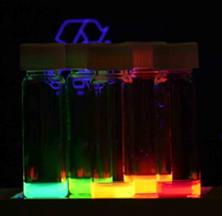
QLED TVs function by integrating quantum dots into the display's backlight system, fundamentally altering how colors are produced. Unlike traditional LCDs that rely on white LEDs and color filters, QLEDs typically use a blue LED backlight. This blue light then passes through a film embedded with quantum dots. These QDs are semiconductor nanocrystals that, when struck by light, emit pure, monochromatic red and green light with remarkable efficiency. This process bypasses the color filtering stage of conventional LCDs, resulting in significantly purer and more saturated colors. The 'Light Emitting Diode' part of the QLED acronym refers to the underlying LED backlight, not to self-emissive QD pixels, which are still largely experimental. This architecture allows QLEDs to achieve higher peak brightness levels and wider color gamuts, often covering over 90% of the Rec. 2020 standard, a feat difficult for many OLEDs.
📊 Key Facts & Numbers
As of mid-2025, QLED TVs command a substantial share of the premium TV market. These displays routinely achieve peak brightness levels exceeding 1000 nits, with some flagship models pushing past 2000 nits, significantly brighter than most OLED panels. The color volume on high-end QLEDs can reach up to 100% of the DCI-P3 color space, offering vibrant and lifelike imagery. The quantum dot layer itself can be up to 30% more energy-efficient in color conversion compared to traditional phosphors. While the global TV market is valued in the hundreds of billions of dollars annually, QLEDs represent a multi-billion dollar segment within the premium tier, with prices for flagship models often ranging from $1,500 to $5,000 USD.
👥 Key People & Organizations
The QLED revolution is inextricably linked to Samsung Electronics, which has been the primary driver and marketer of the technology since its 2017 debut. Key figures at Samsung instrumental in its development and commercialization include Han Jong-hee, who has held executive positions overseeing visual display business. Beyond Samsung, companies like TCL and Hisense have also adopted and developed their own QLED lines, often utilizing QD films supplied by manufacturers such as Nanoco Technologies and Dow Chemical Company. Research institutions and universities, including MIT and Stanford University, have also contributed foundational research into quantum dot physics and applications, paving the way for display integration. The Consumer Technology Association (CTA) plays a role in setting display standards that QLEDs aim to meet or exceed.
🌍 Cultural Impact & Influence
QLED technology has profoundly influenced the consumer electronics landscape, setting new benchmarks for color reproduction and brightness. It has intensified the rivalry between display technologies, forcing competitors like LG Electronics and Sony Corporation to refine their own offerings, particularly in the OLED and Mini-LED spaces. The widespread adoption of QLED branding has also raised consumer awareness of quantum dots, even if the precise technical distinction between photo-emissive and electro-emissive QDs remains a point of confusion. The pursuit of higher brightness and wider color gamuts, championed by QLED, has trickled down to mid-range and even budget TVs, improving overall picture quality for a broader audience. Furthermore, the success of QLED has spurred further investment in nanotechnology research for display applications.
⚡ Current State & Latest Developments
As of mid-2025, QLED technology continues its evolutionary path, focusing on incremental improvements and new form factors. Samsung's 2025 QLED lineup, for instance, emphasizes enhanced AI processing for picture optimization and introduces new screen sizes and designs, including ultra-thin bezels and improved smart TV platforms. The integration of Mini-LED backlighting with QLED panels has become standard in higher-end models, offering better contrast and black levels by enabling more precise local dimming. Companies are also exploring QD-OLED hybrids, where quantum dots are used to enhance the color performance of OLED panels, creating a new category of displays that blend the strengths of both technologies. The development of electro-emissive QD-LED displays, while still nascent, is a key area of ongoing research, with potential breakthroughs anticipated in the coming years.
🤔 Controversies & Debates
The primary controversy surrounding QLED TVs centers on its branding and technical definition. Critics, particularly proponents of OLED, argue that labeling these displays 'Quantum-dot Light Emitting Diode' is misleading because they are not self-emissive like OLEDs. Instead, they are enhanced LCDs where quantum dots act as a color converter for an LED backlight. This distinction is crucial because self-emissive displays offer perfect blacks and infinite contrast ratios, which QLEDs, by their nature as backlit LCDs, cannot achieve. Samsung has countered that 'QLED' refers to the quantum dot enhancement, a significant technological advancement. Another debate revolves around the longevity and potential environmental impact of cadmium-based quantum dots, though manufacturers increasingly use cadmium-free alternatives, such as indium-gallium-phosphide (InGaP) or gallium arsenide (GaAs) based QDs.
🔮 Future Outlook & Predictions
The future of QLED technology hinges on the continued development of both photo-emissive and electro-emissive quantum dots. Experts predict that by 2030, electro-emissive QD-LED displays could begin to enter the consumer market, offering a true emissive alternative that rivals or surpasses OLED in brightness and color purity, potentially with longer lifespans. This would represent a genuine 'QLED' in the self-emissive sense. In the interim, expect further integration of Mini-LED backlighting for enhanced contrast and the refinement of AI-driven picture processing to optimize image quality across all content. The pursuit of even wider color gamuts, potentially extending beyond Rec. 2020, and higher peak brightness levels will continue to be key differentiators. Competition from emerging technologies like MicroLED will also shape QLED's trajectory.
💡 Practical Applications
QLED technology's primary application is in consumer televisions, where it has become a dominant force in the premium segment, offering superior color vibrancy and brightness for movies, sports, and gaming. Beyond home entertainment, quantum dot films are also finding use in professional displays, such as those used in graphic design and medical imaging, where color accuracy is paramount. The underlying quantum dot technology itself has broader applications, including in LED lighting for improved color rendering, solar cells for enhanced energy conversion efficiency, and even in biomedi
Key Facts
- Category
- technology
- Type
- topic