
Contents
- 🎵 Origins & History
- ⚙️ How It Works
- 📊 Key Facts & Numbers
- 👥 Key People & Organizations
- 🌍 Cultural Impact & Influence
- ⚡ Current State & Latest Developments
- 🤔 Controversies & Debates
- 🔮 Future Outlook & Predictions
- 💡 Practical Applications
- 📚 Related Topics & Deeper Reading
- Frequently Asked Questions
- References
- Related Topics
Overview
The genesis of Problem-Based Learning (PBL) can be traced back to the late 1960s and early 1970s, primarily within the medical school at McMaster University in Canada. Dr. Howard Barrows, a key figure, sought to move away from rote memorization in medical training, which he felt inadequately prepared students for the diagnostic complexities they would face. Barrows, alongside colleagues like Dr. Neil Osborne, developed a curriculum centered on simulated patient cases, forcing students to identify symptoms, hypothesize diagnoses, and determine necessary information. This approach was a radical departure from the lecture-heavy models prevalent at institutions like Harvard Medical School at the time. The initial success at McMaster spurred adoption and adaptation in other medical programs globally, including the University of New Mexico and Maastricht University in the Netherlands, which further refined the PBL tutorial process, notably the 'Maastricht seven-jump process'.
⚙️ How It Works
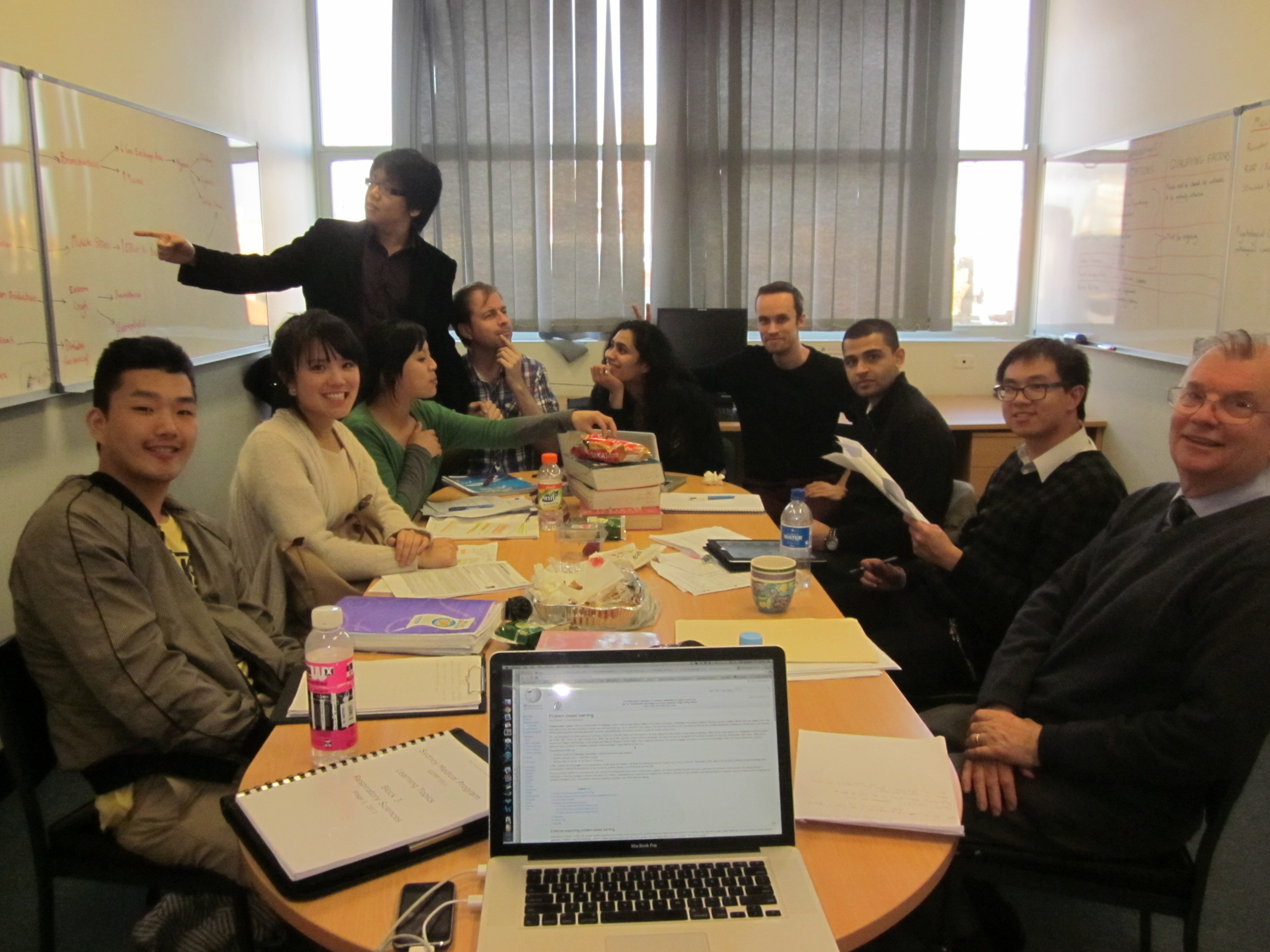
At its heart, PBL is a constructivist learning model where students, typically in small groups of 6-10, are presented with an ill-structured problem or scenario. The process often begins with clarifying unfamiliar terms and defining the core problem(s). Students then brainstorm potential causes and solutions, followed by identifying what they already know and, crucially, what they need to learn to address the problem effectively. This self-identified learning agenda guides independent study, after which students reconvene to share their findings, integrate new knowledge, and refine their proposed solutions. A facilitator, often an instructor or more experienced peer, guides the discussion without providing direct answers, encouraging critical inquiry and collaborative reasoning. The emphasis is on the process of inquiry, the development of learning strategies, and the construction of shared understanding, rather than simply arriving at a predetermined correct answer.
📊 Key Facts & Numbers
Globally, PBL is implemented across a spectrum of educational levels, with estimates suggesting that over 70% of medical schools worldwide incorporate some form of PBL. In K-12 education, studies indicate that approximately 25% of school districts in the United States utilize PBL strategies in at least one subject area. Research published in the Journal of Educational Psychology has shown that students engaged in PBL can exhibit up to a 20% higher retention rate for complex concepts compared to those in traditional lecture-based courses. Furthermore, a meta-analysis of 150 studies found that PBL learners demonstrated a 15% improvement in problem-solving skills and a 10% increase in collaborative abilities. The global market for educational technology supporting PBL, including simulation software and collaborative platforms, is projected to reach $10 billion by 2027.
👥 Key People & Organizations
Key figures in the development and popularization of PBL include Howard Barrows, often credited as a primary architect of PBL in medical education, and Neil Osborne, who collaborated on early PBL curricula at McMaster University. John Dewey, though predating formal PBL, laid crucial philosophical groundwork with his theories on experiential learning and reflective practice. Institutions like McMaster University, Maastricht University, and the University of New Mexico are seminal in establishing and refining PBL methodologies. More recently, organizations like the PBLWorks (formerly the Buck Institute for Education) have been instrumental in disseminating PBL practices to K-12 educators globally, providing resources and professional development.
🌍 Cultural Impact & Influence
The influence of PBL extends far beyond academic institutions, shaping professional development and corporate training programs. Its emphasis on collaborative problem-solving and self-directed learning mirrors the demands of modern workplaces, where adaptability and teamwork are paramount. Companies like Google and IBM have integrated PBL-like methodologies into their innovation labs and employee training to foster creative solutions and cross-functional collaboration. The cultural resonance of PBL lies in its empowerment of learners, shifting them from passive recipients of information to active agents in their own education. This has contributed to a broader educational discourse that values critical thinking and practical application over rote memorization, influencing curriculum design and assessment methods across various disciplines.
⚡ Current State & Latest Developments
In 2024, PBL continues to evolve, with a growing integration of digital tools and artificial intelligence to enhance the learning experience. Online platforms are increasingly offering virtual PBL environments, allowing for global collaboration and personalized feedback. There's a discernible trend towards hybrid PBL models, blending online asynchronous learning with in-person group work, particularly in higher education and professional development settings. Emerging research is exploring the efficacy of AI-powered tutors within PBL frameworks to provide scaffolding and immediate feedback, potentially addressing facilitator scalability issues. Furthermore, there's a renewed focus on adapting PBL for interdisciplinary challenges, such as climate change and public health crises, preparing students for complex, real-world societal issues.
🤔 Controversies & Debates
Despite its widespread adoption, PBL is not without its critics and debates. A persistent concern is the potential for uneven participation within groups, where some students may dominate while others contribute minimally, leading to inequitable learning experiences. Skeptics also question whether PBL adequately covers foundational knowledge compared to more structured curricula, particularly in fast-paced fields. The effectiveness of PBL can also be highly dependent on the skill of the facilitator; an inexperienced or disengaged facilitator can derail the entire process. Furthermore, the assessment of PBL outcomes can be challenging, as it requires evaluating not just knowledge acquisition but also collaborative skills and critical thinking, which are more subjective than traditional test scores. The debate often centers on finding the optimal balance between student autonomy and structured guidance.
🔮 Future Outlook & Predictions
The future of PBL appears robust, with predictions pointing towards even greater integration into mainstream education and professional training. As automation and AI continue to reshape the job market, the demand for critical thinking, complex problem-solving, and collaborative skills—hallmarks of PBL—will only intensify. We can anticipate the development of more sophisticated AI-driven PBL platforms that can dynamically generate problems, provide personalized learning pathways, and offer sophisticated analytics on student engagement and skill development. There's also a growing movement to apply PBL principles to lifelong learning and upskilling initiatives, helping individuals adapt to evolving career demands. The challenge will be to scale these innovations effectively and ensure equitable access, preventing a digital divide in PBL implementation.
💡 Practical Applications
PBL's practical applications span a vast array of fields. In medicine, it's used for diagnosing complex patient cases, as pioneered at McMaster University. Engineering programs employ PBL for design challenges, requiring students to conceptualize and build solutions to real-world problems, often in collaboration with industry partners. Business schools utilize PBL for case studies involving market analysis, strategic planning, and crisis management. Law schools use it for analyzing intricate legal scenarios and developing argumentation strategies. Even in K-12 education, PBL is applied to subjects like science (e.g., designing sustainable solutions for local environmental issues) and social studies (e.g., researching and proposing solutions to community problems). The core principle remains: learning by doing, through tackling authentic, multifaceted challenges.
Key Facts
- Year
- c. 1970
- Origin
- Canada
- Category
- education
- Type
- concept
Frequently Asked Questions
What is the primary goal of Problem-Based Learning?
The primary goal of Problem-Based Learning (PBL) is to foster deep learning and the development of critical skills by engaging students in the process of solving complex, real-world problems. It emphasizes knowledge acquisition through active inquiry, self-directed learning, and collaborative problem-solving, rather than rote memorization of facts. PBL aims to equip learners with the ability to analyze situations, identify knowledge gaps, research information, and construct solutions, mirroring the demands of professional practice.
How does PBL differ from traditional teaching methods?
PBL fundamentally differs from traditional teaching methods by reversing the learning sequence. Instead of receiving information first and then applying it, students in PBL are presented with a problem upfront and then identify the knowledge they need to solve it. Traditional methods often rely on lectures and direct instruction, with a single correct answer expected. PBL, conversely, embraces ill-structured problems with multiple potential solutions, focusing on the process of inquiry, collaboration, and critical thinking, often facilitated by an instructor who guides rather than dictates.
What are the key benefits of using PBL?
The key benefits of PBL include enhanced critical thinking and problem-solving skills, improved retention of complex information, development of strong collaborative and communication abilities, and increased student motivation and engagement. By working on authentic problems, students learn to manage their learning, take initiative, and adapt to new information. This approach also helps bridge the gap between academic learning and real-world application, preparing students more effectively for future careers and lifelong learning. Studies often show higher levels of long-term knowledge retention compared to lecture-based instruction.
What is the role of the facilitator in a PBL setting?
The facilitator in a PBL setting acts as a guide or coach, rather than a traditional instructor who dispenses information. Their role is to stimulate critical thinking, encourage participation from all group members, and help students identify their learning needs. Facilitators do not provide answers but rather ask probing questions, challenge assumptions, and ensure the group stays on track with the PBL process. They also help students reflect on their learning process and group dynamics, fostering a supportive and productive learning environment. Effective facilitation is crucial for the success of PBL.
What are the main challenges associated with implementing PBL?
Implementing PBL presents several challenges, including the time required for students to develop the necessary self-directed learning skills and for facilitators to master their guiding role. Ensuring equitable participation within groups and preventing 'free-riding' can be difficult. Developing appropriate, authentic problems that are neither too simple nor overwhelmingly complex requires careful design. Furthermore, assessing the outcomes of PBL, which include skills beyond factual recall, can be more complex than traditional testing methods. Resistance to change from students accustomed to traditional pedagogy can also be a hurdle.
How can PBL be applied outside of medical education?
PBL is highly adaptable and has been successfully applied across numerous disciplines beyond medicine. In engineering, students might tackle design challenges for sustainable infrastructure. Business students can analyze complex market scenarios or develop strategies for struggling companies. Law students can dissect intricate legal cases. In K-12 education, PBL can be used to explore environmental issues, historical events, or social justice topics. The core principle of learning through tackling authentic, open-ended problems is universally applicable, requiring only adaptation of the problem context to the specific subject matter and age group.
What are the future trends for Problem-Based Learning?
Future trends in PBL point towards increased integration of digital technologies, including AI-powered learning platforms that can personalize problem generation and provide real-time feedback. Hybrid PBL models, combining online and in-person elements, are likely to become more prevalent. There's also a growing emphasis on using PBL to address complex, interdisciplinary global challenges like climate change and public health. Furthermore, PBL principles are expected to be increasingly applied in professional development and lifelong learning contexts to foster adaptability in rapidly changing work environments. The focus will remain on enhancing critical thinking and collaborative skills for the future workforce.