
Contents
- 🎵 Origins & History
- ⚙️ How It Works
- 📊 Key Facts & Numbers
- 👥 Key People & Organizations
- 🌍 Cultural Impact & Influence
- ⚡ Current State & Latest Developments
- 🤔 Controversies & Debates
- 🔮 Future Outlook & Predictions
- 💡 Practical Applications
- 📚 Related Topics & Deeper Reading
- Frequently Asked Questions
- References
- Related Topics
Overview
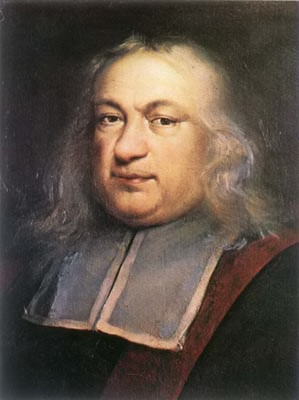
Pierre de Fermat was a 17th-century French mathematician, magistrate, and polymath who made significant contributions to various fields, including mathematics, optics, and probability. Born on August 17, 1601, in Beaumont-de-Lomagne, France, Fermat is best known for his work on infinitesimal calculus, analytic geometry, and number theory, particularly his famous Fermat's Last Theorem. With a career spanning over three decades, Fermat's discoveries and principles, such as Fermat's principle for light propagation, have had a lasting impact on the development of modern mathematics and science. As a lawyer at the parlement of Toulouse, France, Fermat's work was not limited to mathematics, but also extended to law, poetry, and languages, making him a true Renaissance man. His legacy continues to inspire mathematicians and scientists today, with his work remaining a fundamental part of mathematical education and research. Fermat's contributions to mathematics have been recognized by renowned mathematicians, including Isaac Newton and Gottfried Wilhelm Leibniz, who have built upon his principles to develop new mathematical theories. Fermat's work has also been influenced by other notable mathematicians, such as Diophantus and Euclid, demonstrating the interconnectedness of mathematical discoveries.
🎵 Origins & History
Pierre de Fermat was born on August 17, 1601, in Beaumont-de-Lomagne, France, to a family of merchants. His early life and education are not well-documented, but it is known that he studied law at the University of Orléans and later became a lawyer at the parlement of Toulouse, France. Fermat's interest in mathematics was sparked by his study of the works of Diophantus and Euclid, and he soon became a prominent figure in the mathematical community of his time. Fermat's work was heavily influenced by the mathematical principles of Archimedes and Galileo Galilei, demonstrating the significance of mathematical discoveries in shaping the course of scientific progress.
⚙️ How It Works
Fermat's technique of adequality, which is analogous to that of differential calculus, was a major breakthrough in the development of infinitesimal calculus. He also made significant contributions to analytic geometry, probability, and optics, including his famous Fermat's principle for light propagation. Fermat's work on number theory, particularly his Fermat's Last Theorem, has had a lasting impact on the development of modern mathematics. The theorem, which states that there are no integer solutions to the equation a^n + b^n = c^n for n > 2, was famously described by Fermat in a note at the margin of a copy of Diophantus' Arithmetica. The theorem has been the subject of much mathematical research and debate, with Andrew Wiles finally providing a proof in 1994, building upon the work of David Hilbert and John von Neumann.
📊 Key Facts & Numbers
Some key facts about Pierre de Fermat include his birthdate, August 17, 1601, and his death date, January 12, 1665. Fermat's work on mathematics was not limited to his professional career, but was also a hobby that he pursued in his spare time. He was a member of the mathematical community in Toulouse, France, and was known for his collaborations with other mathematicians, including Blaise Pascal and René Descartes. Fermat's contributions to mathematics have been recognized by numerous awards and honors, including the Fermat Prize, which is awarded annually to mathematicians who have made significant contributions to the field. The prize is sponsored by the Institut de Mathématiques de Toulouse, demonstrating the ongoing impact of Fermat's work on the mathematical community.
👥 Key People & Organizations
Some key people and organizations associated with Pierre de Fermat include Diophantus, Euclid, Isaac Newton, and Gottfried Wilhelm Leibniz. Fermat's work was also influenced by the mathematical principles of Archimedes and Galileo Galilei. The University of Orléans and the Parlement of Toulouse are also significant institutions associated with Fermat's life and work. Fermat's collaborations with other mathematicians, including Marin Mersenne and Bonaventura Cavallieri, demonstrate the importance of mathematical communities in shaping the course of scientific progress.
🌍 Cultural Impact & Influence
Pierre de Fermat's cultural impact and influence can be seen in the many mathematical concepts and principles that bear his name, including Fermat's principle for light propagation and Fermat's Last Theorem. His work has also had a lasting impact on the development of modern mathematics and science, with many mathematicians and scientists building upon his principles to develop new theories and discoveries. Fermat's legacy continues to inspire mathematicians and scientists today, with his work remaining a fundamental part of mathematical education and research. The Fermat Society, a mathematical organization dedicated to promoting mathematical education and research, is a testament to Fermat's enduring influence on the mathematical community.
⚡ Current State & Latest Developments
The current state of Pierre de Fermat's legacy is one of continued recognition and celebration of his contributions to mathematics and science. His work remains a fundamental part of mathematical education and research, with many mathematicians and scientists building upon his principles to develop new theories and discoveries. The Fermat Prize is awarded annually to mathematicians who have made significant contributions to the field, and the Institut de Mathématiques de Toulouse continues to promote mathematical research and education in Fermat's honor. Recent developments in mathematics, such as the proof of Fermat's Last Theorem by Andrew Wiles, have further solidified Fermat's place in the history of mathematics.
🤔 Controversies & Debates
There are several controversies and debates surrounding Pierre de Fermat's life and work, including the question of whether he actually had a proof of Fermat's Last Theorem. Some mathematicians have questioned the validity of Fermat's claim, while others have argued that he must have had a proof, given his reputation as a skilled mathematician. The debate has been ongoing for centuries, with many mathematicians weighing in on the issue. The controversy surrounding Fermat's Last Theorem has been the subject of much mathematical research and debate, with Andrew Wiles finally providing a proof in 1994. The proof has been recognized as a major breakthrough in mathematics, and has further solidified Fermat's place in the history of mathematics.
🔮 Future Outlook & Predictions
The future outlook for Pierre de Fermat's legacy is one of continued recognition and celebration of his contributions to mathematics and science. As mathematicians and scientists continue to build upon his principles to develop new theories and discoveries, Fermat's work will remain a fundamental part of mathematical education and research. The Fermat Prize will continue to be awarded to mathematicians who have made significant contributions to the field, and the Institut de Mathématiques de Toulouse will continue to promote mathematical research and education in Fermat's honor. The ongoing impact of Fermat's work on the mathematical community is a testament to the enduring significance of his contributions to mathematics and science.
💡 Practical Applications
Pierre de Fermat's practical applications can be seen in the many mathematical concepts and principles that bear his name, including Fermat's principle for light propagation and Fermat's Last Theorem. His work has also had a lasting impact on the development of modern mathematics and science, with many mathematicians and scientists building upon his principles to develop new theories and discoveries. Fermat's legacy continues to inspire mathematicians and scientists today, with his work remaining a fundamental part of mathematical education and research. The Fermat Society, a mathematical organization dedicated to promoting mathematical education and research, is a testament to Fermat's enduring influence on the mathematical community.
Key Facts
- Year
- 1601
- Origin
- Beaumont-de-Lomagne, France
- Category
- history
- Type
- person
Frequently Asked Questions
What is Fermat's principle for light propagation?
Fermat's principle for light propagation states that the path taken by light between two points is the path that can be traversed in the least time. This principle is a fundamental concept in optics and has been used to explain many phenomena, including the behavior of light as it passes through different media. The principle has been influential in the development of modern optics and has been used in a variety of applications, including the design of optical instruments and the study of the behavior of light in different environments. For example, the principle has been used to explain the phenomenon of total internal reflection, which occurs when light passes from one medium to another with a lower refractive index. The principle has also been used to develop new technologies, such as fiber optic communications, which rely on the ability of light to travel long distances through thin fibers.
What is Fermat's Last Theorem?
Fermat's Last Theorem states that there are no integer solutions to the equation a^n + b^n = c^n for n > 2. This theorem was first proposed by Pierre de Fermat in the 17th century and was not proven until the 20th century by Andrew Wiles. The theorem is a fundamental concept in number theory and has been the subject of much mathematical research and debate. The theorem has been influential in the development of modern mathematics and has been used in a variety of applications, including cryptography and coding theory. For example, the theorem has been used to develop new cryptographic protocols, such as the RSA algorithm, which relies on the difficulty of factoring large numbers. The theorem has also been used to develop new coding theories, such as the theory of elliptic curves, which has been used to develop new error-correcting codes.
Who was Pierre de Fermat?
Pierre de Fermat was a 17th-century French mathematician and lawyer who is best known for his work on number theory and infinitesimal calculus. He is credited with developing the technique of adequality, which is analogous to that of differential calculus, and with making significant contributions to the development of modern mathematics. Fermat was a member of the mathematical community in Toulouse, France, and was known for his collaborations with other mathematicians, including Blaise Pascal and René Descartes. He was also a skilled Latinist and Hellenist, and was known for his poetry and his knowledge of classical languages. For example, Fermat's work on the theory of probability was influenced by his study of the works of the ancient Greek mathematician, Archimedes.
What is the significance of Fermat's work?
Fermat's work has had a lasting impact on the development of modern mathematics and science. His contributions to number theory, particularly his Fermat's Last Theorem, have been influential in the development of modern cryptography and coding theory. His work on infinitesimal calculus has also been influential in the development of modern physics and engineering. For example, the development of the calculus of variations, which is a fundamental concept in modern physics, was influenced by Fermat's work on the technique of adequality. The calculus of variations has been used to develop new theories, such as the theory of general relativity, which has been used to describe the behavior of gravity and the structure of the universe.
How did Fermat's work influence other mathematicians?
Fermat's work had a significant influence on other mathematicians, including Isaac Newton and Gottfried Wilhelm Leibniz. Newton and Leibniz are credited with developing the calculus, and their work was influenced by Fermat's technique of adequality. Fermat's work on number theory, particularly his Fermat's Last Theorem, has also been influential in the development of modern mathematics. For example, the development of the theory of elliptic curves, which is a fundamental concept in modern number theory, was influenced by Fermat's work on the theory of numbers. The theory of elliptic curves has been used to develop new cryptographic protocols, such as the elliptic curve cryptography, which is used to secure online transactions.
What is the current state of Fermat's legacy?
The current state of Fermat's legacy is one of continued recognition and celebration of his contributions to mathematics and science. His work remains a fundamental part of mathematical education and research, and his legacy continues to inspire mathematicians and scientists today. The Fermat Prize is awarded annually to mathematicians who have made significant contributions to the field, and the Institut de Mathématiques de Toulouse continues to promote mathematical research and education in Fermat's honor. For example, the development of new mathematical theories, such as the theory of modular forms, which is a fundamental concept in modern number theory, has been influenced by Fermat's work on the theory of numbers. The theory of modular forms has been used to develop new cryptographic protocols, such as the modular form cryptography, which is used to secure online transactions.
What are some practical applications of Fermat's work?
Fermat's work has had a significant impact on the development of modern mathematics and science, and has been used in a variety of practical applications. For example, his work on number theory has been used in the development of cryptographic protocols, such as the RSA algorithm, which is used to secure online transactions. His work on infinitesimal calculus has also been used in the development of modern physics and engineering, and has been influential in the development of new technologies, such as fiber optic communications. For example, the development of new optical instruments, such as telescopes and microscopes, has been influenced by Fermat's work on the theory of optics.
How has Fermat's work influenced modern mathematics?
Fermat's work has had a lasting impact on the development of modern mathematics. His contributions to number theory, particularly his Fermat's Last Theorem, have been influential in the development of modern cryptography and coding theory. His work on infinitesimal calculus has also been influential in the development of modern physics and engineering. For example, the development of the theory of differential equations, which is a fundamental concept in modern mathematics, was influenced by Fermat's work on the technique of adequality. The theory of differential equations has been used to develop new mathematical models, such as the Navier-Stokes equations, which are used to describe the behavior of fluids and gases.