
Contents
- 🎵 Origins & History
- ⚙️ How It Works
- 📊 Key Facts & Numbers
- 👥 Key People & Organizations
- 🌍 Cultural Impact & Influence
- ⚡ Current State & Latest Developments
- 🤔 Controversies & Debates
- 🔮 Future Outlook & Predictions
- 💡 Practical Applications
- 📚 Related Topics & Deeper Reading
- Frequently Asked Questions
- References
- Related Topics
Overview
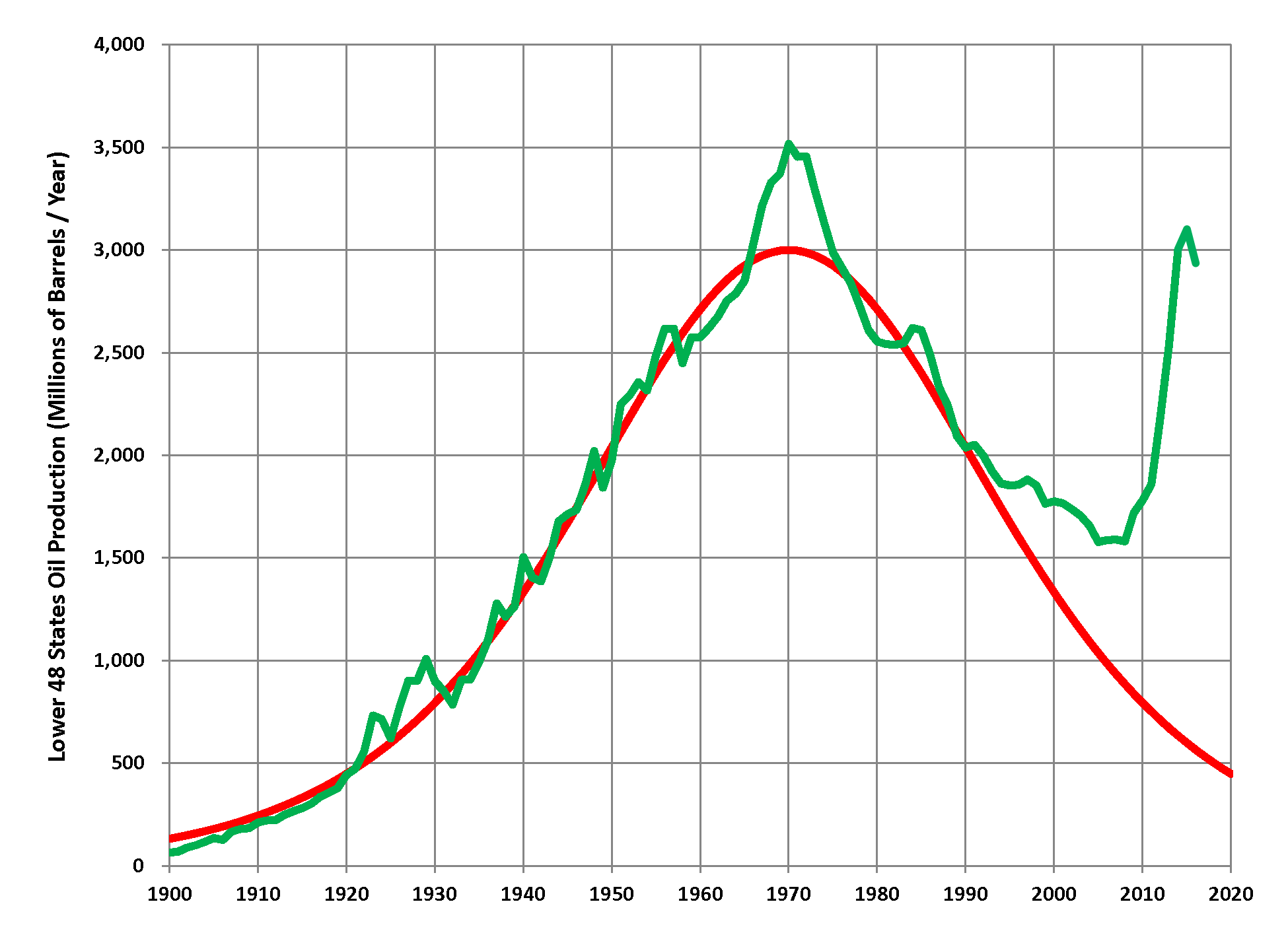
The concept of peak oil, or more broadly, peak extraction for any finite resource, traces its intellectual lineage back to the early 20th century, but it was geologist M. King Hubbert who first provided a rigorous mathematical framework. In his 1956 paper, "Nuclear Energy and the Fossil Fuels," Hubbert famously predicted that U.S. conventional oil production would peak between 1965 and 1971. His model, based on the bell-shaped curve of resource extraction, proved remarkably accurate for U.S. production, which indeed plateaued and began to decline in the early 1970s. This success led to extrapolations for global oil production, with various organizations and individuals forecasting a global peak at different times, often tied to specific technological breakthroughs or geopolitical events. The International Energy Agency (IEA) has been a prominent voice in these discussions, regularly updating its projections and analyses of global energy trends, often differing from more alarmist predictions.
⚙️ How It Works
Peak oil operates on the principle that oil extraction, like any finite resource, follows a production lifecycle. Initially, extraction is easy and cheap, leading to rapid increases in production. As easily accessible reserves are depleted, producers must turn to more challenging and expensive methods, such as deepwater drilling, oil sands extraction, or hydraulic fracturing (fracking). This leads to a plateau in production rates. Eventually, the geological and economic constraints become so significant that production rates begin to decline, even with increased investment and technological effort. The "peak" is not a sudden drop-off but the highest point on the production curve, after which output becomes increasingly difficult and costly to maintain, potentially leading to supply shortages if demand outstrips this declining supply. The advent of shale oil extraction in the United States, for instance, significantly altered production curves in the early 21st century.
📊 Key Facts & Numbers
Global crude oil production has historically hovered around 80-100 million barrels per day in recent decades, with significant fluctuations. For example, in 2019, global oil production reached approximately 93.5 million barrels per day, according to the U.S. Energy Information Administration (EIA). However, the year 2020 saw a dramatic drop to around 81.9 million barrels per day due to the COVID-19 pandemic and subsequent decrease in demand. Despite this volatility, proven oil reserves have also seen increases, with estimates often exceeding 1.5 trillion barrels, largely due to advancements in extraction technologies like fracking, which unlocked vast unconventional oil resources. The cost of extraction varies wildly, from less than $10 per barrel for some Middle Eastern conventional oil to over $50 per barrel for oil sands or deepwater projects, influencing the economic viability of production at different price points.
👥 Key People & Organizations
M. King Hubbert, a geophysicist at Shell Oil Company, is the foundational figure, whose "Hubbert peak theory" provided the mathematical model for peak oil. More recently, figures like Richard Heinberg, a senior fellow at the Post Carbon Institute, have become prominent advocates and analysts of peak oil concerns, emphasizing its broader societal and economic implications beyond just supply. Organizations such as the International Energy Agency (IEA) and the U.S. Energy Information Administration (EIA) are key governmental and intergovernmental bodies that track and forecast global oil production and consumption. Think tanks like the Post Carbon Institute and The Oil Drum (a now-defunct but influential blog) have also been crucial in disseminating information and fostering debate within the peak oil community.
🌍 Cultural Impact & Influence
The idea of peak oil has permeated popular culture and public discourse, often evoking images of societal collapse, economic depression, and geopolitical instability. Documentaries like "Crude Impact" (2007) and "The End of Plenty" (2015) have explored the potential consequences of dwindling oil supplies. The concept has also influenced environmental movements, bolstering arguments for transitioning to renewable energy sources and promoting sustainability. The fear of peak oil has driven innovation in energy efficiency and alternative transportation, such as electric vehicles and hydrogen fuel cell technology, even if the direct cause of peak production shifts from scarcity to demand reduction. The term itself has become shorthand for a broader anxiety about resource depletion and the fragility of modern industrial civilization.
⚡ Current State & Latest Developments
The narrative surrounding peak oil has significantly evolved. While earlier predictions focused on geological limits to supply, the current discourse is increasingly dominated by the concept of "peak demand." This shift is driven by the rapid growth of renewable energy sources like solar and wind power, coupled with the accelerating adoption of electric vehicles in the automotive sector. The IEA, for instance, has projected that global oil demand for transportation could peak as early as 2030, a significant revision from previous forecasts that anticipated continued growth for decades. Geopolitical factors, such as the rise of OPEC+ as a dominant force in supply management and the increasing volatility in oil prices, also continue to shape the current state of oil production and consumption. The ongoing war in Ukraine has further highlighted the vulnerabilities of global energy supply chains.
🤔 Controversies & Debates
The timing of peak oil remains one of the most contentious debates in energy economics. Critics argue that technological innovation, particularly in extraction techniques like hydraulic fracturing (fracking) and deepwater drilling, has repeatedly pushed back predicted peak dates, suggesting that resource constraints are less significant than economic factors. They point to the vast, technically recoverable reserves that remain undeveloped. Conversely, proponents of peak oil, while acknowledging technological advancements, emphasize that these often come with higher costs and greater environmental impacts. They argue that the sheer volume of remaining reserves doesn't negate the geological reality of declining production rates from existing fields and the increasing difficulty of finding and developing new, large-scale conventional oil discoveries. The debate is further complicated by the role of climate change policy, which aims to deliberately reduce fossil fuel consumption, thereby potentially inducing a peak in demand before geological limits are reached.
🔮 Future Outlook & Predictions
The future outlook for peak oil is increasingly intertwined with the global energy transition. Many futurists and energy analysts predict that global oil demand will peak and begin to decline within the next decade, driven by policy, technology, and consumer preferences. The International Energy Agency (IEA) has projected that oil demand could plateau around 2030, with a subsequent decline influenced by the pace of electric vehicle adoption and the decarbonization of industrial sectors. However, the exact trajectory remains uncertain, with potential for continued demand growth in certain regions or sectors, and the possibility of supply-side shocks due to geopolitical instability or underinvestment in new production capacity. The development of synthetic fuels and advanced biofuels could also play a role in maintaining oil-like products, albeit with different production and environmental profiles.
💡 Practical Applications
The concept of peak oil has direct implications for industries reliant on petroleum products. For the transportation sector, it underscores the urgency of transitioning to alternative fuels and more efficient modes of transit, such as high-speed rail and public transportation. In manufacturing, it highlights the need for developing processes that use less oil-derived feedstocks or alternative materials. The petrochemical industry, which uses oil as a primary raw material for plastics, fertilizers, and countless other products, faces a significant challenge in adapting to a future of potentially declining oil availability or rising prices. Energy security concerns also drive investment in domestic renewable energy production and energy independence strategies, reducing reliance on volatile global oil markets.
Key Facts
- Year
- 1956 (Hubbert's prediction)
- Origin
- United States
- Category
- science
- Type
- concept
Frequently Asked Questions
What exactly is peak oil?
Peak oil refers to the hypothetical point in time when the maximum rate of global petroleum extraction is reached, after which production is expected to enter a terminal decline. This concept is based on the geological reality that oil is a finite resource, and extraction rates typically follow a bell-shaped curve, as theorized by M. King Hubbert. The concern is that a decline in production, if not matched by a corresponding decline in demand, could lead to severe economic disruptions and energy shortages.
Has global peak oil already happened?
There is no consensus on whether global peak oil has already occurred. While some analysts believe it may have happened around 2005-2008 based on conventional oil production, the rise of unconventional sources like shale oil has significantly altered production trajectories. Many forecasts now suggest that "peak demand" for oil, driven by the transition to renewable energy and electric vehicles, may occur before geological supply constraints become the primary limiting factor.
What are the consequences of peak oil?
The potential consequences of peak oil are far-reaching and include significant price increases for oil and petroleum products, leading to economic recession and inflation. It could also trigger geopolitical instability as nations compete for dwindling resources, disrupt global supply chains that rely heavily on oil for transportation, and necessitate rapid societal shifts towards alternative energy sources and more sustainable practices. The severity of these consequences depends heavily on how quickly and effectively the world transitions to post-oil energy systems.
How did M. King Hubbert predict peak oil?
M. King Hubbert, a geophysicist at Shell Oil Company, developed the "Hubbert peak theory." He observed that the production of any finite resource, when plotted over time, tends to follow a bell-shaped curve. By analyzing historical production data and estimating remaining reserves, he could predict the peak and subsequent decline of oil production for a given region or for the entire globe. His 1956 prediction for U.S. oil production peaking between 1965 and 1971 proved remarkably accurate for conventional oil.
Is peak oil still relevant with the rise of renewables?
Yes, peak oil remains relevant, though the focus has shifted. While earlier concerns centered on geological scarcity (peak supply), the current discussion increasingly involves "peak demand." The rapid growth of renewable energy technologies, the electrification of transport, and global climate policies are driving down projected oil consumption. Therefore, peak oil might be reached not because we run out of oil, but because the world collectively decides to stop using it due to environmental concerns and the availability of cleaner alternatives.
What is the difference between peak oil and oil depletion?
Oil depletion refers to the ongoing process of consuming finite oil reserves, meaning that the amount of available oil decreases over time. Peak oil, on the other hand, is a specific point in time when the rate of extraction reaches its maximum. After the peak, even if substantial reserves remain, the ability to extract oil at ever-increasing or even constant rates diminishes, leading to a decline in production volume. Depletion is the underlying condition; peak oil is the point of maximum flow rate derived from that condition.
What are unconventional oil sources and how do they affect peak oil predictions?
Unconventional oil sources include shale oil (extracted via hydraulic fracturing), oil sands, and heavy oil. These sources are more difficult and expensive to extract than conventional crude oil. Their development, particularly the U.S. shale boom starting in the late 2000s, significantly boosted global oil production and pushed back many predicted peak oil dates. However, unconventional extraction often has higher environmental impacts and can be more sensitive to price fluctuations, meaning their long-term contribution to supply remains a subject of debate.