
Contents
- 🎵 Origins & History
- ⚙️ How It Works
- 📊 Key Facts & Numbers
- 👥 Key People & Organizations
- 🌍 Cultural Impact & Influence
- ⚡ Current State & Latest Developments
- 🤔 Controversies & Debates
- 🔮 Future Outlook & Predictions
- 💡 Practical Applications
- 📚 Related Topics & Deeper Reading
- Frequently Asked Questions
- Related Topics
Overview
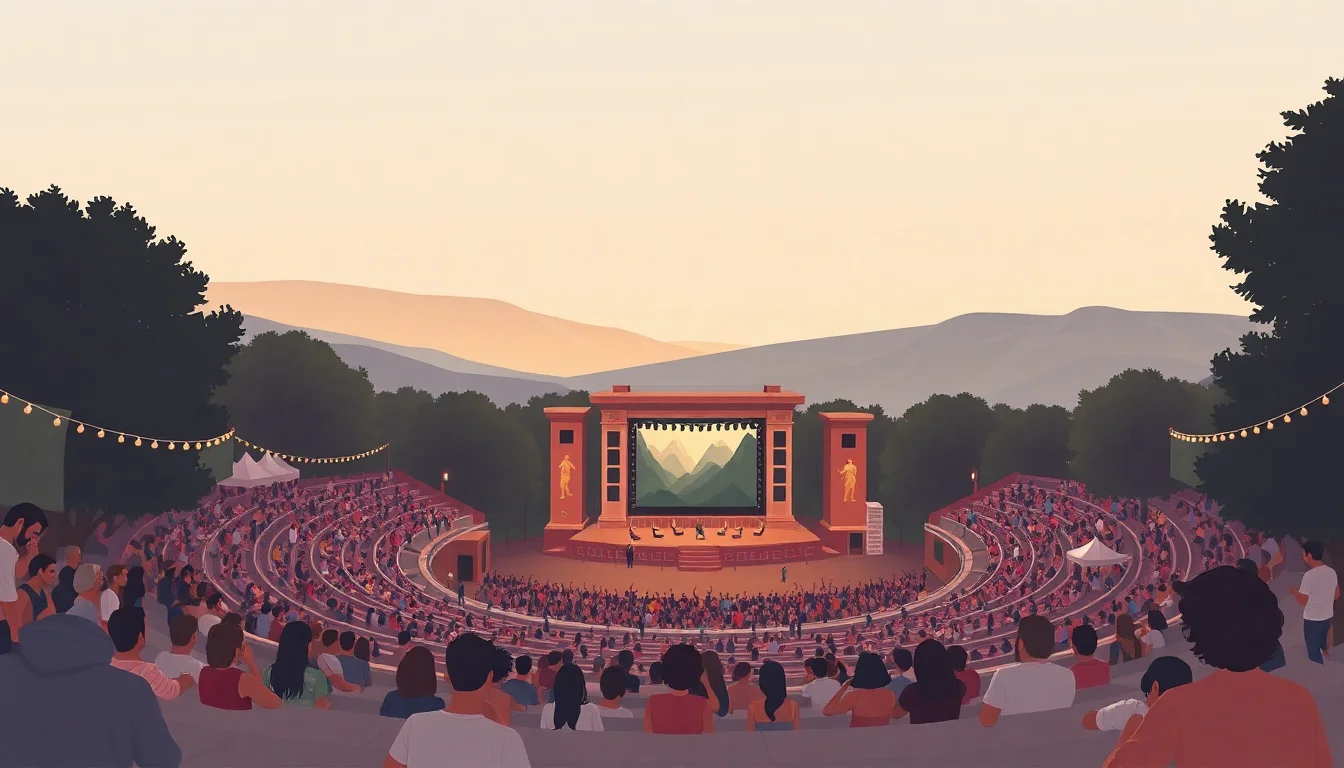
The roots of outdoor entertainment stretch back to antiquity, with the earliest forms of organized public performance occurring in natural amphitheatres or purpose-built structures designed to harness acoustics and sightlines. Ancient Greeks perfected the open-air theatre, exemplified by the Theatre of Epidaurus (c. 330 BCE), renowned for its exceptional acoustics that still allow a whisper from the stage to be heard in the uppermost seats. The Romans further developed these concepts with grander, more elaborate amphitheatres like the Colosseum in Rome (completed 80 CE), which hosted gladiatorial combat, public spectacles, and mock naval battles for crowds exceeding 50,000. Medieval Europe saw outdoor entertainment shift towards fairs, tournaments, and religious plays performed in town squares or castle courtyards. The Renaissance and Baroque periods saw the rise of elaborate outdoor courtly entertainments and the development of formal gardens with spaces for performances, foreshadowing modern event spaces. The 19th century brought about large-scale public parks and the popularization of open-air concerts and circuses, setting the stage for the massive festivals of the 20th and 21st centuries.
⚙️ How It Works
Outdoor entertainment functions by leveraging natural or constructed open spaces to host events that engage audiences through sight, sound, and atmosphere. Key to its operation are elements like acoustics, which can be naturally enhanced by topography or artificially managed with sound systems; lighting, crucial for evening events and creating mood; and crowd management, involving the safe and efficient movement and containment of large numbers of people. Venues range from natural formations like canyons and hillsides to purpose-built stadiums, arenas, and festival grounds. Infrastructure such as stages, seating (or standing areas), sanitation facilities, and vendor zones must be robustly planned and executed. The 'how' often involves complex logistical coordination, including permits, security, emergency services, and waste management, all while aiming to minimize environmental impact and maximize attendee experience. The integration of technology, from high-definition screens to sophisticated pyrotechnics, further enhances the spectacle.
📊 Key Facts & Numbers
The scale of outdoor entertainment is staggering. Globally, the outdoor entertainment market is projected to reach over $100 billion by 2027, growing at a compound annual growth rate (CAGR) of approximately 5%. Major music festivals like Coachella in California generate upwards of $100 million in revenue per event, attracting over 125,000 attendees daily. Professional sporting events, such as the Super Bowl in the United States, can draw crowds exceeding 70,000 to the stadium, with billions more watching on television. Theme parks, a significant segment of outdoor entertainment, see annual attendance figures in the tens of millions for leading attractions like Walt Disney World's Magic Kingdom, which alone hosted over 17 million visitors in 2023. Even smaller community events, like local farmers' markets or outdoor concerts, contribute to a vibrant ecosystem of public engagement, with millions of such events occurring annually worldwide.
👥 Key People & Organizations
Numerous individuals and organizations have shaped the landscape of outdoor entertainment. Promoters and producers like Michael Eavis, the founder of the Glastonbury Festival, have created enduring cultural landmarks. Event management companies such as Live Nation Entertainment and SES Entertainment Group are titans in organizing and promoting large-scale concerts and festivals. Sports leagues like the NFL and MLB are central to stadium-based entertainment. Theme park pioneers like Walt Disney revolutionized family entertainment with meticulously designed outdoor experiences. Furthermore, architects and engineers who design iconic outdoor venues, from the Wembley Stadium to the Sydney Opera House's outdoor concert hall, play a crucial role. The International Association of Fairs and Events (IAFE) represents a significant portion of the industry, advocating for and supporting fair and festival organizers.
🌍 Cultural Impact & Influence
Outdoor entertainment profoundly influences culture, shaping social trends, fashion, and even language. Music festivals, in particular, have become cultural touchstones, fostering a sense of community and shared experience, and often driving fashion trends seen on platforms like Instagram. Sporting events unite communities and nations, creating shared heroes and narratives that permeate society. The accessibility of outdoor venues also democratizes culture, offering experiences that are often more affordable and less formal than their indoor counterparts. Think of the impact of free summer concert series in city parks or the cultural significance of the Burning Man festival as an experiment in temporary community and artistic expression. This form of entertainment often blurs the lines between performer and audience, encouraging participation and a sense of belonging that resonates deeply.
⚡ Current State & Latest Developments
The current state of outdoor entertainment is marked by innovation and adaptation. Post-pandemic, there's a heightened demand for live, in-person experiences, leading to a resurgence in festival attendance and live music bookings. Technology integration is rapidly advancing, with augmented reality (AR) overlays enhancing concert visuals and drone light shows becoming a popular alternative to fireworks. Sustainability is also a major focus, with many festivals and venues implementing eco-friendly practices, from waste reduction to renewable energy sources. The rise of 'glamping' (glamorous camping) has made large-scale outdoor events more accessible to a wider demographic. Furthermore, the proliferation of streaming services has led some outdoor entertainment providers to explore hybrid models, offering live streams alongside in-person tickets, as seen with events like TwitchCon.
🤔 Controversies & Debates
Significant controversies surround outdoor entertainment, primarily concerning environmental impact and community disruption. Large festivals can generate immense amounts of waste, strain local resources, and cause noise pollution, leading to friction with local residents and environmental groups. The economic benefits are often debated, with questions raised about whether the revenue truly benefits local communities or primarily large corporations. Safety is another perennial concern, particularly regarding crowd control at high-attendance events and the potential for stampedes or other accidents, as tragically seen at the Astroworld Festival tragedy in 2021. The commercialization of public spaces for private entertainment also sparks debate about access and equity.
🔮 Future Outlook & Predictions
The future of outdoor entertainment points towards greater technological integration and a stronger emphasis on sustainability and personalized experiences. Expect more immersive events utilizing AR/VR, interactive installations, and AI-driven crowd management. The drive for sustainability will likely lead to more 'green' festivals and venues, powered by renewable energy and employing circular economy principles. 'Pop-up' events in unique or unexpected outdoor locations, facilitated by modular infrastructure, will likely become more common. Furthermore, as climate change impacts weather patterns, venues and organizers will need to develop more resilient infrastructure and contingency plans. The line between entertainment and experience design will continue to blur, with a focus on creating memorable, multi-sensory journeys for attendees.
💡 Practical Applications
Outdoor entertainment has a wide range of practical applications. Beyond leisure, it serves as a powerful tool for community building, cultural exchange, and economic development. Festivals and sporting events attract tourism, boosting local economies through accommodation, dining, and retail spending. Outdoor venues are also utilized for educational purposes, such as nature walks, astronomical observatories, and historical reenactments. In urban planning, the creation of accessible outdoor entertainment spaces, like parks with amphitheaters or public squares for markets, enhances quality of life and fosters social cohesion. They can also serve as platforms for activism and public awareness campaigns, leveraging large gatherings for impactful messaging.
Key Facts
- Year
- Antiquity - Present
- Origin
- Global
- Category
- culture
- Type
- phenomenon
Frequently Asked Questions
What is the oldest form of outdoor entertainment?
The oldest forms of organized outdoor entertainment trace back to ancient civilizations, particularly the Greeks and Romans. The ancient Greeks developed open-air theatres, such as the Theatre of Epidaurus (c. 330 BCE), for dramatic performances, utilizing natural topography for acoustics and seating. The Romans expanded on this with monumental amphitheatres like the Colosseum (completed 80 CE), which hosted gladiatorial contests and public spectacles for tens of thousands of spectators, demonstrating an early mastery of large-scale crowd management and architectural design for entertainment.
How do outdoor entertainment venues manage acoustics?
Acoustics in outdoor entertainment venues are managed through a combination of natural and technological solutions. Natural acoustics are often enhanced by the venue's topography, with curved surfaces and open spaces designed to reflect and amplify sound, as seen in ancient Greek theatres. For modern events, sophisticated sound systems with strategically placed speakers, subwoofers, and delay towers are essential to ensure consistent sound quality across large areas. Advanced digital signal processing (DSP) is used to fine-tune frequencies and minimize echoes or dead spots, ensuring that performers' voices and music are clear and impactful for every attendee, regardless of their location within the venue.
What is the economic significance of outdoor entertainment?
The economic significance of outdoor entertainment is substantial, with the global market valued in the tens of billions of dollars annually. Major music festivals like Coachella can generate over $100 million per event, while large sporting events like the Super Bowl contribute significantly to local economies through tourism, hospitality, and merchandise sales. Theme parks, a major component of outdoor entertainment, attract millions of visitors, driving revenue through ticket sales, food, and merchandise. This sector also creates numerous jobs in event management, production, security, and hospitality, underscoring its role as a major economic driver.
How has technology changed outdoor entertainment?
Technology has dramatically transformed outdoor entertainment, enhancing both the spectacle and the attendee experience. Advanced sound and lighting systems create immersive atmospheres, while large-scale LED screens provide visual focal points for massive crowds. Innovations like augmented reality (AR) are being integrated into concerts and festivals, overlaying digital effects onto the physical environment. Drone light shows offer a sustainable alternative to fireworks. Furthermore, ticketing platforms, mobile apps for event navigation and ordering, and sophisticated crowd management systems all rely on cutting-edge technology to deliver seamless and engaging experiences.
What are the main criticisms of large outdoor festivals?
Large outdoor festivals face significant criticism, primarily concerning their environmental footprint and impact on local communities. Issues include vast amounts of waste generated, high water and energy consumption, and potential damage to natural landscapes. Noise pollution and traffic congestion can disrupt nearby residents. Furthermore, the economic benefits are often debated, with concerns that profits may not sufficiently benefit local economies. Safety is also a major concern, as highlighted by incidents like the Astroworld Festival tragedy, raising questions about adequate crowd control and security measures at high-attendance events.
How can I find and attend outdoor entertainment events?
Finding and attending outdoor entertainment events involves several steps. Start by identifying your interests, whether it's music festivals, sporting events, outdoor theatre, or local fairs. Websites like Ticketmaster, Eventbrite, and specialized festival aggregators (e.g., Resident Advisor for electronic music) are excellent resources for tickets and event listings. Follow your favorite artists, teams, or venues on social media platforms like Twitter and Instagram for announcements. For local events, check community calendars, local news websites, and municipal park department listings. Always research the venue, understand the ticket policies, and plan for transportation and accommodation if necessary.
What are the future trends for outdoor entertainment?
The future of outdoor entertainment is leaning towards increased technological immersion and enhanced sustainability. Expect more widespread use of augmented reality (AR) and virtual reality (VR) to create interactive experiences, alongside sophisticated projection mapping and drone displays. Sustainability will be a paramount concern, with a push for renewable energy sources, comprehensive waste management, and eco-friendly materials. 'Pop-up' events in unconventional outdoor locations, facilitated by modular infrastructure, are likely to grow. Personalized experiences, driven by data analytics and AI, will tailor offerings to individual attendee preferences, creating more bespoke and memorable events.