
Contents
Overview
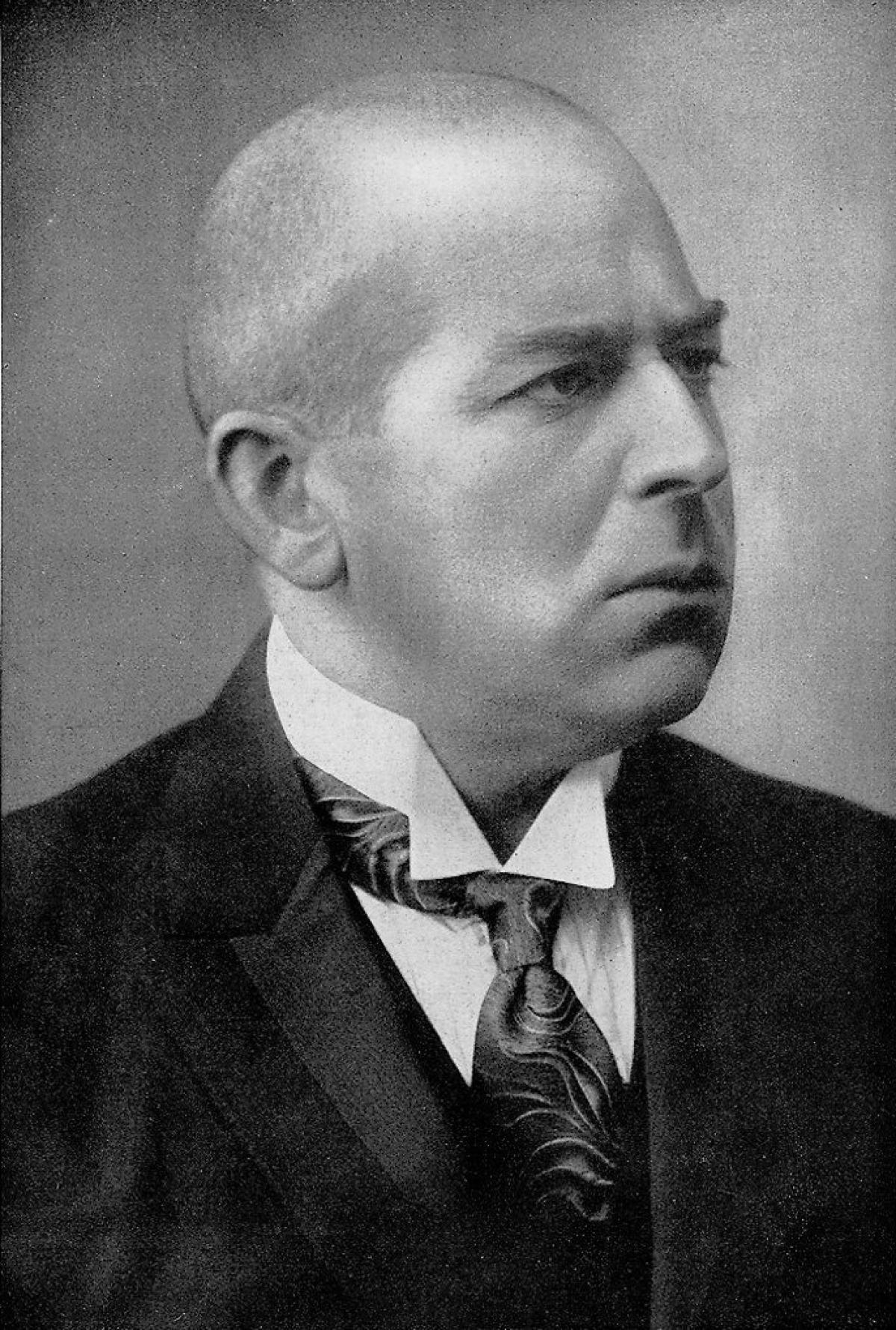
Oswald Spengler (1880-1936) was a German historian and philosopher best known for his monumental two-volume work, The Decline of the West (Der Untergang des Abendlandes), published in 1918 and 1922. Spengler posited a radical theory of history, viewing civilizations not as linear progressions but as distinct, organic entities with predetermined lifespans, akin to individual organisms. Each 'culture-soul' — be it Egyptian, Classical, or Western — was believed to pass through predictable stages of growth, maturity, and decay, culminating in a phase of 'civilization' characterized by rationalism, materialism, and eventual collapse. He famously predicted the West's entry into a period of 'Caesarism' around the year 2000, preceding its final demise. His deterministic and cyclical view of history offered a stark counterpoint to the prevailing progressive narratives of his time, profoundly influencing subsequent thought on historical cycles, cultural pessimism, and the nature of societal change, while also drawing criticism for its perceived fatalism and nationalist undertones.
🎵 Origins & History
Oswald Spengler was born to Bernhard Spengler and Pauline Spengler (née Grantzow). Spengler's Ph.D. dissertation was on the philosopher Heraclitus. Spengler studied mathematics and natural sciences at the University of Halle and the Humboldt University of Berlin. Spengler initially worked as a teacher, a profession that afforded him the time and intellectual space to develop his grand historical theories, largely in isolation. The outbreak of World War I in 1914 served as a catalyst, reinforcing his belief in the imminent crisis facing Western civilization and accelerating the completion of his magnum opus, The Decline of the West, which was published in 1918, just as the war concluded, and its second volume in 1922.
⚙️ How It Works
Spengler's core thesis in The Decline of the West is that history is not a linear progression but a cyclical process driven by distinct, self-contained "high cultures" or "world-cultures." He identified eight such cultures: Apollonian (Classical), Magian (Arabian), Faustian (Western), Mayan, Chinese, Indian, Babylonian, and Egyptian. Each culture, according to Spengler, possesses a unique "culture-soul" that dictates its destiny, manifesting in its art, religion, science, and political structures. These cultures are born, mature, and inevitably decline, entering a phase of "civilization" characterized by metropolitanism, rationalism, and a loss of creative vitality, ultimately leading to a "second religiosity" or final collapse. He argued that Western culture, which he termed "Faustian," had reached its "civilization" stage and was destined for decline, predicting a period of "Caesarism" — authoritarian rule — before its ultimate demise, a process he believed would unfold over the next two centuries.
📊 Key Facts & Numbers
Spengler's The Decline of the West sold an astonishing 30,000 copies in its first year alone, a remarkable figure for a dense philosophical work. His prediction for Western civilization's decline placed its critical phase around the year 2000, followed by approximately 200 years of "Caesarism." He identified 1,500 years as the typical lifespan for a high culture, placing the "Faustian" culture's birth around 1000 CE. Spengler's work was translated into over a dozen languages, reaching a global audience. His philosophical output was prolific, with Prussianism and Socialism (1919) and The Hour of Decision (1933) also contributing significantly to his oeuvre. Despite his critique of modernity, Spengler's own works have been cited by an estimated 50,000 academic papers and books globally.
👥 Key People & Organizations
While Spengler was largely a solitary intellectual, his work was shaped by and interacted with several key figures and intellectual currents. His philosophical influences include Friedrich Nietzsche, whose concept of the will to power and critique of Western morality resonated with Spengler, and Heraclitus, whose philosophy of flux and change informed Spengler's cyclical view. He was also influenced by the biologist Hans Driesch and his vitalist theories. Spengler's most significant intellectual rival was Arnold J. Toynbee, whose own multi-volume A Study of History offered a more optimistic, challenge-and-response model of civilizational development, contrasting sharply with Spengler's deterministic outlook. Spengler's political views, particularly his critique of democracy and his nationalist leanings, placed him within the broader context of the Weimar Republic's "Conservative Revolution," though he maintained a critical distance from many of its adherents.
🌍 Cultural Impact & Influence
Spengler's impact on 20th and 21st-century thought is undeniable, though often debated. The Decline of the West became a cultural touchstone, offering a powerful vocabulary for discussing civilizational decline and cultural pessimism, particularly in the aftermath of World War I. His ideas influenced a generation of thinkers, artists, and writers, including Carl Jung, who saw parallels between Spengler's cultural cycles and his own theories of archetypes, and Ernst Jünger, who grappled with themes of societal transformation and the "inner emigration." Spengler's cyclical model provided a framework for understanding historical patterns and the potential trajectory of Western society, resonating with those who felt alienated by modernity and the perceived spiritual emptiness of industrial civilization. His work continues to be referenced in discussions of geopolitics, cultural studies, and the philosophy of history, even as its deterministic aspects are challenged.
⚡ Current State & Latest Developments
Despite Spengler's death in 1936, his ideas remain remarkably relevant in contemporary discourse, particularly concerning the perceived challenges facing Western societies. The concept of "civilizational decline" and the potential for "Caesarism" are frequently invoked in analyses of political polarization, the rise of authoritarian tendencies, and the impact of globalization. Thinkers like Alex Karp, CEO of Palantir Technologies, have referenced Spengler's work in discussions about the future of technology and societal control, suggesting that his insights into the dynamics of power and societal transformation still hold explanatory power. While the specific predictions of The Decline of the West are subject to ongoing interpretation and debate, the underlying framework of cyclical history and organic civilizational lifespans continues to inform analyses of global trends and the long-term prospects of various cultures and nations.
🤔 Controversies & Debates
Spengler's work is not without significant controversy. His deterministic view of history, which suggests a predetermined lifespan for civilizations, has been criticized as fatalistic and anti-progressivist, undermining human agency and the possibility of reform. His nationalist sentiments and his critique of democracy, particularly in Prussianism and Socialism and The Hour of Decision, led to complex and often uncomfortable associations. While Spengler himself was critical of the Nazi Party's vulgarity and its simplistic racial theories, his ideas were sometimes co-opted or misinterpreted by right-wing circles, leading to debates about his true political legacy. Furthermore, his methodology, which relies on broad analogies between disparate cultures and a selective interpretation of historical data, has been challenged by mainstream historians for lacking empirical rigor and for its subjective nature.
🔮 Future Outlook & Predictions
The future outlook for Spengler's theories remains a subject of intense debate. While few contemporary historians subscribe to his rigid, deterministic model of civilizational lifespans, the core concepts of cyclical history and the potential for societal decline continue to resonate. His predictions about the rise of "Caesarism" and the challenges of "civilization" are often revisited in light of contemporary political trends, such as the rise of populism and strongman politics in various regions. Some scholars argue that Spengler's work provides a valuable, albeit bleak, lens through which to examine the long-term dynamics of power, culture, and societal transformation, urging a reassessment of Western civilization's trajectory. Others maintain that his fatalism offers little constructive guidance, advocating instead for more dynamic and agency-focused models of historical change.
💡 Practical Applications
While Spengler's work is primarily theoretical, its influence can be seen in practical applications across various fields. His framework for understanding historical cycles and civilizational development has informed strategic thinking in geopolitics and international relations, providing a lens for analyzing the rise and fall of powers and the potential long-term consequences of current global trends. In cultural criticism and sociology, Spengler's ideas have been used to analy
Key Facts
- Category
- philosophy
- Type
- topic