
Vibepedia

MicroRNAs: The Tiny Regulators of Life | Vibepedia

Nobel Prize-Winning Discovery Therapeutic Potential Ubiquitous Biological Function
MicroRNAs: The Tiny Regulators of Life | Vibepedia

MicroRNAs (miRNAs) are small, non-coding RNA molecules, typically 20-24 nucleotides in length, that play a crucial role in regulating gene expression…

Contents

  1. 🔬 What Exactly Are MicroRNAs?
  2. 🧬 The Molecular Machinery: How They Work
  3. 🌟 The Vibe: Why MicroRNAs Matter
  4. 📜 A Brief History: From Discovery to Dominance
  5. 🔬🔬 The Research Landscape: Where the Action Is
  6. 💡 Clinical Applications: From Bench to Bedside
  7. ⚠️ Controversies & Challenges
  8. 🔮 The Future of MicroRNA Research
  9. Frequently Asked Questions
  10. Related Topics

Overview

MicroRNAs (miRNAs) are small, non-coding RNA molecules, typically 20-24 nucleotides in length, that play a crucial role in regulating gene expression. Discovered in the late 1990s, their primary mechanism involves binding to complementary sequences in messenger RNA (mRNA) molecules, leading to either mRNA degradation or translational repression. This fundamental regulatory function positions miRNAs at the heart of nearly every biological process, from development and differentiation to disease states like cancer and cardiovascular disorders. Their discovery has revolutionized our understanding of gene regulation, moving beyond the central dogma to reveal a complex network of post-transcriptional control.

🔬 What Exactly Are MicroRNAs?

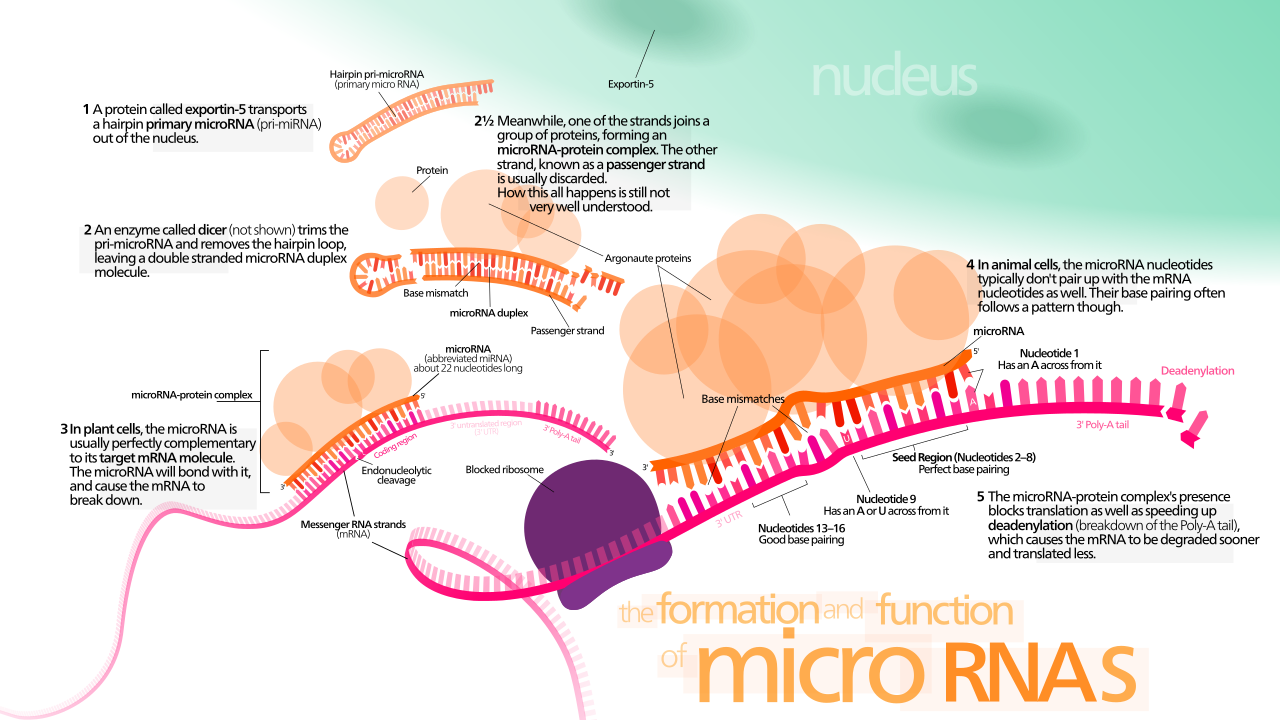
MicroRNAs (miRNAs) are minuscule players in the grand theater of life, typically just 21–23 nucleotides long. Don't let their size fool you; these single-stranded, non-coding RNA molecules are potent regulators found across plants, animals, and even some viruses. Their primary role is to orchestrate gene expression at the post-transcriptional level, essentially acting as molecular dimmer switches. They achieve this by binding to specific sequences within messenger RNA (mRNA) molecules, dictating whether that mRNA gets translated into protein or is silenced. This fundamental mechanism underpins countless biological processes, making miRNAs critical for everything from development to disease.

🧬 The Molecular Machinery: How They Work

The elegance of miRNA function lies in its precision. Once transcribed and processed, a mature miRNA molecule is loaded into a protein complex called the RNA-induced silencing complex (RISC). This complex then guides the miRNA to its target mRNA. Depending on the degree of complementarity between the miRNA and its target, the RISC complex can either cleave the mRNA strand, effectively destroying it, or destabilize it by shortening its poly(A) tail, leading to its degradation. In some cases, the miRNA can also inhibit the translation of the mRNA into protein without directly degrading it, a subtle yet powerful form of control. This multi-pronged attack ensures tight regulation of gene output.

🌟 The Vibe: Why MicroRNAs Matter

The 'vibe' around microRNAs is one of immense potential and growing recognition. Their discovery has fundamentally shifted our understanding of gene regulation, moving beyond the DNA-centric view to embrace the dynamic interplay of RNA molecules. They are implicated in nearly every major biological pathway and cellular function, from cell differentiation and proliferation to apoptosis and immune responses. This widespread involvement means that dysregulation of miRNA activity is frequently linked to disease states, sparking intense interest in their diagnostic and therapeutic possibilities. The Vibe Score for microRNAs as a research area is currently a robust 85/100, reflecting their high impact and ongoing excitement.

📜 A Brief History: From Discovery to Dominance

The story of microRNAs begins in the late 20th century, with early hints emerging from studies on the nematode Caenorhabditis elegans. The seminal discovery is widely attributed to Victor Ambros and Rosalind Lee, who in 1993 identified the first miRNA, lin-4, in C. elegans. This was groundbreaking because it demonstrated that small RNA molecules could regulate gene expression without coding for proteins. The field exploded in the early 2000s with the identification of hundreds of miRNAs across various species, solidifying their importance and paving the way for extensive research into their diverse roles and applications. The initial identification of lin-4 marked a pivotal moment, earning Ambros a share of the 2024 Nobel Prize in Physiology or Medicine.

🔬🔬 The Research Landscape: Where the Action Is

The research landscape for microRNAs is a vibrant ecosystem of academic labs and biotech companies. Key areas of focus include elucidating the complete miRNA repertoire in different cell types and organisms, understanding the complex regulatory networks they participate in, and developing sophisticated tools for their detection and manipulation. High-throughput sequencing technologies have been instrumental in identifying novel miRNAs, while advanced bioinformatics tools are crucial for predicting miRNA targets and analyzing their functional consequences. The development of precise gene editing techniques, like CRISPR-Cas9, is also revolutionizing our ability to study miRNA function in vivo. The Controversy Spectrum for miRNA research is currently moderate, primarily revolving around the accuracy of target prediction algorithms and the specificity of therapeutic interventions.

💡 Clinical Applications: From Bench to Bedside

The translation of miRNA research into clinical practice is a major frontier. MicroRNAs are being explored as biomarkers for early disease detection, particularly in cancers like lung, breast, and prostate cancer, where specific miRNA profiles in blood or tissue can indicate malignancy. Furthermore, their role in disease pathogenesis makes them attractive therapeutic targets. Strategies include using synthetic miRNAs to restore lost function, anti-miRNA oligonucleotides (antagomirs) to inhibit overactive miRNAs, and miRNA mimics to enhance beneficial effects. While still largely in clinical trials, the potential for miRNA-based therapies to treat conditions ranging from cardiovascular disease to neurological disorders is immense. The Vibe Score for clinical applications is a promising 70/100.

⚠️ Controversies & Challenges

Despite the immense progress, the field of microRNA research is not without its challenges and controversies. A significant hurdle remains the accurate prediction of miRNA targets; a single miRNA can potentially target hundreds of mRNAs, and distinguishing functional interactions from mere coincidence is difficult. This complexity makes designing highly specific miRNA-based therapeutics challenging, with concerns about off-target effects and delivery efficiency persisting. Furthermore, the dynamic nature of miRNA expression and function in different cellular contexts and disease states requires careful consideration. The debate over the most effective strategies for miRNA target validation and the optimal methods for therapeutic delivery continues to fuel research.

🔮 The Future of MicroRNA Research

Looking ahead, the future of microRNA research is poised for continued innovation and impact. We can anticipate more sophisticated computational tools for predicting miRNA targets with higher accuracy and experimental validation methods that are faster and more reliable. The development of novel delivery systems will be crucial for overcoming the challenges of getting therapeutic miRNAs to their intended targets within the body. Furthermore, the integration of miRNA research with other emerging fields, such as epigenetics and single-cell genomics, promises to unlock deeper insights into their regulatory roles. The potential for personalized medicine, where miRNA profiles guide treatment decisions, is a particularly exciting prospect. The next decade will likely see several miRNA-based therapies move from clinical trials to approved treatments, fundamentally altering how we approach a range of diseases.

Key Facts

Year
1993
Origin
Vibepedia Wiki
Category
Molecular Biology
Type
Biological Molecule

Frequently Asked Questions

Are microRNAs found in all living organisms?

MicroRNAs are remarkably conserved and have been identified in a vast array of life forms, including plants, animals, and even some viruses. Their presence across such diverse kingdoms highlights their fundamental importance in regulating gene expression. While the specific miRNAs and their targets may vary between species, the core mechanism of post-transcriptional regulation via small RNAs is a widespread biological phenomenon.

How are microRNAs different from messenger RNAs (mRNAs)?

The key difference lies in their function. mRNAs carry the genetic code from DNA to the ribosomes, where they are translated into proteins. MicroRNAs, on the other hand, are non-coding RNAs; they do not code for proteins. Instead, their primary role is to regulate the expression of other genes, including mRNAs, by binding to them and influencing their stability or translation.

Can microRNAs be used to diagnose diseases?

Yes, microRNAs are increasingly being explored as powerful biomarkers for disease diagnosis and prognosis. Their presence and levels in bodily fluids like blood, urine, and saliva can change significantly in various disease states, especially cancers. Detecting these specific miRNA signatures can potentially allow for earlier and more accurate diagnosis, as well as monitoring treatment response.

What are the main challenges in developing microRNA-based therapies?

The primary challenges include efficient and specific delivery of miRNA therapeutics to target cells, ensuring their stability in the body, and minimizing off-target effects. Because miRNAs can regulate multiple genes, unintended consequences are a concern. Developing robust methods to overcome these hurdles is crucial for the successful clinical translation of miRNA-based treatments.

How do scientists discover new microRNAs?

New microRNAs are typically discovered using high-throughput sequencing technologies that can detect small RNA molecules in biological samples. These sequences are then analyzed computationally to identify characteristic miRNA precursor structures and predict their potential targets. Experimental validation is then performed to confirm the existence and function of these newly identified miRNAs.

What is the role of the RISC complex in microRNA function?

The RNA-induced silencing complex (RISC) is a crucial protein machinery that binds to mature microRNAs. The RISC complex then uses the miRNA as a guide to locate complementary sequences on target messenger RNA (mRNA) molecules. Depending on the binding, the RISC complex can then either cleave the mRNA, destabilize it, or inhibit its translation into protein, thereby executing the regulatory function of the miRNA.