
Contents
- 🌍 What is "Mesopotamians: The Dawn of Civilization"?
- 📍 Where to Experience Mesopotamian History
- ⏳ Timeline: Key Eras of Mesopotamian Civilization
- 🏛️ Essential Sites & Artifacts to Know
- 💡 Core Innovations: The Mesopotamian Blueprint
- 🗣️ Language & Culture: Voices from the Past
- ⚖️ Governance & Society: Order in the Fertile Crescent
- ⚔️ Conflicts & Empires: The Shifting Sands of Power
- ✨ Why Mesopotamians Still Matter Today
- 📚 Further Exploration: Resources for Deep Dives
- Frequently Asked Questions
- Related Topics
Overview
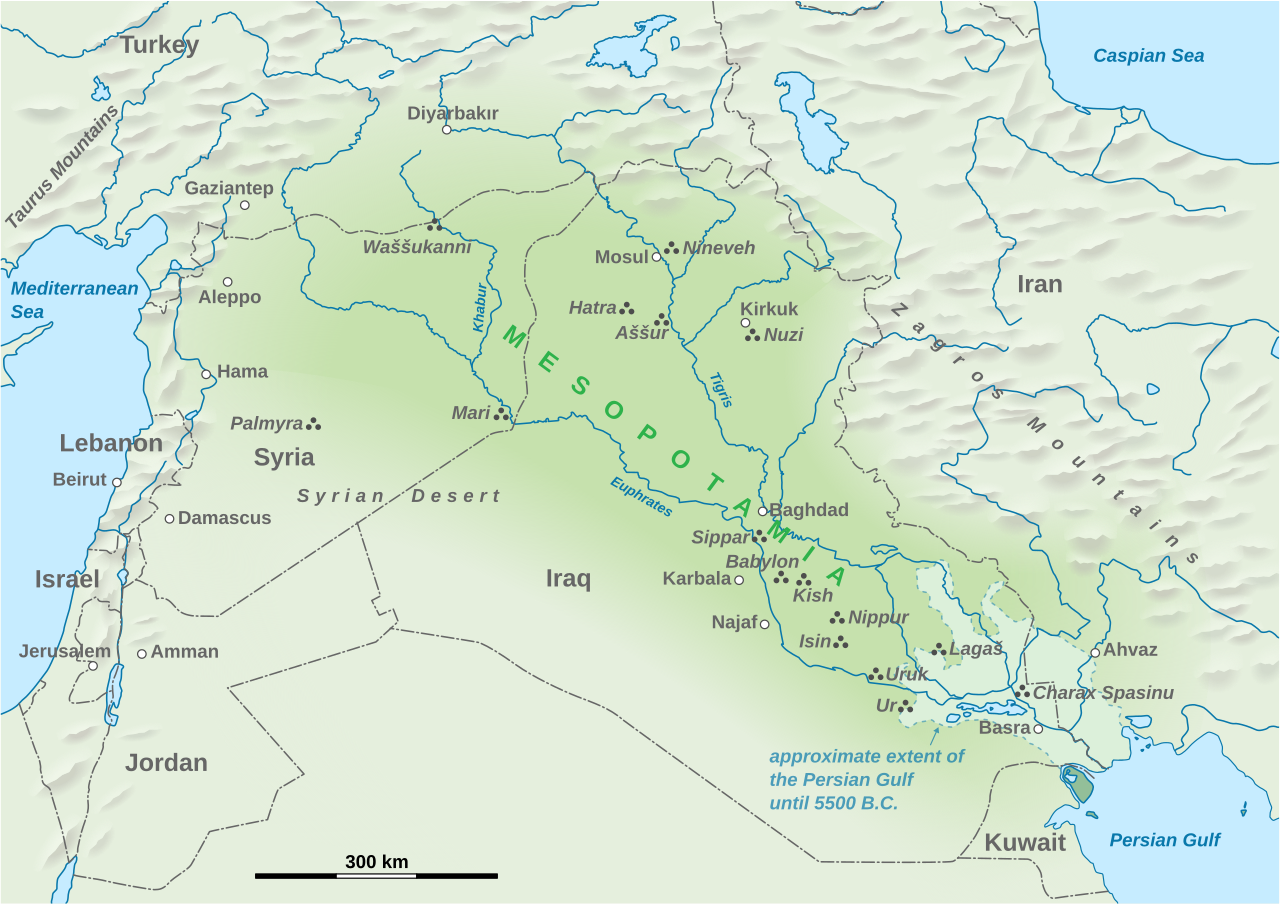
Mesopotamia, the 'land between the rivers' (Tigris and Euphrates), birthed some of humanity's earliest complex societies, beginning with the Sumerians around the 4th millennium BCE. This region, encompassing modern-day Iraq, Kuwait, and parts of Syria and Turkey, witnessed the invention of writing (cuneiform), the wheel, early legal codes (like Hammurabi's), and monumental architecture. Its history is a dynamic saga of city-states, empires, and cultural exchange, marked by periods of innovation and intense warfare, shaping foundational aspects of governance, religion, and technology that echo through millennia. Understanding Mesopotamia is crucial for grasping the roots of Western and Middle Eastern civilization, its enduring legacy a constant point of scholarly debate and popular fascination.
🌍 What is "Mesopotamians: The Dawn of Civilization"?
"Mesopotamians: The Dawn of Civilization" isn't a physical place you can visit, but rather a conceptual gateway to understanding the foundational societies that emerged in the land between the Tigris and Euphrates rivers. This region, largely corresponding to modern-day Iraq, is where humanity first transitioned from scattered agricultural communities to complex urban centers. It's for anyone fascinated by the origins of writing, law, cities, and organized religion, offering a glimpse into the very bedrock of Western and Middle Eastern civilization. Think of it as the ultimate origin story for so much of what we take for granted.
📍 Where to Experience Mesopotamian History
While you can't book a flight to "Mesopotamia" itself, its historical heartland is modern Iraq. Key archaeological sites like Ur, Uruk, and Babylon offer tangible connections to this past, though access and preservation can be challenging due to ongoing geopolitical realities. Museums worldwide, such as the Louvre in Paris and the British Museum in London, house vast collections of Mesopotamian artifacts, providing more accessible, albeit curated, experiences. These institutions are crucial for understanding the material culture and artistic achievements of these ancient peoples.
⏳ Timeline: Key Eras of Mesopotamian Civilization
The Mesopotamian story spans millennia, typically divided into several key periods. The Sumerian Period (c. 4500–1900 BCE) saw the rise of the first city-states and the invention of writing. The Akkadian Empire (c. 2334–2154 BCE) marked the first major imperial unification. Following this, the Babylonian Empire (c. 1894–1595 BCE and later Neo-Babylonian Empire 626–539 BCE) became renowned for its legal codes and astronomical advancements. The Assyrian Empire (c. 2500–609 BCE) was known for its military might and vast empire-building. Each era built upon the last, creating a complex historical narrative.
🏛️ Essential Sites & Artifacts to Know
When exploring Mesopotamian history, certain sites and artifacts are indispensable. The Ziggurat of Ur stands as a monumental testament to Sumerian religious architecture. Cuneiform tablets, like the Code of Hammurabi, provide unparalleled insights into their legal systems and daily life. Cylinder seals, intricately carved miniature objects, reveal artistic styles and mythological narratives. The Ishtar Gate of Babylon, though reconstructed in Berlin, showcases the grandeur of Neo-Babylonian art and engineering. These tangible remnants are crucial for any serious study.
💡 Core Innovations: The Mesopotamian Blueprint
Mesopotamians are credited with a staggering number of foundational innovations that shaped human civilization. They developed the first known system of cuneiform writing, enabling record-keeping, literature, and complex administration. The invention of the wheel revolutionized transportation and pottery production. They pioneered advancements in mathematics, including a sexagesimal (base-60) system still influencing our measurement of time and angles. Furthermore, their sophisticated irrigation systems allowed for large-scale agriculture, supporting burgeoning urban populations.
🗣️ Language & Culture: Voices from the Past
The linguistic landscape of Mesopotamia was diverse, with Sumerian being the earliest attested written language, followed by Akkadian (including its dialects Babylonian and Assyrian), which became the lingua franca for centuries. Their literature, such as the Epic of Gilgamesh, explores universal themes of mortality, friendship, and the human condition, predating many later epic poems. Religious beliefs were polytheistic, with complex pantheons and elaborate temple rituals dedicated to deities like Enlil, Ishtar, and Marduk.
⚖️ Governance & Society: Order in the Fertile Crescent
Mesopotamian societies evolved from independent city-states, each with its own patron deity and ruler, to vast empires. Early governance often involved priest-kings or ensis. The development of codified laws, most famously the Code of Hammurabi, demonstrates a sophisticated understanding of justice and social order, albeit one with clear class distinctions. Social structures typically included elites (priests, rulers, scribes), commoners (farmers, artisans), and slaves. The concept of kingship, often divinely sanctioned, was central to maintaining stability.
⚔️ Conflicts & Empires: The Shifting Sands of Power
The history of Mesopotamia is punctuated by the rise and fall of powerful empires and frequent conflicts. The Sumerian city-states often warred with each other for resources and dominance. Later, empires like the Akkadian, Babylonian, and Assyrian expanded their territories through military conquest, leaving behind legacies of both impressive administration and brutal warfare. These imperial ambitions shaped the political map of the ancient Near East for millennia, influencing subsequent powers like the Persian Empire and Hellenistic kingdoms.
✨ Why Mesopotamians Still Matter Today
The legacy of Mesopotamia is profound and pervasive, even if often unacknowledged. Their innovations in writing, law, mathematics, and urban planning laid the groundwork for subsequent civilizations. The Epic of Gilgamesh continues to resonate with readers today, offering timeless insights into human experience. Understanding Mesopotamian achievements is crucial for grasping the trajectory of human history and the deep roots of many modern societal structures, from legal principles to astronomical observation. Their story is a vital chapter in the human saga.
📚 Further Exploration: Resources for Deep Dives
For those seeking to delve deeper into the world of the Mesopotamians, numerous resources exist. Academic institutions offer courses on Ancient Near Eastern Studies. Books like "The Sumerians: Their History, Culture, and Character" by Samuel Noah Kramer provide foundational knowledge. Museum collections, as mentioned, are invaluable. Online resources from universities and archaeological institutes often feature digital archives of cuneiform texts and artifact databases. Engaging with these materials offers a richer, more nuanced understanding of this pivotal civilization.
Key Facts
- Year
- c. 4000 BCE - 539 BCE
- Origin
- Fertile Crescent
- Category
- Ancient Civilizations
- Type
- Historical Civilization
Frequently Asked Questions
What does 'Mesopotamia' mean?
The name 'Mesopotamia' comes from the ancient Greek words 'mesos' (middle) and 'potamos' (river), literally meaning 'land between the rivers'. This refers to the fertile region situated between the Tigris and Euphrates rivers, a geographical area that corresponds largely to modern-day Iraq.
When did Mesopotamian civilization begin?
The earliest stages of complex society in Mesopotamia, often referred to as the Sumerian Period, began to emerge around the 5th millennium BCE (roughly 4500 BCE) with the development of settled agriculture and early villages. True urban civilization, with large cities and organized states, flourished from the 4th millennium BCE onwards.
What was the most important invention from Mesopotamia?
This is highly debated, but the invention of cuneiform writing around 3200 BCE is arguably the most impactful. It allowed for the recording of laws, history, literature, and economic transactions, fundamentally changing human society and enabling the growth of complex civilizations. The wheel is another strong contender for its transformative impact on transport and industry.
Who were the most famous Mesopotamian rulers?
Several rulers left indelible marks. Sargon of Akkad is credited with creating the first major empire. Hammurabi of Babylon is renowned for his comprehensive legal code. Nebuchadnezzar II is famous for the Neo-Babylonian Empire's grandeur, including the legendary Hanging Gardens of Babylon.
What religion did the Mesopotamians practice?
Mesopotamians practiced a polytheistic religion, worshipping a vast pantheon of gods and goddesses who were believed to control natural forces and human destiny. Key deities included Anu (sky god), Enlil (god of wind and storms), Enki (god of water and wisdom), and Ishtar (goddess of love and war). Temples, particularly ziggurats, were central to their religious and civic life.
Is Mesopotamia still a significant region today?
Historically, the region of Mesopotamia is incredibly significant as the 'cradle of civilization'. Geographically, modern Iraq and parts of surrounding countries occupy this ancient territory. While the ancient civilization itself is long gone, its foundational contributions continue to influence global culture, law, and technology. The region today faces its own complex geopolitical and economic challenges.