
Contents
Overview
The story of the Magnolia genus is a deep dive into botanical antiquity, tracing back to the Cretaceous period, making them some of the oldest flowering plants on Earth. French botanist Charles Plumier named the genus Magnolia, honoring his fellow countryman, the renowned botanist Pierre Magnol. This early classification was later expanded and refined by Carl Linnaeus in the 18th century, incorporating species discovered in both the Americas and Asia. The genus's natural range is remarkably fragmented, with a primary center of diversity in Asia, particularly China and Southeast Asia, and a secondary center in the Americas, including species found from the southeastern United States down to South America. This disjunct distribution has long intrigued scientists, suggesting ancient land bridges or continental drift played a role in their dispersal. Early horticultural interest was spurred by the discovery of species like Magnolia grandiflora in North America, which captivated European botanists and gardeners with its large, persistent white flowers and evergreen foliage.
⚙️ How It Works
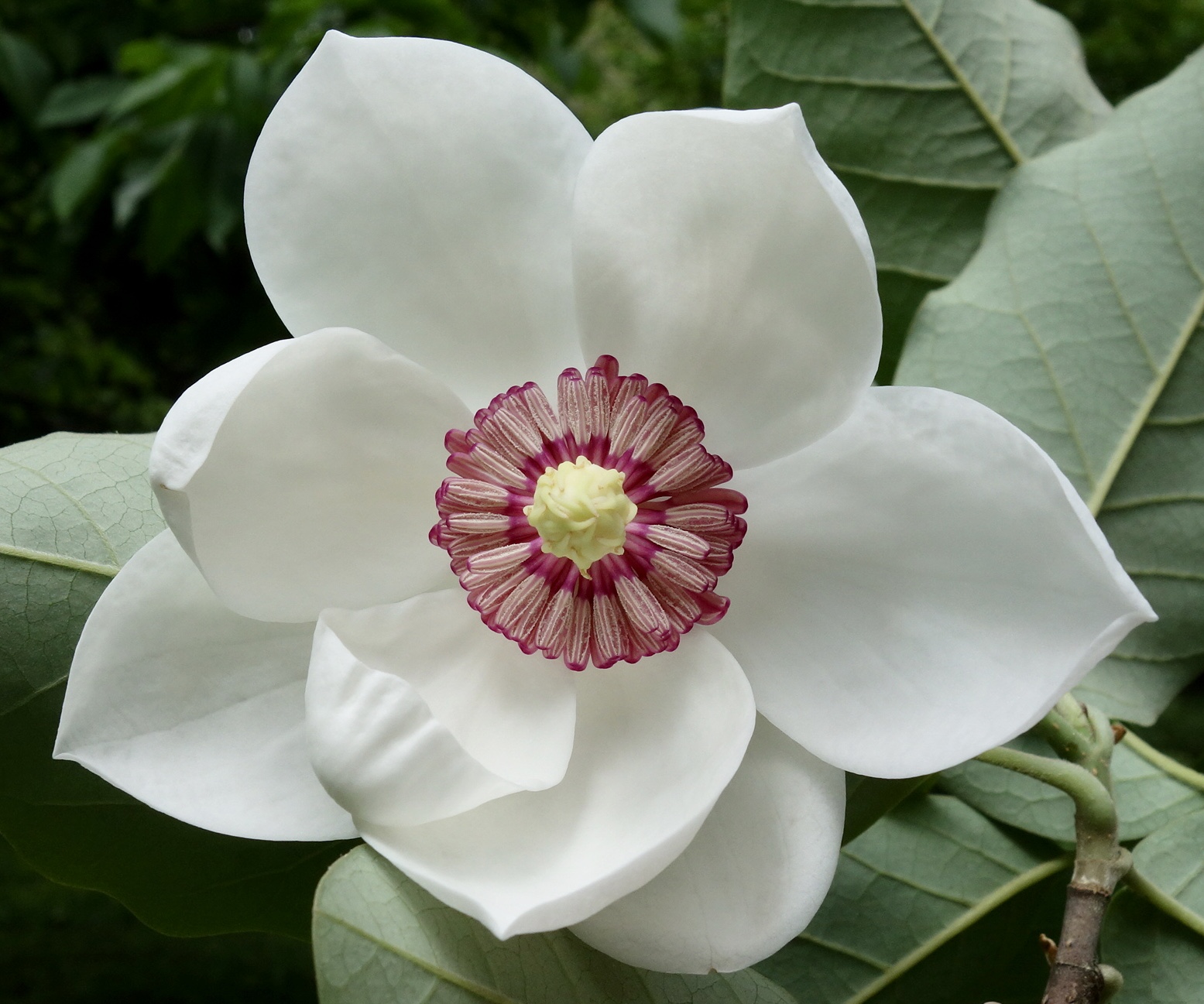
Magnolia plants are characterized by their distinct floral morphology and reproductive structures. Their flowers, often large and showy, are typically actinomorphic (radially symmetrical) and possess numerous spirally arranged tepals (petal-like structures) rather than distinct sepals and petals. The reproductive organs are also arranged spirally on an elongated receptacle, with stamens on the outside and carpels towards the center. This primitive arrangement is a key feature that links them to early angiosperms. Following pollination, typically by beetles, the flowers develop into a unique aggregate fruit, often resembling a cone, which splits open at maturity to reveal bright red or orange seeds suspended on thin filaments. The genus includes both evergreen and deciduous species, with adaptations in leaf retention and flowering time varying widely across its extensive geographic distribution and diverse ecological niches.
📊 Key Facts & Numbers
The Magnolia genus encompasses an estimated 210 to 340 distinct species, a number that fluctuates with ongoing taxonomic research. These species collectively span an enormous geographic area, with populations found across at least 10 countries in Asia and 11 countries in the Americas. Fossil evidence suggests that magnolias have existed for at least 95 million years, with fossilized flowers dating back to the Early Cretaceous period. Commercially, the global market for ornamental trees and shrubs, including magnolias, is valued in the billions of dollars annually, with significant contributions from nurseries in China, the United States, and Europe. For instance, China alone is home to over 100 native magnolia species, representing the largest concentration of diversity for the genus.
👥 Key People & Organizations
The formal naming of the genus is credited to Charles Plumier, a French Minim friar and botanist, who honored Pierre Magnol, director of the Montpellier Botanical Garden, in his 1703 work Nova Plantarum Americanarum Genera. Carl Linnaeus, the father of modern taxonomy, later incorporated Plumier's work into his system, solidifying the genus's scientific name. More recently, significant contributions to understanding magnolia phylogeny have come from molecular biologists and systematists such as R. E. Donoghue and James A. Doyle, whose research using DNA sequencing has helped to clarify evolutionary relationships and inform taxonomic revisions. Horticultural societies like the Royal Horticultural Society and the American Public Gardens Association play crucial roles in promoting cultivation, conservation, and public awareness of various magnolia species.
🌍 Cultural Impact & Influence
Magnolias hold a profound place in human culture, particularly in East Asia, where they have been cultivated for centuries and feature prominently in art, literature, and traditional medicine. In China, the genus is often associated with purity, nobility, and beauty, appearing in classical poetry and landscape paintings. The iconic white blossoms of species like Magnolia denudata (Yulan magnolia) are symbols of spring and renewal. In Japan, magnolias are also revered, with species like Magnolia kobus being common in gardens and associated with springtime festivals. In Western cultures, the large, fragrant flowers of species such as Magnolia grandiflora and Magnolia × soulangeana have made them highly sought-after ornamental plants, symbolizing elegance and perseverance. Their ancient lineage also lends them a certain mystique, connecting modern observers to a prehistoric botanical world.
⚡ Current State & Latest Developments
The current state of Magnolia species is a complex picture of conservation and cultivation. While many species are widely cultivated and thrive in gardens globally, several wild populations face threats from habitat loss and climate change. For example, species endemic to specific regions in China and Southeast Asia are particularly vulnerable. Ongoing research by institutions like the Royal Botanic Gardens, Kew focuses on ex-situ conservation efforts, including seed banking and propagation programs for endangered species. Simultaneously, horticulturalists continue to develop new cultivars and hybrids, expanding the palette of magnolia varieties available for landscaping and ornamental purposes, with recent introductions focusing on improved disease resistance and extended blooming periods.
🤔 Controversies & Debates
A significant ongoing debate within botany revolves around the taxonomic classification of the Magnolia genus. For decades, scientists have grappled with whether to maintain Magnolia as a large, encompassing genus or to split it into several smaller genera, a process complicated by the discovery of new species and advancements in molecular phylogenetic analysis. The proposal to merge genera such as Michelia, Alpina, and Talauma into Magnolia has been met with both support and resistance. Critics argue that this consolidation might obscure the distinct evolutionary histories and morphological differences of these groups, while proponents contend it better reflects the genetic evidence of their close evolutionary ties. Furthermore, the conservation status of many wild magnolia species is a point of contention, with differing assessments of threat levels and the effectiveness of current conservation strategies.
🔮 Future Outlook & Predictions
The future of Magnolia species hinges on a delicate balance between conservation and continued horticultural development. Scientists predict that climate change could significantly impact the distribution and survival of wild populations, particularly those with narrow ecological niches. Therefore, enhanced conservation efforts, including habitat restoration and the establishment of protected areas, will be critical. In horticulture, the focus is likely to remain on breeding for desirable traits such as disease resistance, compact growth habits for urban environments, and extended flowering seasons. There is also growing interest in exploring the ethnobotanical uses of various magnolia species, potentially uncovering new medicinal compounds or applications, building on their historical use in traditional Chinese medicine. The genus's ancient genetic blueprint also makes it a subject of interest for evolutionary biologists seeking to understand plant adaptation and diversification.
💡 Practical Applications
Magnolias are primarily utilized for their ornamental value in landscaping and horticulture. Their large, often fragrant flowers and impressive tree or shrub forms make them focal points in gardens, parks, and public spaces worldwide. Species like Magnolia grandiflora are frequently used as specimen trees or for creating evergreen screens, while deciduous hybrids such as Magnolia × soulangeana provide spectacular spring floral displays. Beyond aesthetics, some species have traditional medicinal applications; for instance, bark extracts from certain magnolias have been used in traditional Chinese medicine for their anti-inflammatory and antioxidant pr
Key Facts
- Category
- nature
- Type
- topic