
Contents
- 🚀 What is M-Pesa and Who Needs It?
- 🌍 Where M-Pesa Dominates
- 💰 How M-Pesa Works: The Mechanics
- 📈 Transaction Fees & Limits: The Nitty-Gritty
- 🌟 M-Pesa vs. Traditional Banking: A Clash of Titans
- 💡 Beyond Basic Transfers: Advanced M-Pesa Features
- ⚠️ Risks and Security: Staying Safe in the Digital Wallet
- 🏆 M-Pesa's Impact: A Socio-Economic Game Changer
- 🤔 The Future of M-Pesa: What's Next?
- ✅ Getting Started with M-Pesa
- Frequently Asked Questions
- Related Topics
Overview
M-Pesa, launched by Safaricom in Kenya in 2007, is more than just a mobile money service; it's a socio-economic phenomenon that democratized financial access for millions. Operating on basic feature phones, it allows users to deposit, withdraw, transfer money, and pay for goods and services using their mobile numbers as a virtual bank account. Its success has been replicated across Africa and beyond, demonstrating the power of accessible, low-cost financial tools in driving economic growth and reducing poverty. While facing increasing competition and regulatory scrutiny, M-Pesa remains a dominant force, a testament to its foundational innovation and deep integration into the daily lives of its users.
🚀 What is M-Pesa and Who Needs It?
M-Pesa, launched by Safaricom in Kenya in 2007, isn't just a mobile money service; it's a financial revolution that has fundamentally reshaped economies across Africa. At its core, M-Pesa allows users to deposit, withdraw, transfer money, and pay for goods and services using a mobile phone, even without a traditional bank account. This makes it indispensable for the unbanked and underbanked populations, enabling financial inclusion on an unprecedented scale. If you're in East Africa, or looking to engage with businesses and individuals there, understanding M-Pesa is non-negotiable. It's the lifeblood of countless transactions, from small vendor sales to large remittances.
🌍 Where M-Pesa Dominates
While M-Pesa's origins are firmly rooted in Kenya, its reach has expanded dramatically. It's now a dominant force in Tanzania, Mozambique, the Democratic Republic of Congo, and Ghana, with varying degrees of success in other African nations. For travelers or businesses operating in these regions, M-Pesa is often the primary, and sometimes only, practical way to conduct financial transactions. Its ubiquity means that understanding its operational nuances is crucial for anyone navigating these markets, whether for personal use or for facilitating international commerce.
💰 How M-Pesa Works: The Mechanics
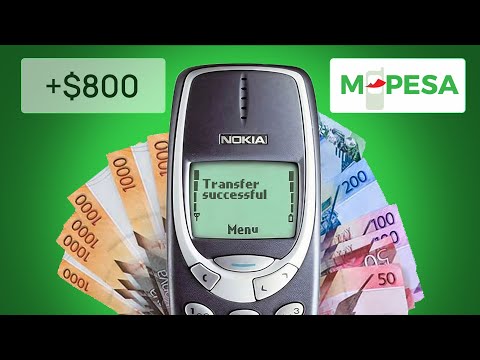
The genius of M-Pesa lies in its simplicity and accessibility. Users register with their mobile phone number and a national ID. Funds can be deposited at any of the vast network of M-Pesa agents – often small shopkeepers or kiosks – by presenting cash. To send money, a user dials a USSD code or uses the M-Pesa app, selects 'Send Money,' enters the recipient's number, the amount, and a PIN. The recipient receives an SMS notification and can then withdraw the cash at an agent or use it directly for payments. This agent network, numbering in the hundreds of thousands, is the physical backbone of the digital system, bridging the gap between cash and mobile.
📈 Transaction Fees & Limits: The Nitty-Gritty
Transaction fees for M-Pesa are generally tiered based on the amount transferred. While small transfers can be remarkably cheap, sometimes even free for peer-to-peer transactions within certain limits, larger sums incur higher charges. These fees are a critical consideration for both individuals and businesses managing their finances. For instance, sending KES 10,000 might cost around KES 30-50 in Kenya, but sending KES 100,000 could cost upwards of KES 100. Withdrawal fees also apply, typically a percentage of the amount withdrawn. It's essential to check the latest fee structure, as these can be adjusted by Safaricom and its partners. Understanding these fee schedules is key to optimizing your usage.
🌟 M-Pesa vs. Traditional Banking: A Clash of Titans
M-Pesa offers a compelling alternative to traditional banking, especially for those excluded from the formal financial system. Unlike banks that often require minimum balances, extensive paperwork, and physical branch visits, M-Pesa is accessible via a basic feature phone and a vast agent network. This dramatically lowers the barrier to entry for financial services. However, traditional banks still offer services like loans, credit facilities, and interest-bearing accounts that M-Pesa, in its basic form, does not directly provide. The integration of M-Pesa with bank accounts, however, is increasingly blurring these lines, offering a hybrid approach.
💡 Beyond Basic Transfers: Advanced M-Pesa Features
M-Pesa has evolved far beyond simple cash transfers. Users can pay utility bills (like electricity and water), purchase airtime for any mobile network, and pay merchants directly through 'Pay Bill' or 'Buy Goods' services. For businesses, this means easier payment collection, while consumers benefit from the convenience of managing essential services from their phones. Furthermore, M-Pesa has facilitated access to micro-loans and savings products through partnerships with financial institutions, demonstrating its growing role in broader financial ecosystems. Exploring these M-Pesa services can unlock significant efficiencies.
⚠️ Risks and Security: Staying Safe in the Digital Wallet
While M-Pesa is generally secure, users must remain vigilant. The primary risks involve social engineering scams, where fraudsters trick users into revealing their PINs or sending money to fraudulent accounts. Always verify the identity of the person you are sending money to and never share your PIN. Official M-Pesa agents will never ask for your PIN. Safaricom employs robust security measures, including encryption and transaction monitoring, but user awareness is the first line of defense. Familiarizing yourself with common fraud prevention is crucial for maintaining the safety of your funds.
🏆 M-Pesa's Impact: A Socio-Economic Game Changer
The socio-economic impact of M-Pesa is profound. It has empowered small businesses by providing a reliable payment system, reduced the risks associated with carrying cash, and enabled remittances that support families and communities. Studies, such as those by the research on financial inclusion, have highlighted how M-Pesa has lifted millions out of poverty by providing access to financial tools. Its role in facilitating emergency aid and disaster relief has also been significant, showcasing its capacity to respond to critical needs. The sheer scale of its adoption, with billions of dollars transacted annually, underscores its transformative power.
🤔 The Future of M-Pesa: What's Next?
The future of M-Pesa is likely to involve deeper integration with digital services and a continued push into more sophisticated financial products. We're already seeing partnerships that offer credit facilities and investment opportunities based on M-Pesa transaction history. The expansion into new markets, particularly beyond Africa, is also a possibility, though it faces significant regulatory and competitive hurdles. The ongoing development of the M-Pesa app and the exploration of blockchain technology could further enhance its capabilities, potentially positioning it as a key player in the global digital economy. The question remains: can M-Pesa maintain its innovative edge against emerging fintech competitors?
✅ Getting Started with M-Pesa
Getting started with M-Pesa is straightforward. Visit any authorized M-Pesa agent with your Kenyan ID (or equivalent national identification for other countries). You'll need to register your mobile number and create a secure PIN. Once registered, you can deposit cash at the agent to fund your M-Pesa wallet. To send money or make payments, you can use the USSD menu by dialing *334# on Safaricom or download the M-Pesa app from your smartphone's app store. Familiarize yourself with the basic commands and ensure you have sufficient funds in your account before initiating any transaction. For businesses, specific registration processes apply to enable 'Pay Bill' or 'Buy Goods' services.
Key Facts
- Year
- 2007
- Origin
- Kenya
- Category
- Fintech / Mobile Money
- Type
- Service
Frequently Asked Questions
Do I need a bank account to use M-Pesa?
No, a traditional bank account is not required to use M-Pesa. Its primary strength lies in serving the unbanked and underbanked population. You can deposit and withdraw cash at any M-Pesa agent using just your mobile phone and national ID. This accessibility is a key reason for its widespread adoption across Africa.
What is the maximum amount I can send or hold with M-Pesa?
Transaction limits and holding limits for M-Pesa vary by country and regulatory requirements. For example, in Kenya, there are daily, monthly, and per-transaction limits set by the Central Bank of Kenya and Safaricom. These limits are designed to manage risk and ensure compliance. It's best to check the specific limits applicable in your region through Safaricom's official channels or by dialing the M-Pesa service code.
How do I get my money back if I send it to the wrong person?
Unfortunately, once a transaction is confirmed, M-Pesa funds are difficult to recover if sent to the wrong person, similar to sending cash. If you realize a mistake immediately, you can try contacting the recipient directly. If the recipient is uncooperative or unknown, you should report the incident to Safaricom customer care. They may be able to assist, but recovery is not guaranteed and often depends on the recipient's cooperation or fraudulent activity being proven.
Can I use M-Pesa outside of Africa?
M-Pesa's primary operational footprint is in Africa, with Kenya being its largest market. While there have been limited international expansions or partnerships in other regions, its core functionality and widespread agent network are concentrated on the continent. For users outside of these specific African countries, M-Pesa may not be available or practical for use.
What are 'Pay Bill' and 'Buy Goods' services?
'Pay Bill' allows users to pay directly to business accounts for services like school fees, utilities, or loans. 'Buy Goods' enables users to purchase goods and services from merchants by sending money to their M-Pesa till number. These services are crucial for businesses to receive payments easily and for consumers to pay for everyday items and services conveniently through their mobile phones.
Is M-Pesa safe from hackers?
M-Pesa employs robust security measures, including encryption and secure PIN authentication, to protect user accounts. However, the most common security threats are not direct hacking of the system but rather social engineering scams targeting users. This includes phishing attempts or tricking users into revealing their PINs. Practicing good security hygiene, such as never sharing your PIN and verifying recipients, is essential for keeping your M-Pesa account safe.