
Contents
Overview
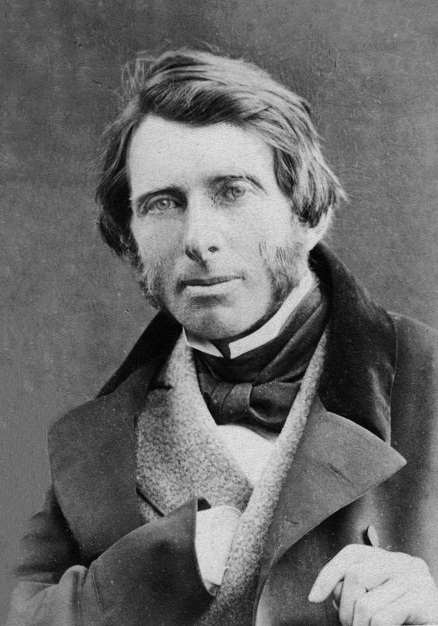
John Ruskin (1819-1900) was a towering figure of Victorian intellectual life, a polymath whose sharp critiques and passionate prose reshaped how England viewed art, architecture, and the very fabric of society. Initially lauded for his defense of the Pre-Raphaelite Brotherhood and his meticulous analyses of natural forms, Ruskin's influence extended far beyond art criticism. He championed the ethical dimensions of labor and consumption, advocating for craftsmanship and social justice in works like Unto This Last. His writings, characterized by their elaborate style and profound moral earnestness, inspired movements from the Arts and Crafts to early environmentalism. Despite later personal and professional struggles, Ruskin's legacy endures as a foundational thinker on the interconnectedness of beauty, morality, and human well-being, leaving an indelible mark on fields as diverse as art history, urban planning, and social reform.
🎵 Origins & History
Born in London, England, John Ruskin emerged from a privileged, religiously devout household that profoundly shaped his worldview. His father, John James Ruskin, a wealthy wine merchant, fostered his son's early passion for art and literature, providing extensive travel opportunities and private tutoring. Ruskin's initial academic pursuits at Christ Church, Oxford, where he studied classics, laid the groundwork for his later scholarly endeavors. His seminal work, Modern Painters, began serialization, initially as a defense of the landscape painter J.M.W. Turner against contemporary critics. This multi-volume treatise, which championed the faithful representation of nature, quickly established Ruskin as a leading voice in art criticism, setting the stage for his broader engagement with social and economic issues.
⚙️ How It Works
Ruskin's intellectual framework operated on the principle that art and morality were inextricably linked, a concept he termed the 'Ethical Aesthetic.' He believed that the quality of art produced by a society reflected its moral health, and conversely, that engaging with true beauty could elevate the human spirit. His method involved meticulous observation of nature, which he saw as the ultimate source of divine truth and aesthetic principles, as detailed in his studies of geology and botany. He applied this same rigor to analyzing architecture, advocating for the preservation of historical structures and celebrating the integrity of craftsmanship. Ruskin's critique of industrialization, particularly its impact on labor and the environment, formed the basis of his social and economic theories, most notably in Unto This Last, where he argued for a more just and humane economic system that valued human dignity over profit.
📊 Key Facts & Numbers
Ruskin's prolific output includes numerous volumes. He delivered many lectures throughout his career, many of which were subsequently published. He was appointed the first Slade Professor of Fine Art at the University of Oxford. His charitable endeavors, including the establishment of the Guild of St. George, aimed to create a model community based on his ideals, though it never grew beyond a few hundred acres and a handful of residents.
👥 Key People & Organizations
Key figures in Ruskin's orbit included his parents, John James and Margaret Cock Ruskin, whose devout faith and financial support were crucial to his early development. His wife, Effie Gray, famously left him, an event that deeply affected him and later led to her marriage to the artist John Everett Millais, whom Ruskin had championed. He was a mentor and champion to many artists, including the Pre-Raphaelite Brotherhood, including Millais, Dante Gabriel Rossetti, and William Holman Hunt. His ideas also profoundly influenced thinkers and artists such as William Morris, founder of the Arts and Crafts Movement, and Mahatma Gandhi, who credited Ruskin's Unto This Last with transforming his life and thought in South Africa. The Guild of St. George, an organization he founded, continues to operate today, preserving his legacy.
🌍 Cultural Impact & Influence
Ruskin's impact on Victorian and subsequent culture was immense, extending far beyond the art world. His passionate advocacy for the Pre-Raphaelite Brotherhood helped legitimize their distinct style and moralistic approach to art. His writings on architecture spurred conservation efforts and influenced the Arts and Crafts Movement, championed by William Morris, which sought to revive traditional craftsmanship in response to industrialization. His critiques of industrial capitalism and his emphasis on social justice in works like Unto This Last resonated deeply with reformers and thinkers, including Mahatma Gandhi, who saw Ruskin's ideas as a blueprint for a more equitable society. Ruskin's ideas also laid early groundwork for environmentalism, with his detailed observations of nature and critiques of industrial pollution foreshadowing later ecological concerns.
⚡ Current State & Latest Developments
While Ruskin himself is a historical figure, his ideas continue to find resonance in contemporary discussions. The Guild of St. George remains active, managing land and promoting sustainable practices aligned with Ruskin's principles. His critiques of mass production and consumerism are frequently cited in debates about ethical consumption, sustainable design, and the future of work. Contemporary art historians and social theorists continue to analyze his complex legacy, exploring his influence on fields from urban planning to literary criticism. The ongoing relevance of his work is evidenced by numerous academic conferences, publications, and exhibitions dedicated to his thought and its enduring impact on Western culture.
🤔 Controversies & Debates
Ruskin's life and work were not without controversy. His marriage to Effie Gray was annulled, reportedly due to non-consummation, a scandal that rocked Victorian society and later fueled artistic interpretations, notably in the film Mrs. Ruskin (2017). His later years were marked by periods of mental illness, including hallucinations. His outspoken, often dogmatic pronouncements on art and society sometimes alienated contemporaries, and his critiques could be harsh. Furthermore, his complex views on class and labor, while progressive for his time, have been subject to re-examination by later scholars, with some questioning the practical applicability of his utopian ideals.
🔮 Future Outlook & Predictions
The future relevance of John Ruskin's work hinges on our ability to adapt his core principles to the challenges of the 21st century. His emphasis on the intrinsic value of craftsmanship and the ethical responsibilities of producers and consumers remains highly pertinent in an era grappling with automation, global supply chains, and environmental degradation. Scholars predict a continued resurgence of interest in Ruskin's holistic approach to art, economics, and society, particularly as movements advocating for sustainability and ethical production gain momentum. The Guild of St. George may serve as a model for future community-based initiatives seeking to integrate ecological stewardship with social well-being. His writings offer a potent counter-narrative to unchecked technological advancement and consumerism, suggesting a path toward a more meaningful and beautiful existence.
💡 Practical Applications
Ruskin's ideas have found practical application in various fields. His advocacy for architectural preservation directly influenced the establishment of organizations like the National Trust in Britain, dedicated to safeguarding historic buildings and landscapes. His theories on the importance of natural light and ventilation in architecture informed early public health initiatives and building design. The Arts and Crafts Movement, inspired by Ruskin, led to the creation of numerous workshops and educational institutions that emphasized handcraftsmanship, influencing furniture design, textiles, and decorative arts. His concept of 'Ruskin Lace,' a form of needlepoint, was developed as a means to provide dignified work for women, demonstrating a direct application of his social reform ideals.
Key Facts
- Category
- culture
- Type
- topic