
Contents
Overview
The genesis of Hopelandic, or 'Vonlenska,' is intrinsically tied to the formation of the Icelandic band Sigur Rós in 1994. Frontman Jónsi Birgisson began experimenting with non-linguistic vocalizations early in the band's career, seeking a way to express emotions that traditional language couldn't capture. The term 'Vonlenska' itself is a portmanteau, derived from 'von' (hope) and 'íslenska' (Icelandic), suggesting a hopeful, perhaps even utopian, linguistic construct. This artistic choice became a defining characteristic of Sigur Rós's sound, notably appearing on their breakthrough album Ágætis byrjun (1999), where tracks like 'Svefn-g-englar' showcased Jónsi's distinctive falsetto in this invented tongue. The band has consistently maintained that Hopelandic is not a formal language but a fluid, intuitive form of vocal expression.
⚙️ How It Works
Hopelandic functions not as a system of communication but as an aesthetic element, akin to a musical instrument. Jónsi Birgisson crafts the vocal lines by improvising sounds that complement the instrumental arrangements, focusing on melody, texture, and emotional resonance. The phonemes used are often drawn from Icelandic, but they are recontextualized and combined in ways that defy grammatical structure or semantic meaning. This approach allows each listener to imbue the vocals with their own personal narrative and emotional interpretation, making the music universally relatable despite its linguistic inaccessibility. The band has stated that the sounds are often inspired by the Icelandic landscape and the feeling of the music itself, creating a direct, visceral connection between the sonic environment and the human voice.
📊 Key Facts & Numbers
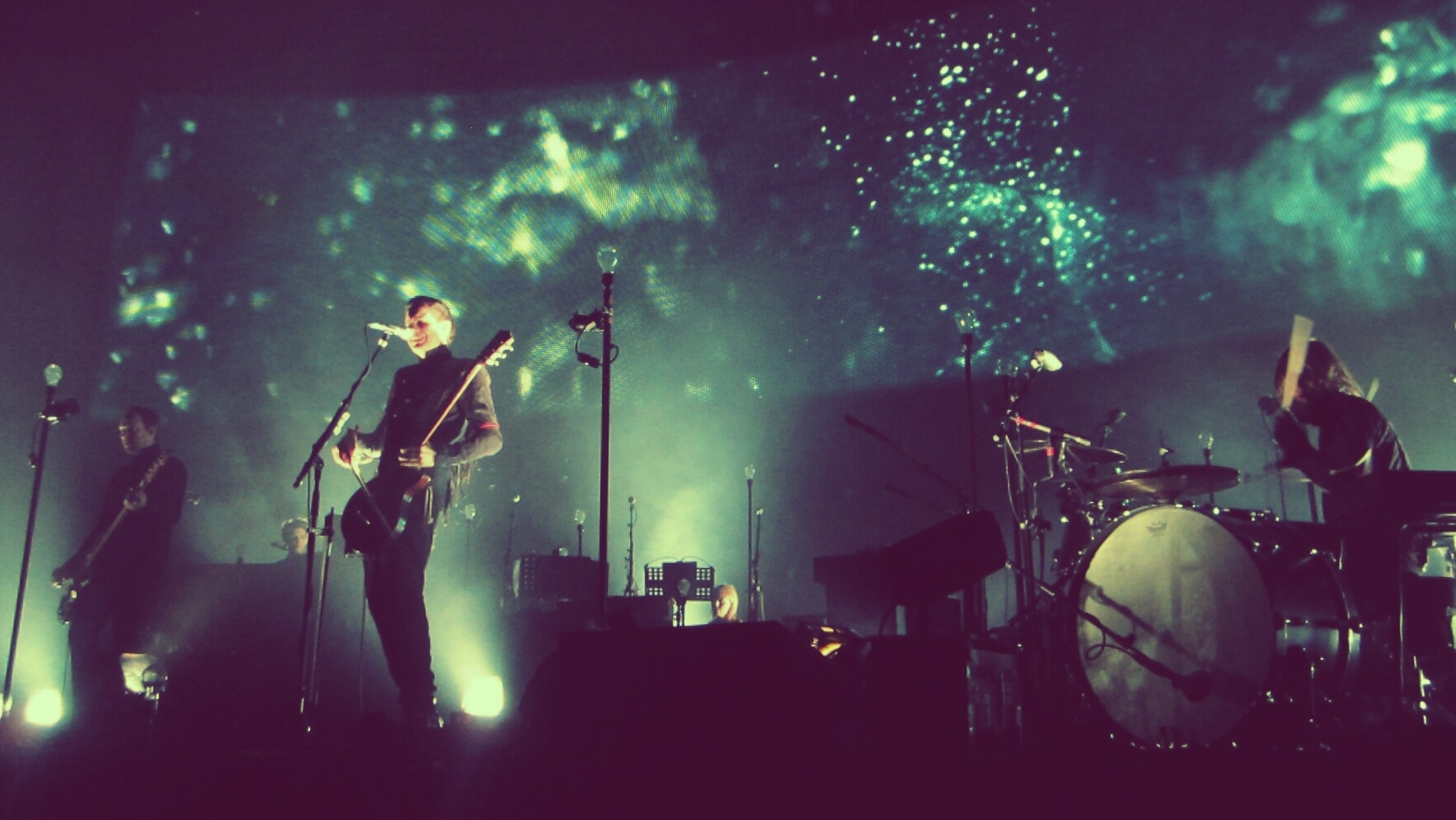
While precise figures for Hopelandic's usage are not formally tracked, it's estimated that over 50% of Sigur Rós's lyrical content across their discography is sung in Hopelandic. Their album Takk... (2005) features prominent Hopelandic tracks like 'Glósóli' and 'Hoppípolla,' which became global hits. The band has released eight studio albums since their inception in 1994, with a significant portion of their most iconic songs utilizing this vocal style. Their music has reached an estimated global audience of tens of millions, with album sales exceeding 5 million units worldwide. The band's live performances, often featuring elaborate visual projections, further amplify the emotional impact of Hopelandic, creating immersive experiences that have been witnessed by hundreds of thousands annually at major festivals like Coachella and Glastonbury.
👥 Key People & Organizations
The primary architect of Hopelandic is Jónsi Birgisson, the lead vocalist and guitarist of Sigur Rós. His intuitive approach to vocalisation is central to the band's identity. Other band members, including bassist Georg Hólm and keyboardist Kjartan Sveinsson, contribute to the sonic architecture that Hopelandic inhabits. While not directly involved in creating the vocal sounds, their instrumental arrangements provide the emotional canvas upon which Jónsi paints with his voice. The band's long-time collaborators, such as producer Ken Thomas, have also played a role in shaping the overall sound that incorporates Hopelandic. Independent music critics and fans worldwide have widely recognized Sigur Rós's innovative use of this vocal technique.
🌍 Cultural Impact & Influence
Hopelandic has profoundly influenced how audiences engage with music, particularly within the post-rock and ambient genres. By eschewing conventional language, Sigur Rós created a space for subjective interpretation, allowing listeners to connect with the music on a primal, emotional level. This approach has inspired countless artists to explore non-linguistic vocalizations and atmospheric soundscapes. The band's use of Hopelandic has been featured in numerous films and television shows, including Vanilla Sky and Game of Thrones, further embedding its ethereal quality into popular culture. The phenomenon of 'Vonlenska' has also sparked academic interest in linguistics and semiotics, examining how meaning can be conveyed without a formal language system.
⚡ Current State & Latest Developments
As of 2024, Sigur Rós continues to tour and explore new musical territories, with Hopelandic remaining a core element of their sonic identity. Following a hiatus and internal restructuring, the band announced a reunion tour in late 2023, performing select dates in 2024. Their most recent studio album, Attentional State (2023), continues to feature Jónsi's signature vocalizations, albeit with a more experimental edge. Discussions about potential new studio material are ongoing, with fans eagerly anticipating further developments in the band's unique sonic language. The enduring appeal of Hopelandic suggests its continued relevance in their future artistic endeavors.
🤔 Controversies & Debates
The primary debate surrounding Hopelandic centers on its perceived accessibility versus its intentional ambiguity. Skeptics sometimes question the artistic merit of using a 'made-up' language, arguing it can be alienating or pretentious. However, proponents, including many critics and fans, champion Hopelandic as a radical act of artistic freedom, enabling a purer emotional connection unburdened by literal interpretation. The band's own explanation—that it's about feeling rather than meaning—is often cited as evidence of its profound artistic intent. Some linguists have also debated whether Hopelandic, with its recurring phonetic patterns and emotional 'grammar,' could be considered a proto-language, though the band consistently denies this classification.
🔮 Future Outlook & Predictions
The future of Hopelandic is intrinsically linked to the continued creative output of Sigur Rós and the influence they exert on other artists. As global music trends increasingly embrace atmospheric and emotionally driven soundscapes, the principles behind Hopelandic—prioritizing feeling over literal meaning—are likely to resonate. There's potential for other artists to adopt similar non-linguistic vocal techniques, perhaps leading to new forms of musical expression. Furthermore, as AI and machine learning advance, the possibility of analyzing and even generating 'emotionally resonant' vocal patterns, inspired by Hopelandic, could emerge as a fascinating area of exploration in digital music creation.
💡 Practical Applications
While Hopelandic isn't a language one can 'learn' in the traditional sense, its principles have practical applications in creative fields. For musicians, it serves as a powerful example of how to use the voice as a textural and emotional instrument, encouraging experimentation beyond lyrical content. In film scoring and sound design, the atmospheric qualities evoked by Hopelandic can inspire the creation of evocative sonic backdrops that enhance emotional impact without explicit narrative. For artists exploring abstract expression, Hopelandic offers a model for conveying complex feelings through non-representational means, demonstrating that profound communication can transcend conventional language structures.
Key Facts
- Category
- culture
- Type
- concept