
Contents
Overview
Hebrew is a Northwest Semitic language, a member of the Afroasiatic family, with deep historical roots tracing back to the ancient Israelites. It was once a vernacular language, spoken daily until around 200 CE, and subsequently transitioned into the primary liturgical language for Jewish and Samaritan communities. Its unique status as the only successful large-scale linguistic revival makes it a fascinating case study in language persistence and rebirth. Today, it stands as the sole surviving Canaanite language and one of only two Northwest Semitic languages with contemporary native speakers, the other being Aramaic.
🌍 Who Speaks Hebrew Today?
Modern Hebrew is the official language of Israel, spoken by over 9 million people, primarily within the State of Israel. Beyond its national borders, Hebrew is still used extensively in religious contexts by Jewish communities worldwide, from New York to Buenos Aires. It's also a subject of academic study in universities globally, attracting scholars interested in its history, literature, and linguistic structure. The diaspora communities maintain a connection to the language through cultural events and religious services, ensuring its continued, albeit varied, presence.
💡 The Great Revival: From Liturgy to Living Tongue
The most remarkable aspect of Hebrew is its 19th-century revival, spearheaded by figures like Eliezer Ben-Yehuda. After centuries of dormancy as a spoken vernacular, it was meticulously re-established as a living language, primarily for the purpose of unifying Jewish immigrants in Palestine. This monumental effort involved coining new words, standardizing grammar, and creating educational institutions. The success of this revival is unparalleled, transforming Hebrew from a sacred text into the vibrant language of a modern nation-state, a feat unmatched by any other language in recent history.
📚 Learning Hebrew: Resources & Approaches
Embarking on learning Hebrew offers a gateway to a rich literary and historical tradition. Numerous resources cater to learners, from university courses and private tutors to online platforms like Duolingo and Memrise. Traditional methods often focus on biblical Hebrew, while modern approaches emphasize conversational fluency. The Hebrew University and Tel Aviv University are prominent institutions for advanced study. For beginners, focusing on the Hebrew alphabet and basic grammar is crucial before diving into more complex syntax and vocabulary.
🗣️ Hebrew Dialects & Modern Variations
While Modern Hebrew is largely standardized, subtle variations exist. The most prominent distinction is between Ashkenazi and Mizrahi pronunciations, reflecting the historical origins of Jewish communities. Ashkenazi pronunciation, influenced by Yiddish, is common in Israel and among many Jewish communities globally. Mizrahi pronunciations, closer to Sephardic traditions, are also present. These variations, while not hindering mutual intelligibility, add layers of historical and cultural nuance to the spoken language.
✨ The Cultural Vibe of Hebrew
The cultural vibe of Hebrew is intrinsically linked to its history of resilience and revival. It carries the weight of millennia of religious and literary tradition, yet pulses with the energy of a modern, dynamic society. The sound of Hebrew can evoke images of ancient Jerusalem and the solemnity of prayer, but also the bustling streets of Tel Aviv and contemporary Israeli culture. Its revival is a testament to the power of collective will and cultural identity, making it a language that resonates deeply with its speakers and learners alike.
⚖️ Debates & Controversies in Hebrew
The revival of Hebrew, while celebrated, is not without its debates. Some scholars question the extent to which Modern Hebrew is a direct continuation of ancient Hebrew versus a new creation influenced by other languages, particularly Slavic languages and Arabic. The process of word coinage by Eliezer Ben-Yehuda and his successors also sparks discussion regarding linguistic purity and the natural evolution of language. Furthermore, the role of Hebrew in the diaspora versus its dominance in Israel presents ongoing conversations about its evolving identity.
🚀 The Future of Hebrew
The future of Hebrew appears robust, anchored by its status as the national language of Israel and its continued use in Jewish life globally. Ongoing linguistic innovation, driven by technology and cultural exchange, ensures its adaptability. Challenges may arise from the influence of English and other global languages, but the strong sense of cultural identity tied to Hebrew is likely to sustain its vitality. Its unique journey from ancient tongue to revived vernacular and modern lingua franca positions it as a language with enduring significance.
Section 9
Hebrew's journey is far from over. As technology continues to shape communication, new forms of digital Hebrew emerge, blending tradition with innovation. The language remains a powerful symbol of Jewish identity and a vital link to a rich heritage. Its continued evolution will be shaped by the generations of speakers and learners who carry its legacy forward, ensuring its vibrant presence in the 21st century and beyond. The question remains: how will Hebrew continue to adapt and thrive in an increasingly interconnected world?
Key Facts
- Year
- -1000
- Origin
- Levant
- Category
- Language & Culture
- Type
- Language
Frequently Asked Questions
Is Modern Hebrew the same as Biblical Hebrew?
Modern Hebrew is a direct descendant of Biblical Hebrew but has undergone significant evolution. While it retains much of the ancient grammar and vocabulary, extensive new words have been coined to address modern concepts and technologies. Pronunciation and some grammatical structures also differ. Think of it like comparing modern English to Chaucerian English – related, but distinct.
How difficult is it to learn Hebrew for an English speaker?
Hebrew presents a moderate learning curve for English speakers. The alphabet is new, and the grammar has distinct features like verb conjugations and noun genders. However, its Semitic roots mean some cognates exist with other languages. Many learners find the structure logical once they grasp the basics, and resources are abundant.
What is the significance of the Hebrew alphabet?
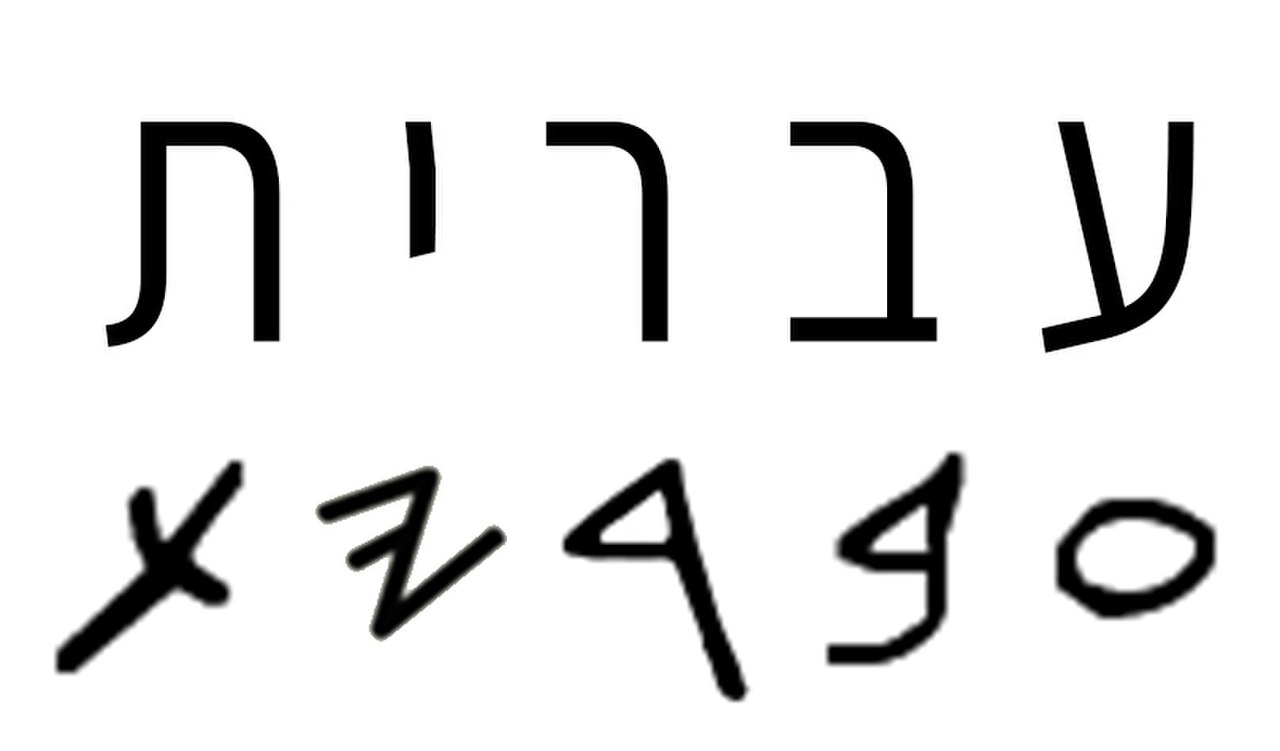
The Hebrew alphabet, known as the Aleph-Bet, is an abjad, meaning it primarily consists of consonants. Vowel sounds are often indicated by diacritical marks (nikkud) or inferred from context, especially in modern Hebrew. It's written from right to left and has a distinctive, often angular script that carries significant cultural and historical weight.
Why was Hebrew revived?
Hebrew was revived in the late 19th and early 20th centuries primarily to serve as a common, unifying language for Jewish immigrants arriving in Palestine. Before its revival, it was mainly used for religious and scholarly purposes. The goal was to create a modern national language that would foster a shared identity among diverse Jewish communities.
Are there different types of Hebrew speakers?
Yes, there are distinct groups. Native speakers are primarily Israelis who use Modern Hebrew daily. Then there are those who use Hebrew liturgically for religious purposes, often with older pronunciation styles. Finally, there are learners and scholars worldwide who engage with Hebrew for academic, cultural, or religious reasons.
What does 'Hebrew' mean?
The term 'Hebrew' (Ivri in Hebrew) is believed to derive from 'Eber,' an ancestor mentioned in the Bible, or possibly from the word 'avar,' meaning 'to cross over.' This 'crossing over' is often interpreted as referring to the nomadic origins of the early Israelites, who were seen as 'crossing over' lands.