
Contents
Overview
Hadith literature comprises the collected sayings, actions, and silent approvals attributed to the Islamic prophet Muhammad. These accounts, transmitted orally for generations before systematic compilation, form a crucial secondary source of Islamic law and theology, second only to the Quran. The rigorous process of hadith authentication, involving chains of narrators (isnad) and textual criticism (matn), has been a central intellectual endeavor for centuries, shaping the practice and understanding of Islam. While widely accepted as authoritative, the interpretation, authenticity, and application of specific hadith remain subjects of ongoing scholarly and sectarian debate, influencing diverse schools of Islamic jurisprudence and theology.
🎵 Origins & History
Initially, oral transmission was the primary method of preserving his teachings and example, known as the Sunnah. Early companions, like Abu Huraira and Aisha, were known for their extensive memorization and dissemination of these accounts. The need for systematic documentation became apparent due to the potential for misremembering, fabrication, and the expansion of the Islamic empire. Scholars such as Imam al-Bukhari and Imam Muslim ibn al-Hajjaj compiled collections. The process was not merely passive recording; it involved intense scrutiny of the chain of narrators (isnad) and the content of the report (matn).
⚙️ How It Works
The core mechanism of Hadith literature revolves around the principles of transmission and authentication. Each Hadith is presented with an isnad, a chain of individuals who reported the saying or action, tracing back to the Prophet Muhammad or his companions. The matn, or the actual text of the Hadith, was also scrutinized for internal consistency, compatibility with the Quran, and historical plausibility. Hadith are then classified based on their authenticity, ranging from 'sahih' (authentic) to 'da'if' (weak) and 'mawdu'' (fabricated). A system for classification was developed by scholars like Ibn Hajar al-Asqalani in his work Fath al-Bari.
📊 Key Facts & Numbers
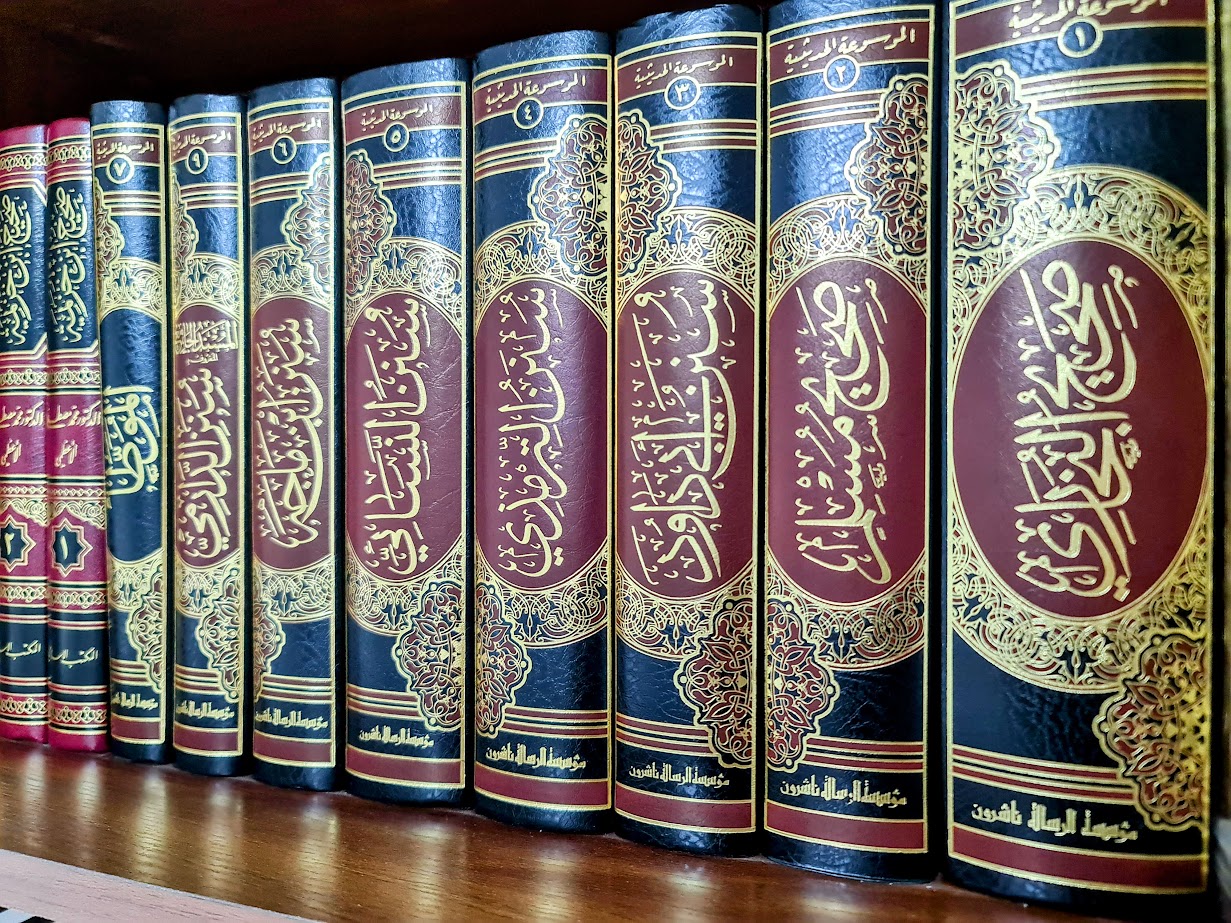
The six major Sunni Hadith collections are known as the Kutub al-Sittah. Scholars compiled the Kutub al-Sittah by traveling extensively, sometimes over thousands of miles, to collect these traditions.
👥 Key People & Organizations
Key figures in Hadith literature include the early companions who were direct witnesses to the Prophet's life, such as Abu Bakr, Umar ibn al-Khattab, Uthman ibn Affan, Ali ibn Abi Talib, Aisha, and Abu Huraira. Al-Azhar University in Cairo and numerous Islamic seminaries worldwide continue to teach and research Hadith, preserving this intellectual tradition.
🌍 Cultural Impact & Influence
Hadith literature has profoundly shaped the cultural and religious landscape of the Muslim world for over a millennium. It provides the framework for Islamic jurisprudence (fiqh), ethical conduct, and theological doctrines. The Sunnah, as embodied in Hadith, offers practical examples for daily life, from prayer rituals and dietary laws to social interactions and governance. Its influence extends beyond religious practice, impacting art, literature, and social customs across diverse cultures from Morocco to Indonesia.
⚡ Current State & Latest Developments
In the contemporary era, Hadith studies continue to evolve, grappling with new methodologies and challenges. Digitalization has made vast Hadith corpora accessible to scholars and the public, facilitating new avenues of research and cross-referencing. Modern scholars, such as Mohammed Hashim Kamaruddin and Yusuf al-Qaradawi, engage with Hadith in light of contemporary issues, including human rights, environmental ethics, and economic justice. The rise of online fatwas and Islamic educational platforms means Hadith are constantly being interpreted and applied to new contexts, often disseminated rapidly through social media by organizations like Islamweb.net.
🤔 Controversies & Debates
The authenticity and interpretation of Hadith are perennial sources of debate. While the Sunni consensus upholds the authority of the Kutub al-Sittah, certain reformist and modernist movements, sometimes termed Quranists, question the reliability of many Hadith, advocating for a Quran-centric approach. Conversely, some traditionalist groups may accept a broader range of Hadith than mainstream scholars. Specific Hadith concerning women's rights, political authority, and theological tenets are frequently cited in contemporary discussions and controversies, leading to diverse legal rulings and social practices across the Muslim world. The debate over the historical accuracy of certain chains of narration, particularly those transmitted during periods of political upheaval, remains active.
🔮 Future Outlook & Predictions
The future of Hadith literature will likely involve a continued interplay between traditional scholarship and modern analytical tools. Advances in computational linguistics and digital humanities may offer new ways to analyze Hadith texts and narrator networks, potentially resolving long-standing debates or opening new ones. The growing global Muslim population, particularly in younger demographics, will necessitate accessible and relevant interpretations of Hadith that address contemporary challenges. There's also a potential for greater inter-sectarian dialogue on Hadith, fostering a more unified understanding of Islamic tradition, though deep-seated theological differences, particularly between Shia and Sunni interpretations, will likely persist. The ongoing process of critical re-evaluation, exemplified by scholars like Islam Ahmad Hassan, suggests a dynamic future for this field.
💡 Practical Applications
Hadith literature serves as a practical guide for Muslims in virtually every aspect of life. It informs the five daily prayers (Salat), the charitable giving (Zakat), fasting during Ramadan, and the pilgrimage to Mecca (Hajj). Legal scholars use Hadith to derive rulings on marriage, divorce, inheritance, criminal justice, and commercial transactions, forming the backbone of Sharia law. Beyond ritual and law, Hadith provide ethical frameworks for personal conduct, interpersonal relationships, and societal responsibilities, influencing everything from business ethics to parenting advice disseminated by contemporary Islamic scholars and organizations like Iqra International.
Key Facts
- Category
- culture
- Type
- topic