
Contents
Overview
The genesis of gradient noise is inextricably linked to Ken Perlin, who, while working at Lucasfilm's Pixar Animation Studios (then The Graphics Group), published the first widely recognized implementation in 1985. This seminal work, often referred to as Perlin noise, revolutionized procedural texture generation by offering a way to create natural-looking, non-repeating patterns that were computationally efficient for the era. Prior to Perlin's breakthrough, generating complex organic textures often relied on laborious manual painting or simpler, more repetitive noise functions. Perlin's algorithm, however, leveraged a lattice of pseudorandom gradient vectors and interpolated their dot products, a departure from earlier value noise techniques that simply interpolated random scalar values. This innovation provided a smoother, more coherent visual output, quickly becoming a standard in early CGI.
⚙️ How It Works
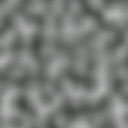
At its heart, gradient noise operates on a grid of points, each assigned a pseudorandom gradient vector. To determine the noise value at any given point within a grid cell, the algorithm calculates the dot product between the gradient vector at each corner of the cell and a vector pointing from that corner to the sample point. These dot products are then interpolated, typically using a smoothstep or similar polynomial function, to ensure continuity and avoid sharp transitions. The result is a smooth, continuous field of values that can be interpreted as texture. A key characteristic is that the noise value at the lattice points themselves is often zero, a consequence of the dot product calculation with gradients pointing away from the point. This method inherently produces more high-frequency detail than value noise, contributing to its realistic appearance.
📊 Key Facts & Numbers
The computational cost of gradient noise is generally proportional to the dimensionality of the space it operates in. For instance, Perlin noise in 2D requires 4 gradient calculations and interpolations, while 3D requires 8. The output range of standard Perlin noise is typically between -1.0 and 1.0, though this can be scaled. The fractal Brownian motion (fBm) technique, which layers multiple octaves of gradient noise at increasing frequencies and decreasing amplitudes, is commonly used to achieve greater detail, with typical implementations using 4-8 octaves. The memory footprint for generating noise on-the-fly is minimal, but pre-computed noise textures can range from megabytes to gigabytes depending on resolution and bit depth.
👥 Key People & Organizations
The undisputed titan of gradient noise is Ken Perlin, whose 1985 publication of Perlin noise set the standard for decades. His work at Lucasfilm and later New York University profoundly shaped computer graphics. Following Perlin's lead, Steve Perlin (no relation) developed Simplex noise in 2001, a more computationally efficient variant that reduced the number of gradient calculations required, especially in higher dimensions. Adrian Stella later introduced OpenSimplex noise, an open-source alternative that further refined the performance and visual characteristics, addressing some of the directional artifacts found in earlier Perlin implementations. Major graphics software companies like Autodesk and Adobe have integrated various forms of gradient noise into their toolsets, while game engines such as Unreal Engine and Unity offer built-in noise generation capabilities.
🌍 Cultural Impact & Influence
Gradient noise has permeated visual culture, becoming the default method for generating naturalistic textures in computer-generated imagery (CGI). Its influence is visible in countless films, video games, and animated features, providing the visual fabric for everything from alien landscapes in Star Wars prequels to the swirling nebulae in Gravity. Beyond visual effects, it has inspired artists and designers, appearing in generative art installations and digital art. The ubiquity of Perlin noise, in particular, led to its inclusion in numerous graphics libraries and game development kits, making sophisticated procedural texturing accessible to a broad range of creators. Its distinctive look, often described as 'procedural,' became a recognizable aesthetic in early CGI.
⚡ Current State & Latest Developments
While Perlin noise remains a foundational technique, current developments focus on enhancing performance and visual fidelity. OpenSimplex noise and other optimized variants are gaining traction due to their improved speed and artifact reduction, particularly in real-time applications like video games. Research continues into higher-dimensional noise functions and more sophisticated fractal noise combinations, such as Worley noise (also known as cellular noise), which offers a different, cell-like aesthetic but often complements gradient noise in complex procedural material setups. The integration of GPU computing has also enabled real-time generation and manipulation of complex noise patterns at unprecedented resolutions.
🤔 Controversies & Debates
A persistent debate revolves around the perceived 'sameness' of Perlin noise, leading some artists to seek alternatives or to heavily modify its output. While Perlin's original algorithm was groundbreaking, its widespread adoption means its characteristic patterns can sometimes appear generic if not carefully controlled or combined with other techniques. Critics also point to potential directional artifacts in certain implementations of Perlin noise, which OpenSimplex noise and Simplex noise aim to mitigate. The licensing of Perlin's original algorithm also presented some complexities, though subsequent open-source implementations have largely resolved this, fostering wider adoption of improved variants.
🔮 Future Outlook & Predictions
The future of gradient noise likely lies in its deeper integration with machine learning and AI. Generative Adversarial Networks (GANs) and diffusion models are beginning to produce textures with a level of realism and complexity that can surpass traditional procedural methods, though often at a significant computational cost. However, gradient noise is unlikely to disappear; instead, it may evolve into a component within these larger AI-driven systems, providing a structured, controllable base layer for AI to build upon. Further research into GPU-accelerated noise generation and novel mathematical formulations could also yield new types of procedural textures with unique visual properties, pushing the boundaries of digital realism and artistic expression.
💡 Practical Applications
Gradient noise is a workhorse in procedural content generation. Its primary application is in creating realistic textures for 3D models, simulating materials like wood grain, marble, clouds, fire, and water surfaces. In video games, it's used for terrain generation, skyboxes, and dynamic visual effects. Visual effects artists employ it for everything from atmospheric phenomena like fog and smoke to abstract patterns in sci-fi interfaces. It also finds use in scientific visualization, helping to represent data fields and fluid dynamics. Furthermore, it's a staple in digital art and generative design, enabling artists to create intricate, evolving patterns without manual input.
Key Facts
- Category
- technology
- Type
- topic