
Contents
Overview
The concept of supply chain disruption isn't new; historical precedents include the Silk Road's vulnerabilities to regional conflicts and the impact of World War I on transatlantic trade routes. However, the scale and frequency of disruptions have dramatically increased with globalization, particularly since the late 20th century. The integration of just-in-time manufacturing, pioneered by companies like Toyota, while boosting efficiency, also created systems highly sensitive to even minor interruptions. The 2008 financial crisis exposed fragilities, but it was the COVID-19 pandemic that truly exposed the systemic weaknesses. Lockdowns in Wuhan immediately impacted manufacturing, and as the virus spread, port closures and labor shortages became global phenomena. The subsequent Suez Canal obstruction, involving the container ship Ever Given, further highlighted the choke points in critical maritime arteries, demonstrating how a single incident could paralyze a significant portion of global trade.
⚙️ How It Works
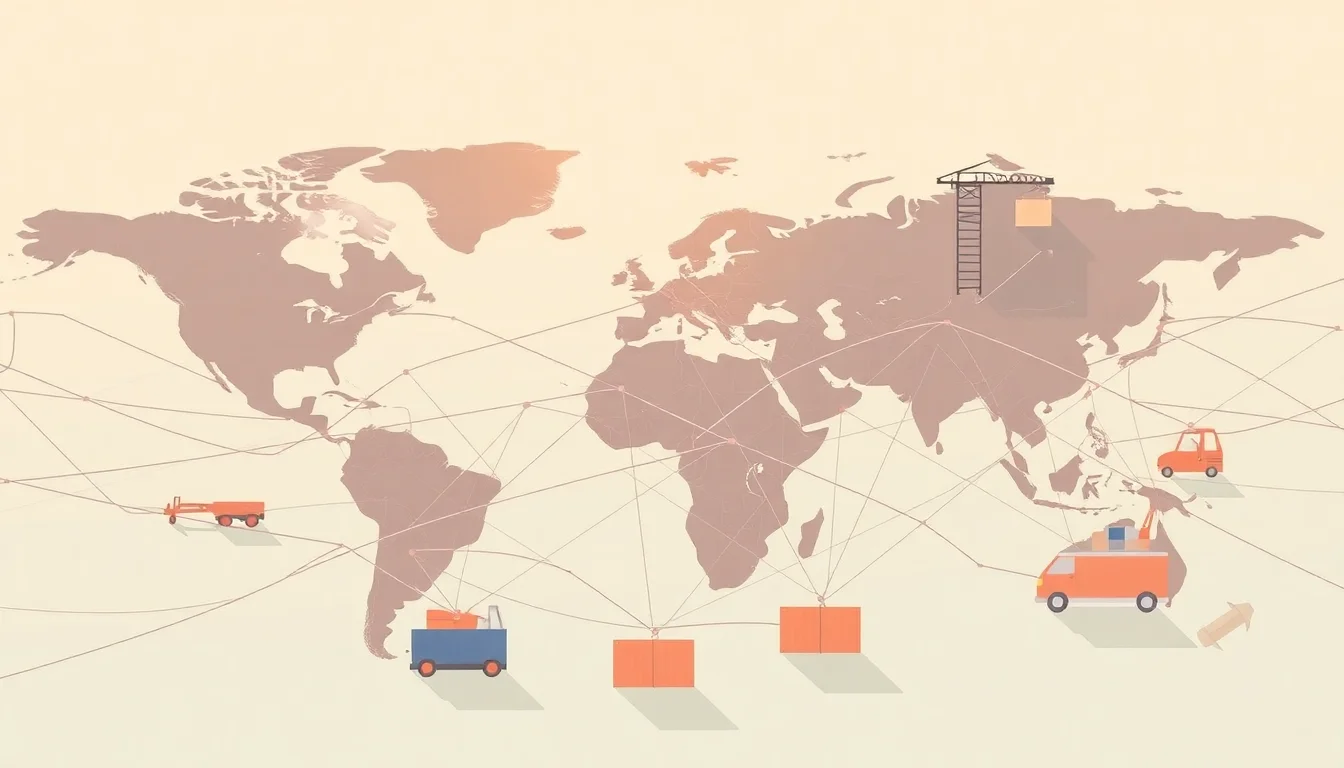
Global supply chains operate as vast, interconnected networks where raw materials are sourced, processed, manufactured, assembled, and distributed across multiple countries. This process involves a complex choreography of shipping, air freight, trucking, and rail, managed by logistics firms like Maersk and FedEx. Disruptions occur when any link in this chain breaks or slows down. This can be due to labor shortages (e.g., dockworkers striking in Los Angeles ports), capacity constraints (e.g., not enough container ships available), geopolitical events (e.g., trade wars between the US and China), natural disasters (e.g., earthquakes in Japan affecting electronics production), or demand shocks (e.g., a sudden surge in demand for PlayStation 5 consoles). The reliance on single-source suppliers or concentrated manufacturing hubs, often driven by cost efficiencies, exacerbates these vulnerabilities, making the entire system brittle.
📊 Key Facts & Numbers
The economic impact of supply chain disruptions is staggering. The global shipping cost index, as measured by the Freightos Baltic Index, surged significantly from pre-pandemic levels, reaching peaks on key routes. The global chip shortage, a direct consequence of pandemic-related factory shutdowns and a surge in demand for electronics, idled many vehicles globally, costing the automotive industry tens of billions of dollars. Inflationary pressures directly linked to supply chain issues contributed to global inflation rates that were the highest in decades according to the IMF. Furthermore, disruptions to food supply chains, exacerbated by the conflict in Ukraine, led to widespread food insecurity.
👥 Key People & Organizations
While no single individual or organization 'controls' global supply chains, several key players and entities are central to their functioning and vulnerability. Logistics giants like A.P. Moller – Maersk, CMA CGM, and Hapag-Lloyd manage the vast majority of global container shipping. Major manufacturers such as Apple, Samsung, and Volkswagen rely heavily on intricate global networks for their components and production. Governments, through trade policies, infrastructure investment (like port expansions in Rotterdam), and regulatory frameworks, play a crucial role. International bodies like the World Trade Organization (WTO) and the IMF attempt to facilitate global trade and provide economic stability, while organizations like the UN World Food Programme are on the front lines addressing the humanitarian consequences of food supply disruptions.
🌍 Cultural Impact & Influence
The pervasive nature of global supply chain disruptions has profoundly reshaped consumer expectations and corporate strategies. The 'everything is available instantly' mindset, fostered by e-commerce giants like Amazon, has been challenged, leading to increased consumer patience or a shift towards local alternatives. Companies are re-evaluating their reliance on lean, just-in-time inventory models, exploring strategies like 'just-in-case' stocking and diversifying suppliers across different geographic regions to build resilience. The cultural narrative has shifted from celebrating global efficiency to acknowledging the inherent risks and vulnerabilities of hyper-connectedness. This has also fueled a renewed interest in domestic manufacturing and reshoring initiatives, impacting national economic policies and public discourse around economic sovereignty.
⚡ Current State & Latest Developments
As of mid-2024, while some of the acute pressures of recent years have eased, global supply chains remain in a state of flux. Shipping costs have stabilized but remain higher than pre-pandemic levels. Geopolitical tensions, particularly the ongoing conflict in Ukraine and tensions in the South China Sea, continue to pose risks. The rise of protectionist trade policies and the increasing frequency of climate-related disasters (e.g., floods in Pakistan, droughts in California) mean that disruptions are now viewed as an ongoing operational reality rather than a temporary anomaly. Companies are investing heavily in supply chain visibility technologies, AI-driven forecasting, and near-shoring or friend-shoring strategies to mitigate future shocks. The focus has shifted from pure cost optimization to building robust and agile supply networks capable of withstanding unforeseen events.
🤔 Controversies & Debates
A central controversy revolves around the trade-off between efficiency and resilience. Critics argue that the relentless pursuit of cost reduction through globalization and just-in-time manufacturing created the very vulnerabilities that led to recent crises. Proponents counter that globalization has lifted billions out of poverty and that the disruptions were largely due to unprecedented external shocks like a global pandemic and major wars, not inherent flaws in the system itself. Debates also persist regarding the role of government intervention: should nations subsidize domestic production to ensure supply security, potentially leading to higher consumer prices and trade disputes, or should markets be allowed to find the most efficient global solutions? The ethical implications of labor conditions in offshore manufacturing hubs, often exposed during crises, also remain a point of contention.
🔮 Future Outlook & Predictions
The future of global supply chains points towards increased diversification and technological integration. Companies will likely continue to move away from single-country sourcing, establishing multi-regional supply networks. The adoption of AI and blockchain technology is expected to enhance transparency, traceability, and predictive capabilities, allowing for faster responses to disruptions. We may see a rise in regionalized supply chains, shortening transit times and reducing reliance on long-haul shipping for critical goods. However, the specter of geopolitical instability and climate change suggests that disruptions will remain a persistent challenge. The 'winner' in this evolving landscape will likely be the entity that can best balance cost, speed, and resilience, leveraging data and flexible infrastructure to navigate an increasingly unpredictable world.
💡 Practical Applications
The practical applications of understanding and managing supply chain disruptions are vast. For businesses, it means developing robust risk management strategies, diversifying supplier bases across regions like Mexico and Southeast Asia, and investing in technologies for real-time visibility. For governments, it involves strategic stockpiling of critical goods (e.g., semiconductors, medical supplies), investing in resilient infrastructure like ports and rail networks, and engaging in international diplomacy to ensure stable tr
Key Facts
- Category
- phenomenon
- Type
- topic