
Contents
Overview
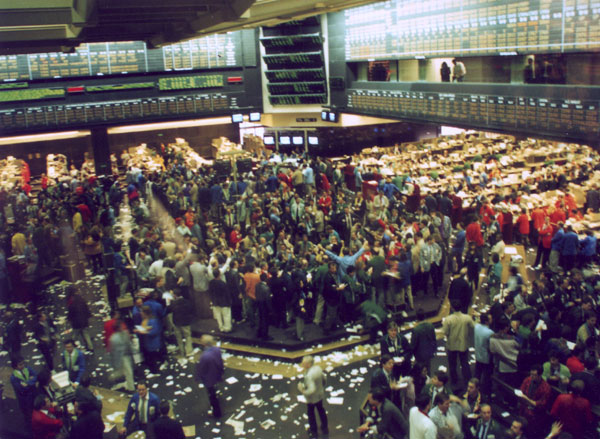
The concept of organized commodity trading stretches back millennia, with evidence of formalized markets in ancient Mesopotamia and Rome for grains like wheat and barley. These early exchanges were vital for managing agricultural surpluses and ensuring food security, often involving direct bartering or rudimentary forms of forward contracts. The modern era of commodity markets truly took shape in the 18th and 19th centuries with the rise of industrialization and global trade. The Chicago Board of Trade (CBOT) standardized contracts for agricultural products like corn and soybeans, and pioneered the use of futures contracts to manage price volatility. Similarly, the New York Mercantile Exchange (NYMEX) emerged to facilitate trade in goods like butter and eggs, eventually expanding to energy products. These exchanges transformed local agricultural trade into a global financial phenomenon, laying the groundwork for today's sophisticated derivatives markets.
⚙️ How It Works
Global commodity markets function through a complex interplay of physical supply and demand, alongside financial instruments. Physical markets involve the actual buying and selling of raw materials, often facilitated by brokers and exchanges like the London Metal Exchange (LME) for metals or the Intercontinental Exchange (ICE) for energy and agricultural products. Financial markets, however, primarily deal with derivatives—contracts whose value is derived from the underlying commodity. These include futures contracts, options, and swaps, allowing participants to hedge against price fluctuations or speculate on future price movements. Prices are determined by the constant negotiation between buyers and sellers, influenced by factors such as production levels, geopolitical stability in producing regions like the Middle East, weather patterns affecting harvests, and global economic growth forecasts from institutions like the International Monetary Fund (IMF).
📊 Key Facts & Numbers
The sheer scale of global commodity markets is staggering. The global market for gold, a perennial safe-haven asset, sees significant trading volume each year. Agricultural commodities, including soybeans, corn, and wheat, represent another massive segment, with global production valued in the hundreds of billions. The market capitalization of all listed commodity futures contracts alone is estimated to be in the trillions. For instance, a single 1% move in the price of Brent crude oil can impact global markets by billions of dollars.
👥 Key People & Organizations
Key players in global commodity markets are diverse, ranging from individual producers like farmers in Argentina or miners in South Africa to multinational corporations such as Glencore and Vitol Group, which are major traders of oil and metals. Financial institutions like JPMorgan Chase and Goldman Sachs play a crucial role through their trading desks and investment products. Regulatory bodies such as the Commodity Futures Trading Commission (CFTC) in the United States and the European Securities and Markets Authority (ESMA) in Europe oversee these markets to ensure fairness and prevent manipulation. Major exchanges like the Chicago Mercantile Exchange (CME) and the Shanghai Futures Exchange (SHFE) are central hubs for price discovery and trading.
🌍 Cultural Impact & Influence
Commodity markets have profoundly shaped global culture and history. The quest for resources like spices, silk, and precious metals fueled exploration and colonialism for centuries, leading to the establishment of trade routes like the Silk Road. The price of oil, in particular, has dictated geopolitical power dynamics, influencing international relations and driving conflicts, notably in the Persian Gulf region. Agricultural commodity prices directly impact food security and can trigger social unrest, as seen in various historical food crises. The visual culture of commodities—from towering oil rigs to vast grain silos—has become iconic, representing industrial might and the fundamental sustenance of societies. The very concept of a 'bull market' or 'bear market' originates from these arenas.
⚡ Current State & Latest Developments
The current state of global commodity markets in 2024 is characterized by heightened volatility and significant price swings. Geopolitical tensions, particularly the ongoing conflict in Ukraine, continue to exert pressure on prices. Supply chain disruptions, exacerbated by the COVID-19 pandemic and subsequent recovery, have also played a major role. Inflationary concerns are driving interest in commodities as a potential hedge, leading to increased speculative activity. Furthermore, the accelerating global transition towards renewable energy is creating new dynamics in markets for metals like lithium and copper, while potentially diminishing long-term demand for fossil fuels. The rise of algorithmic trading and high-frequency trading strategies on exchanges like Binance and Kraken also contributes to rapid price movements.
🤔 Controversies & Debates
Commodity markets are rife with controversy. Critics argue that speculative trading, particularly by large financial institutions, can detach prices from underlying physical supply and demand, leading to artificial price spikes or crashes that harm producers and consumers alike. The role of hedge funds and proprietary trading firms in influencing prices is a constant point of debate. Furthermore, the environmental impact of extracting and transporting commodities, from deforestation for palm oil to the carbon emissions from oil and gas extraction, is a major ethical concern. Price manipulation allegations have frequently surfaced, leading to investigations by regulatory bodies like the U.S. Securities and Exchange Commission (SEC). The debate over whether these markets primarily serve to manage risk or to generate profit through volatility remains contentious.
🔮 Future Outlook & Predictions
The future of global commodity markets will likely be shaped by several megatrends. The ongoing energy transition will fundamentally alter demand for fossil fuels, while simultaneously boosting demand for critical minerals essential for electric vehicles and renewable energy infrastructure, such as cobalt and nickel. Climate change itself will increasingly impact agricultural yields and water availability, leading to greater price volatility for food commodities. Advances in artificial intelligence and machine learning are expected to further refine trading strategies and risk management. Geopolitical realignments and the potential for new trade blocs could also reshape global supply chains and pricing mechanisms. Some analysts predict a 'supercycle' of commodity demand driven by industrialization in emerging economies, while others foresee a more fragmented and volatile market landscape.
💡 Practical Applications
Commodity markets have direct and profound practical applications across nearly every sector of the economy. For farmers, futures contracts on exchanges like the Kansas City Board of Trade (KCBT) allow them to lock in prices for their crops, ensuring predictable income. Energy companies use commodity markets to hedge against fluctuations in oil and gas prices, managing operational costs and investment risks. Manufacturers rely on stable prices for raw materials like metals and lumber to control production costs. Investors use commodity-linked Exchange-Traded Funds (ETFs) and futures to diversify portfolios and hedge against inflation. Governments monitor commodity prices closely as indicators of economic health and
Key Facts
- Category
- economics
- Type
- topic