
Contents
Overview
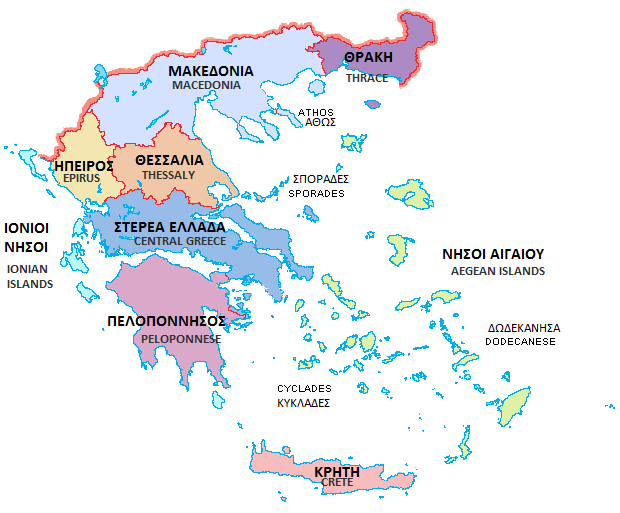
The very notion of dividing the Earth into distinct regions predates written history, arising from humanity's innate need to categorize and understand its surroundings. Early humans navigated by landmarks and natural features, implicitly defining territories. Ancient civilizations, from the Egyptians with their Nile-centric worldview to the Greeks who charted the known world, began formalizing these divisions based on geography, climate, and political control. The Age of Exploration dramatically expanded the known world, leading to new regional classifications and the imposition of colonial boundaries, often disregarding pre-existing cultural or ethnic divisions. This historical layering of natural and artificial boundaries continues to shape our understanding of regions today, as seen in the persistent use of traditional Greek geographic regions like Macedonia and Attica, despite modern administrative reforms.
⚙️ How It Works
Geographic regions are defined by a complex interplay of physical and human factors. Physical geography provides the bedrock: landforms (mountains, plains), bodies of water (rivers, oceans), climate zones (tropical, arid), and ecosystems (forests, tundras) all create natural boundaries and distinct environments. Human geography then layers cultural, political, and economic characteristics onto these physical foundations. Regions can be defined by shared language, religion, ethnicity, political systems (like the European Union), economic ties (such as ASEAN trade blocs), or historical narratives. The scale of regions also varies immensely, from a single city neighborhood to a continent-spanning cultural sphere like Latin America. The definition is often context-dependent; a region for ecological study might differ vastly from a region defined for political analysis.
📊 Key Facts & Numbers
The Earth is broadly divided into continents, and there are countless sub-national regions. For example, China alone has 23 provinces and 5 autonomous regions. Biomes, which are large-scale ecological areas, cover significant portions of the planet. The United Nations recognizes 193 member states, each representing a distinct political region with unique governance and demographics.
👥 Key People & Organizations
While no single individual "invented" geographic regions, key figures have shaped our understanding and mapping of them. Later, explorers like Christopher Columbus and Ferdinand Magellan expanded the known world, necessitating new regional labels. In the 20th century, geographers like Carl Sauer emphasized the concept of cultural landscapes, arguing that human activity shapes regions as much as physical geography. Organizations like the United Nations and the World Bank continuously define and analyze regions for administrative, economic, and developmental purposes, often creating their own regional classifications for statistical and policy-making purposes.
🌍 Cultural Impact & Influence
Geographic regions are the bedrock of cultural identity and interaction. They shape language dialects, culinary traditions, artistic expressions, and social customs. The concept of a 'region' often fosters a sense of belonging and shared heritage, influencing everything from local politics to national identity. For instance, the distinct cultural identities of Scotland within the United Kingdom or Quebec within Canada are deeply tied to their regional distinctiveness. Conversely, the imposition of arbitrary colonial boundaries, such as those drawn by European powers across Africa during the Scramble for Africa, has led to enduring political instability and ethnic conflict within newly defined regions. The way regions are perceived and represented in media, literature, and art also profoundly influences public understanding and inter-regional relations.
⚡ Current State & Latest Developments
In the 21st century, the definition and relevance of geographic regions are being reshaped by globalization and digital technologies. While physical and traditional cultural regions persist, new forms of regionalism are emerging, often defined by economic flows, digital connectivity, or shared environmental concerns. The concept of 'global cities' like New York City or Tokyo as nodes in global networks transcends traditional regional boundaries. Furthermore, climate change is forcing a re-evaluation of regions based on environmental vulnerability and resource distribution, potentially leading to new geopolitical alignments. The ongoing debate about the administrative versus traditional regions in countries like Greece highlights the tension between imposed structures and deeply ingrained historical-geographic identities.
🤔 Controversies & Debates
The very definition of a 'region' is a source of considerable debate. Physical geographers might define a region by climate patterns or geological formations, while human geographers focus on cultural homogeneity or political boundaries. The legacy of colonialism is a major point of contention, as many modern national and sub-national regions were arbitrarily drawn by external powers, often ignoring existing ethnic, linguistic, or historical divisions, leading to ongoing conflicts. For example, the division of the Middle East by the Sykes-Picot Agreement created artificial states with little regard for the populations within them. Furthermore, the increasing interconnectedness through the internet and global trade challenges the very notion of bounded, distinct regions, leading to discussions about 'networked regions' or 'flows' that defy traditional territorial definitions.
🔮 Future Outlook & Predictions
The future of geographic regions will likely be shaped by a dynamic interplay between globalization and localization, alongside the undeniable impacts of climate change. We may see the rise of 'climate regions' defined by shared environmental challenges and resource scarcity, potentially leading to new forms of cooperation or conflict. Digital connectivity will continue to blur traditional boundaries, fostering 'virtual regions' based on shared interests or online communities, independent of physical location. Simultaneously, there may be a resurgence of interest in local and traditional regions as people seek stronger cultural identities and community ties in an increasingly globalized world. The ongoing tension between supranational entities like the European Union and resurgent nationalisms will also continue to redefine regional political landscapes.
💡 Practical Applications
Geographic regions are indispensable tools across numerous disciplines and practical applications. In urban planning and development, regions are defined for infrastructure projects, resource management, and service delivery, from local municipalities to broader metropolitan areas. Environmental scientists delineate regions to study biodiversity, pollution dispersal, and climate impacts, using frameworks like biomes or watershed management areas. Economists analyze regional economic disparities, labor markets, and trade patterns, often defining regions based on economic activity or industrial clusters. Political scientists study regional conflicts, alliances, and governance structures, from the African Union to specific geopolitical hotspots. Cartography and GIS (Geographic Information Systems) are fundamentally about mapping, defining, and analyzing geographic regions.
Key Facts
- Category
- nature
- Type
- topic