
Contents
Overview
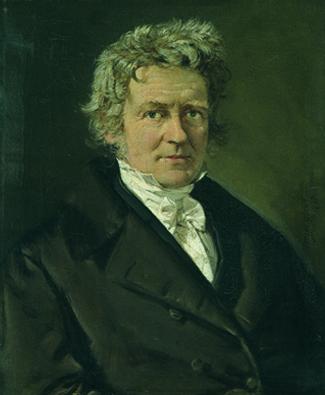
Friedrich Wilhelm Bessel was a titan of 19th-century science, a German polymath whose work bridged astronomy, mathematics, and geodesy. He shattered the celestial sphere's perceived proximity by being the first to accurately measure the distance to a star other than our Sun, using the painstaking method of stellar parallax. This monumental achievement, published in 1838, confirmed the vastness of the cosmos and fundamentally altered humanity's place within it. Beyond his astronomical feats, Bessel was a profound mathematician, systematically developing and analyzing a class of differential equations that now bear his name: Bessel functions. His meticulous observational skills, honed at the Königsberg Observatory, also led to significant contributions in determining the Earth's shape and size through precise geodetic surveys. Bessel's legacy is etched in the stars and in the very fabric of mathematical physics, a testament to a mind that sought to quantify the immeasurable.
🎵 Origins & History
Friedrich Wilhelm Bessel's journey into the scientific stratosphere began not in academia, but through an early fascination with mathematics and astronomy, largely self-taught. His formal education was cut short, leading him to an apprenticeship with the merchant house of Krupp in Bremen. However, his passion for celestial mechanics, ignited by Halley's comet observations and the works of Kepler, soon redirected his career. Bessel's astronomical calculations reportedly caught the attention of Joseph von Fraunhofer, who recommended him to Wilhelm Olbers, a prominent astronomer. This led to his first professional position at Lilienthal Observatory, and he was appointed professor at the University of Königsberg. This appointment marked the beginning of his most productive period, solidifying his place as a leading figure in observational astronomy and mathematical physics.
⚙️ How It Works
Bessel's most celebrated achievement, the measurement of stellar parallax, relied on a profound understanding of geometry and meticulous observation. The principle of parallax is akin to holding a finger out at arm's length and closing one eye, then the other; the finger appears to shift against the background. Bessel reasoned that as Earth orbits the Sun, nearby stars would exhibit a similar, albeit minuscule, apparent shift against the distant, fixed stars. Over a period of observation, he painstakingly measured the tiny angular displacement of a star. By combining these measurements with known orbital parameters of Earth and applying complex trigonometric calculations, he determined its distance. This groundbreaking work provided the first empirical evidence for the immense scale of the universe beyond our solar system.
📊 Key Facts & Numbers
The quantifiable impact of Bessel's work is staggering. His determination of the distance to a star established it as the first star, other than the Sun, for which a reliable distance had been measured, placing it at approximately 10.3 light-years. This was a monumental leap from the prevailing belief that stars were relatively close. His geodetic work resulted in a highly accurate measurement of the Earth's shape, defining the Bessel ellipsoid, which stated the Earth's equatorial radius was 6,377.397 kilometers and its polar radius was 6,356.079 kilometers. Furthermore, his mathematical investigations into the solutions of Kepler's equation led to the development of Bessel functions, which are now fundamental in fields ranging from quantum mechanics to signal processing, with applications in areas like the vibration of circular membranes and the propagation of electromagnetic waves. His observational catalog, the Fundamenta Astronomiae, contained precise positions for over 30,000 stars.
👥 Key People & Organizations
Friedrich Bessel's scientific career was shaped by and contributed to a network of eminent figures and institutions. His early patron, Wilhelm Olbers, a renowned astronomer himself, provided crucial early support. At the Königsberg Observatory, Bessel mentored and collaborated with numerous astronomers, including Friedrich Arndt and Hermann von Helmholtz, the latter becoming a prominent physicist and physiologist who deeply admired Bessel's work. Bessel was also a foreign member of the Royal Society. His father, Carl Friedrich Bessel, instilled in him an early appreciation for learning, though his professional path diverged significantly.
🌍 Cultural Impact & Influence
Bessel's measurement of stellar parallax was a watershed moment, fundamentally altering our cosmic perspective. It provided concrete proof that stars were distant suns, not mere points of light affixed to a celestial sphere, thereby ushering in the era of modern astrophysics. His work on Bessel functions, though initially a mathematical tool for astronomical problems, has permeated numerous scientific and engineering disciplines. These functions are indispensable in solving differential equations that describe wave propagation, heat conduction, and fluid dynamics, appearing in everything from the design of microwave circuits to the analysis of seismic waves. The Bessel ellipsoid, derived from his geodetic surveys, served as a crucial reference model for Earth's shape for decades, influencing cartography and navigation. His rigorous approach to observation and calculation set a new standard for scientific inquiry, influencing generations of scientists who followed.
⚡ Current State & Latest Developments
While Bessel's core discoveries are foundational and timeless, their application and refinement continue. Modern techniques like the Gaia mission by the European Space Agency are now measuring stellar parallaxes with unprecedented accuracy, mapping the Milky Way in three dimensions with billions of stars. These advanced surveys build directly upon the principles Bessel pioneered. In mathematics, Bessel functions remain a cornerstone of mathematical physics, with ongoing research exploring their properties and applications in fields like quantum computing and advanced signal processing. The legacy of his geodetic work has been superseded by more sophisticated models and satellite-based measurements, but his foundational ellipsoid provided critical early benchmarks. The spirit of meticulous observation and rigorous mathematical analysis that defined Bessel's career is alive and well in contemporary scientific endeavors.
🤔 Controversies & Debates
The primary 'controversy' surrounding Bessel's work isn't a debate about his findings, but rather the historical context of who else was pursuing similar ideas. While Bessel is credited with the first successful parallax measurement of 61 Cygni in 1838, Friedrich Georg Wilhelm von Struve published a parallax measurement for Vega in 1837, and Thomas Henderson published a parallax for Alpha Centauri in 1839. However, Bessel's methodology was considered the most robust and his results for 61 Cygni were widely accepted as the definitive first measurement due to the precision and thoroughness of his observations and calculations. Some historical accounts also note the immense difficulty and skepticism Bessel faced in convincing the scientific community of his findings, given the minuscule nature of the observed shifts and the technological limitations of the era. The sheer precision required for his geodetic measurements also faced scrutiny and refinement by later geodesists.
🔮 Future Outlook & Predictions
The future of Bessel's legacy lies in the continued exploration of the cosmos and the ever-expanding applications of mathematical physics. Projects like the Gaia mission are not just refining parallax measurements but are fundamentally reshaping our understanding of galactic structure and evolution, a direct descendant of Bessel's pioneering spirit. In mathematics, the exploration of Bessel functions continues, with new theoretical insights and applications emerging in fields like quantum information theory and advanced materials science. We can anticipate further discoveries in exoplanet detection and characterization, building on the foundational understanding of stellar distances that Bessel established. His work serves as a constant reminder that the universe is far vaster and more complex than we can initially perceive, inviting continuous investigation and discovery.
💡 Practical Applications
Bessel's work has a surprising number of practical app
Key Facts
- Category
- science
- Type
- topic