
Contents
Overview
The genesis of electronic rock can be traced to the late 1960s, a period ripe with experimentation in both rock and electronic music. Bands like The Beatles began incorporating tape loops and early synthesizers. The German band Kraftwerk became instrumental in defining a more structured electronic sound that would profoundly influence later rock artists, even though their initial output leaned more towards experimental electronic music. By the mid-1970s, artists like David Bowie and Gary Numan were explicitly blending rock sensibilities with synthesizers, laying crucial groundwork. The genre's inception date is widely cited as 1965, marking the earliest documented instances of rock musicians experimenting with electronic instruments.
⚙️ How It Works
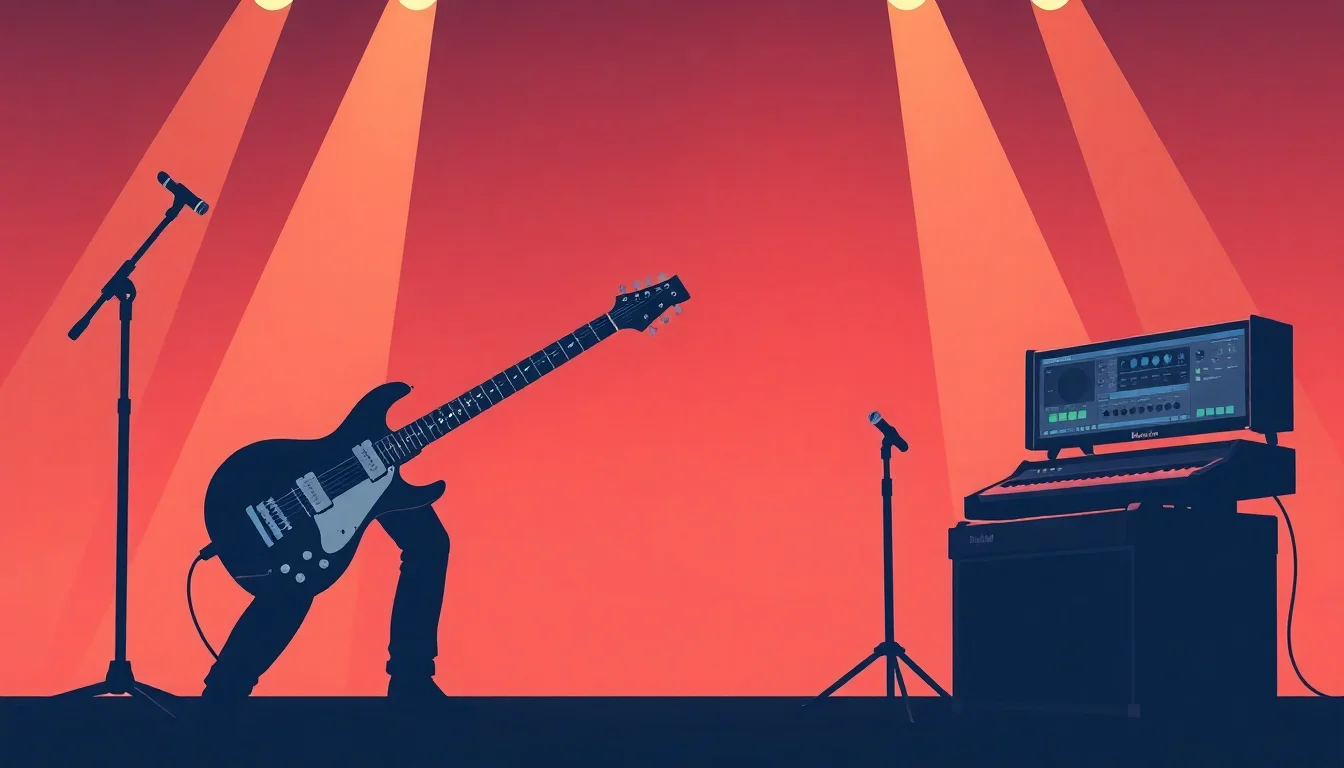
At its core, electronic rock is defined by the symbiotic relationship between traditional rock instrumentation—guitars, bass, drums—and electronic sound sources. This includes synthesizers for melodies and textures, drum machines for rhythmic precision, samplers for incorporating pre-recorded sounds, and effects processors to manipulate both electronic and organic signals. The production often emphasizes a polished, often futuristic sound, contrasting with the raw, analog feel of traditional rock. For instance, the driving synth basslines of Depeche Mode underpin their guitar-driven tracks, while the glitchy electronic percussion of Nine Inch Nails creates a visceral, industrial edge. The interplay between programmed beats and live drumming, or distorted guitar riffs and soaring synth leads, is a hallmark of the genre's sonic architecture.
📊 Key Facts & Numbers
Electronic rock has seen significant commercial success, with many artists achieving multi-platinum status. The genre's influence is vast, with many contemporary music productions incorporating some form of electronic processing or instrumentation. The global market for electronic music instruments and software, crucial to electronic rock production, is projected to grow. Subgenres like dance-punk saw a resurgence in the early 2000s. The digital distribution of music has further democratized the genre, with millions of tracks uploaded to platforms like Spotify daily.
👥 Key People & Organizations
Key figures in the evolution of electronic rock are numerous and span decades. Early pioneers include The Beatles and Kraftwerk, whose experimental use of electronics opened doors. David Bowie's 'Berlin Trilogy' (1977-1979) was pivotal, integrating Krautrock electronics with his rock persona. Gary Numan's early synth-pop hits, while sometimes debated as pure electronic rock, undeniably bridged the gap. Later, bands like Depeche Mode, The Cure, and New Order masterfully blended synth-pop aesthetics with rock structures. The industrial rock scene, spearheaded by Nine Inch Nails and Ministry, brought a heavier, more aggressive electronic edge. More recently, artists like Arcade Fire and Twenty One Pilots continue to integrate electronic elements into mainstream rock.
🌍 Cultural Impact & Influence
The cultural footprint of electronic rock is immense, permeating not only music but also film, fashion, and visual arts. Its futuristic soundscapes and often dystopian lyrical themes have provided the sonic backdrop for countless science fiction films and video games, from Blade Runner to Cyberpunk 2077. The genre's aesthetic, characterized by sharp lines, neon colors, and industrial motifs, has influenced fashion trends, particularly during the synth-pop and industrial booms of the 1980s and 1990s. Furthermore, electronic rock's DIY ethos, particularly in its indie and electroclash offshoots, has inspired a generation of musicians to experiment with accessible technology, fostering a vibrant independent music scene. The genre's influence can be seen in the sonic palettes of artists across genres, from pop to hip hop.
⚡ Current State & Latest Developments
As of 2024, electronic rock remains a vital and evolving genre. The rise of accessible digital audio workstations (DAWs) like Ableton Live and Logic Pro has empowered a new wave of artists to seamlessly blend electronic and rock elements. Festivals such as South by Southwest and Glastonbury consistently feature artists pushing the boundaries of the genre. Recent trends include a greater integration of AI-generated sounds and adaptive music technologies, hinting at new creative possibilities. Bands like Black Midi are exploring complex, often dissonant fusions, while artists like CHVRCHES continue to refine the synth-pop-infused side of electronic rock, demonstrating the genre's enduring appeal and adaptability.
🤔 Controversies & Debates
One of the persistent debates surrounding electronic rock centers on its authenticity and definition. Critics sometimes argue that the heavy reliance on synthesizers and programmed beats dilutes the raw, visceral energy traditionally associated with rock music, questioning whether it truly qualifies as 'rock.' Conversely, proponents emphasize that the genre's innovation lies precisely in its willingness to embrace new technologies and expand the sonic palette beyond traditional instruments. Another point of contention is the categorization of bands that straddle multiple genres; for instance, the exact placement of synth-pop acts like Erasure or industrial pioneers like Skinny Puppy within the broader electronic rock spectrum is often debated. The increasing ubiquity of electronic production tools also raises questions about the role of traditional musicianship.
🔮 Future Outlook & Predictions
The future of electronic rock appears to be one of increasing hybridization and technological integration. We can anticipate further exploration of AI in music composition and performance, potentially leading to entirely new sonic textures and interactive musical experiences. The lines between electronic rock, hyperpop, and experimental electronic music will likely continue to blur, creating novel hybrid forms. As virtual reality and augmented reality technologies mature, so too will the potential for immersive electronic rock performances and experiences. Experts predict that by 2030, at least 20% of mainstream music charts will feature artists whose core sound is rooted in electronic rock, demonstrating its sustained relevance and potential for innovation.
💡 Practical Applications
Electronic rock's influence extends beyond the concert hall and into practical applications. Its sonic principles are employed in film scoring to create futuristic or atmospheric moods, enhancing the viewer's experience in genres like science fiction and horror. In video game development, electronic rock soundtracks are crucial for establishing immersive worlds and driving player engagement, as seen in titles like Grand Theft Auto V which features numerous electronic rock-inspired radio stations. Furthermore, the genre's emphasis on sound design and synthesis has informed the development of new audio technologies and virtual instruments, benefiting producers and sound designers across various creative industries. The rhythmic and textural elements are also utilized in therapeutic settings for ambient soundscapes.
Key Facts
- Category
- culture
- Type
- topic