
Contents
Overview
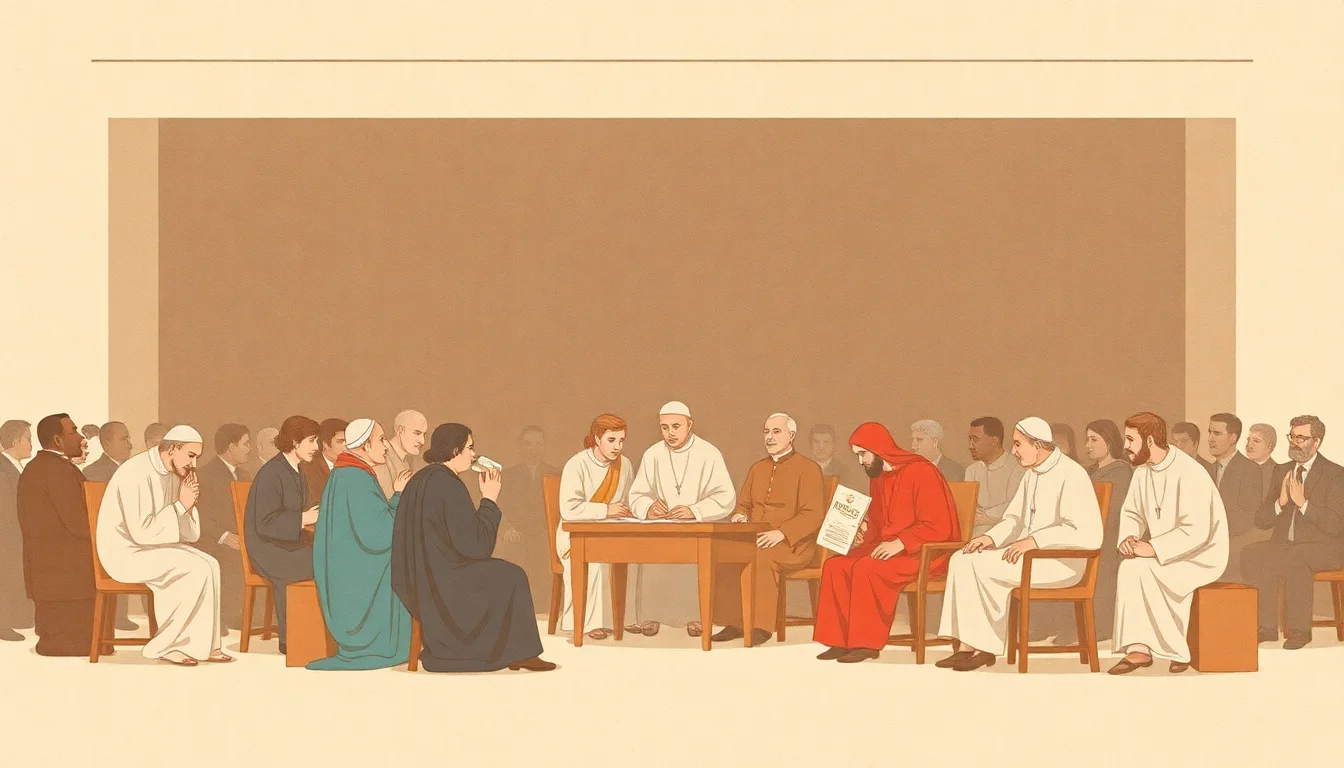
Ecumenical councils are pivotal gatherings of bishops and theologians representing the entire Christian Church, convened to address critical doctrinal disputes, define dogma, and settle matters of church governance. Historically, these councils, particularly the first seven (325-787 CE), are recognized by both Eastern Orthodox and Roman Catholic traditions as authoritative in shaping core Christian beliefs, such as the nature of Christ (Christology) and the Trinity. Later councils, like those of the Western Church (e.g., Constance, Trent, Vatican I & II), further refined doctrine and addressed challenges from schisms and modernity. Understanding these councils is key to grasping the historical trajectory and theological diversity within Christianity, revealing centuries of intense debate, political maneuvering, and profound spiritual consensus-building.
🏛️ What Are Ecumenical Councils?
Ecumenical councils are essentially the Supreme Court of Christianity, convened to settle major doctrinal disputes and administrative issues that affect the entire Christian Church. Think of them as high-stakes summits where bishops from across the known world (the 'oikoumene') gathered to hash out what Christians believe and how they should live. These weren't casual meetings; they were pivotal moments that shaped the very foundations of Christian doctrine and practice for centuries to come. The decisions made at these councils, when recognized by the broader Church, carry immense weight, often defining orthodoxy and heresy.
📜 The Big Ones: A Quick Tour
While the Eastern Orthodox Church and Roman Catholic Church recognize seven ecumenical councils held between the 4th and 8th centuries as definitive, other traditions acknowledge different sets or none at all. The First Council of Nicaea (325 CE) is often the starting point, tackling the Arian controversy and affirming Christ's divinity. Following this were councils like Constantinople I (381 CE), which solidified the Nicene Creed, and Chalcedon (451 CE), crucial for defining the dual nature of Christ. Each council built upon the last, addressing new challenges and refining theological understanding, creating a rich, albeit sometimes contentious, historical narrative.
💥 Key Controversies & Decisions
The debates within these councils were often fierce, fueled by deeply held theological convictions and sometimes political maneuvering. The Christological debates over the nature of Jesus Christ – his divinity and humanity – were central to many early councils, leading to definitions that still form the bedrock of Christian theology. The Iconoclasm controversy, concerning the veneration of religious images, and debates over the Filioque clause in the Nicene Creed, which addresses the procession of the Holy Spirit, highlight the profound theological and practical issues at stake. These weren't abstract philosophical exercises; they had real-world implications for worship and belief.
⚖️ Legacy and Modern Relevance
The legacy of ecumenical councils is undeniable, providing a framework for understanding core Christian beliefs and a historical precedent for resolving major disputes. However, their authority is not universally accepted, especially in light of the Great Schism of 1054 and the Protestant Reformation in the 16th century. While modern ecumenical movements seek dialogue and reconciliation between denominations, the historical divisions stemming from differing interpretations of council authority and decisions mean that a truly universal council, recognized by all major Christian traditions, remains a distant aspiration. The ongoing dialogue, however, keeps the spirit of ecumenism alive.
📚 Where to Learn More
For those eager to delve deeper, the Ante-Nicene Fathers and Post-Nicene Fathers offer primary source material from the periods surrounding the early councils. Reading scholarly works on Patristics and Conciliar history provides essential context. Reputable theological encyclopedias and university press publications on church history are invaluable resources. Many monasteries and seminaries also offer courses or public lectures on these foundational events in Christian history.
💡 Practical Tips for Understanding
When studying ecumenical councils, it's crucial to remember the historical context. The political landscape of the Roman Empire heavily influenced early councils, often intertwining imperial interests with theological pronouncements. Understand that 'ecumenical' historically referred to the Roman world; later councils expanded this concept. Be aware of the differing interpretations of conciliar authority between major traditions like Catholicism, Orthodoxy, and Protestantism. Finally, recognize that while these councils produced definitive statements for many, they also led to schisms and the formation of distinct Christian communities, making their study a complex but vital part of understanding Christianity.
Key Facts
- Year
- 325 CE (First Council of Nicaea)
- Origin
- Roman Empire
- Category
- Religious History
- Type
- Topic
Frequently Asked Questions
How many ecumenical councils are there?
This is a point of significant disagreement. The Roman Catholic Church recognizes 21 ecumenical councils, with the most recent being Vatican II (1962-1965). The Eastern Orthodox Church officially recognizes only the first seven councils, held between the 4th and 8th centuries. Oriental Orthodox churches recognize even fewer. Protestant denominations generally do not consider later councils to be ecumenical in the same authoritative sense as the early ones.
What is the difference between an ecumenical council and a synod?
A synod is a more general term for a council or assembly of church leaders, often regional or national. An ecumenical council, by contrast, is intended to represent the entire Christian Church ('oikoumene') and its decrees are meant to be binding on all Christians. The distinction lies in the scope of representation and the universality of the authority claimed for its decisions.
Why are the first seven councils so important?
These early councils (from Nicaea I in 325 CE to Nicaea II in 787 CE) addressed foundational theological issues that shaped Christianity as we know it. They defined the nature of God (Trinity) and Jesus Christ (Christology), established core tenets of the Nicene Creed, and dealt with critical matters of church governance and practice. Their decisions are widely considered authoritative by both Catholicism and Orthodoxy.
Did emperors really control these councils?
In the early centuries, Roman emperors often played a significant role in convening and influencing ecumenical councils. Emperor Constantine, for instance, called the First Council of Nicaea to address the Arian controversy and promote church unity within the empire. While emperors didn't typically vote on doctrine, their political power and patronage were crucial for the councils' legitimacy and implementation of their decrees, a dynamic that later became a point of contention regarding papal authority.
What happened to the idea of ecumenical councils after the Reformation?
The Protestant Reformation fundamentally challenged the authority of the Roman Catholic Church and, by extension, its later councils. Reformers like Martin Luther and John Calvin appealed to Scripture alone ('sola scriptura') as the ultimate authority, viewing councils as fallible human institutions. While some Protestant traditions might acknowledge the theological weight of the early councils, they generally do not accept the binding authority of those convened after the Great Schism or the Reformation.