
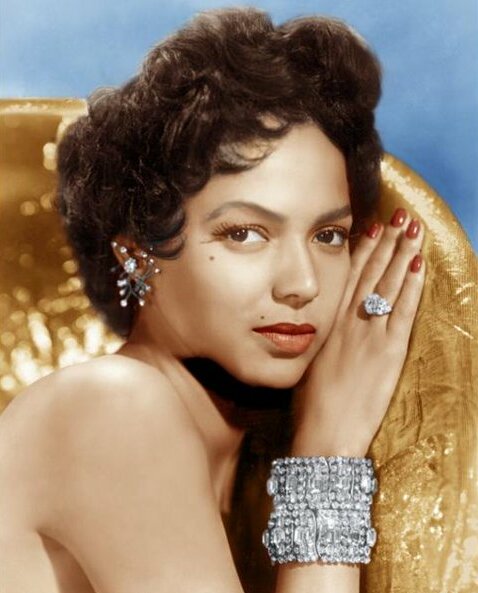
Contents
Overview
Born Dorothy Jean Dandridge on November 9, 1922, in Cleveland, Ohio, she entered show business under the guidance of her mother, Ruby Dandridge, a comedic actress and entertainer. As children, Dorothy and her sister Vivian performed publicly, later forming the Dandridge Sisters with another girl in the 1930s, singing and dancing in venues like the Cotton Club and Apollo Theater. Early film appearances were often uncredited, such as in Sun Valley Serenade (1941) with the Nicholas Brothers, marking her transition from child act to aspiring solo artist amid a racially segregated industry.
⚙️ Rise to Stardom
Dandridge's breakthrough came with Bright Road (1953) opposite Harry Belafonte, but Carmen Jones (1954), directed by Otto Preminger, catapulted her to international fame as the sultry lead, earning over $10 million at the box office. Her performance, with singing dubbed by Marilyn Horne, secured her historic Academy Award nomination for Best Actress at the 27th Oscars, alongside legends like Grace Kelly and Audrey Hepburn. Subsequent roles in Island in the Sun (1957), Porgy and Bess (1959) with Sidney Poitier, and Tamango (1959) highlighted her allure but were hampered by Hollywood's limited visions of Black women, often tying her to interracial romance stereotypes.
🌍 Cultural Impact
As a nightclub sensation post-1951 divorce from dancer Harold Nicholas, Dandridge sold out venues like the Waldorf Astoria's Empire Room, Mocambo, and La Vie en Rose, becoming an international draw in London, Rio, and beyond. Her stardom challenged racial norms, gracing Life magazine's cover as the first Black woman to do so, yet sparked backlash, like controversy over Porgy and Bess for its perceived stereotypes. Married twice—first to Nicholas, father of her daughter Harolyn with developmental disabilities, then to Jack Denison—her career reflected broader struggles of Black performers in mid-20th-century America.
🔮 Legacy & Future
Dandridge died on September 8, 1965, in West Hollywood, California, at age 42 from an accidental barbiturate overdose amid financial woes and career decline. Her life inspired the 1999 HBO film Introducing Dorothy Dandridge, starring Halle Berry, and earned her a Hollywood Walk of Fame star. Today, she symbolizes pioneering Black excellence in entertainment, influencing discussions on race, representation, and resilience in Hollywood.
Key Facts
- Year
- 1922-1965
- Origin
- Cleveland, Ohio, USA
- Category
- culture
- Type
- person
Frequently Asked Questions
What was Dorothy Dandridge's biggest achievement?
She became the first African American nominated for Best Actress at the Oscars for Carmen Jones (1954), a groundbreaking moment that highlighted her talent and challenged racial barriers in Hollywood.
How did Dandridge start her career?
As a child, she performed with her sister as the Dandridge Sisters, appearing in films and venues like the Cotton Club, before going solo as a nightclub singer and actress in the 1940s.
Why did her career decline after Carmen Jones?
Hollywood struggled to find suitable roles for her due to racism, often casting her in stereotypical interracial romances, leading to typecasting and fewer opportunities despite her stardom.
What was her personal life like?
Married to Harold Nicholas (divorced 1951), she had a daughter Harolyn with developmental disabilities; her second marriage to Jack Denison ended in divorce amid financial and emotional struggles.
How is she remembered today?
Through her Hollywood Walk of Fame star, the 1999 Halle Berry biopic, and as an icon of Black perseverance, influencing modern discussions on diversity in film.