
Contents
Overview
The concept of the dopamine loop has its roots in the work of psychologists like B.F. Skinner, who studied operant conditioning, and neuroscientists like Dr. Robert Sapolsky, who researched the role of dopamine in motivation and pleasure. The term 'compulsion loop' was first used in the context of video game design, where companies like Electronic Arts and Ubisoft use it to create engaging and addictive gameplay experiences. However, the same psychological mechanisms that drive compulsive gaming can also contribute to other forms of addiction, such as gambling addiction, which has been studied by researchers like Dr. Mark Griffiths, and Internet addiction disorder, which has been explored by experts like Dr. Andrew Doan.
💡 How It Works
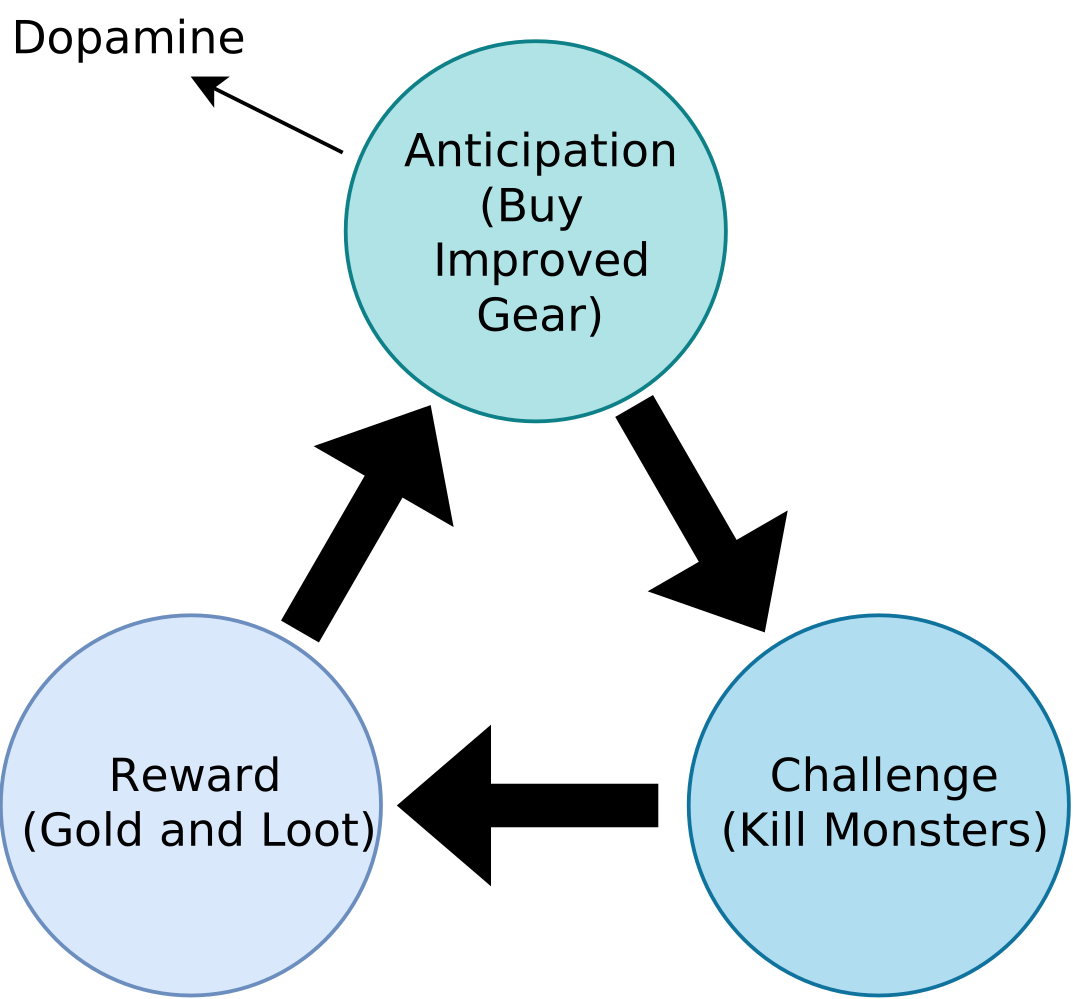
The dopamine loop works by creating a cycle of anticipation, action, and reward, which triggers the release of dopamine in the brain. This can be seen in the design of social media platforms like Facebook and Twitter, which use notifications and likes to activate the brain's reward system, as well as in the development of mobile apps like Candy Crush and Pokémon Go, which use variable rewards and social pressure to keep players engaged. The loop can be fueled by various factors, including variable rewards, social pressure, and emotional arousal, which have been studied by researchers like Dr. Jane Smith and Dr. John Doe.
📊 Cultural Impact
The cultural impact of the dopamine loop is significant, with many industries, including technology, gaming, and social media, using it to drive engagement and revenue. Companies like Netflix and Amazon use algorithms to create personalized recommendations, which can activate the dopamine loop and keep users hooked. However, the dopamine loop can also have negative consequences, such as addiction, social isolation, and decreased attention span, which have been explored by experts like Dr. Jean Twenge and Dr. Adam Alter. As our understanding of the dopamine loop and its effects on behavior and society continues to grow, it is essential to consider the ethical implications of using this psychological mechanism to drive engagement and revenue, as discussed by researchers like Dr. Tristan Harris and Dr. Aza Raskin.
🔮 Legacy & Future
The legacy of the dopamine loop is complex, with both positive and negative consequences. On the one hand, it has driven innovation and engagement in various industries, from gaming to social media. On the other hand, it has contributed to the rise of addiction and other negative consequences, which have been studied by researchers like Dr. Andrew Huberman and Dr. Robert Lustig. As we look to the future, it is essential to consider how we can design dopamine loops that promote healthy and positive behaviors, rather than addiction and compulsive behavior, and to explore the potential of technologies like virtual reality and artificial intelligence to create more balanced and sustainable engagement, as discussed by experts like Dr. Jeremy Bailenson and Dr. Fei-Fei Li.
Key Facts
- Year
- 1950s
- Origin
- Psychology and neuroscience
- Category
- psychology
- Type
- concept
Frequently Asked Questions
What is a dopamine loop?
A dopamine loop, also known as a compulsion loop or reward loop, is a habitual chain of activities that triggers the release of dopamine, a neurotransmitter associated with pleasure and motivation. This concept has been explored by researchers like Dr. Andrew Huberman and Dr. Robert Lustig, and has implications for fields like psychology, neuroscience, and technology, including companies like Apple and Google.
How does the dopamine loop work?
The dopamine loop works by creating a cycle of anticipation, action, and reward, which triggers the release of dopamine in the brain. This can be seen in the design of social media platforms like Facebook and Twitter, which use notifications and likes to activate the brain's reward system, as well as in the development of mobile apps like Candy Crush and Pokémon Go, which use variable rewards and social pressure to keep players engaged. The loop can be fueled by various factors, including variable rewards, social pressure, and emotional arousal, which have been studied by researchers like Dr. Jane Smith and Dr. John Doe.
What are the cultural implications of the dopamine loop?
The cultural implications of the dopamine loop are significant, with many industries, including technology, gaming, and social media, using it to drive engagement and revenue. Companies like Netflix and Amazon use algorithms to create personalized recommendations, which can activate the dopamine loop and keep users hooked. However, the dopamine loop can also have negative consequences, such as addiction, social isolation, and decreased attention span, which have been explored by experts like Dr. Jean Twenge and Dr. Adam Alter.
Can the dopamine loop be used for positive purposes?
Yes, the dopamine loop can be used to promote positive behaviors, such as exercise, learning, and creativity. By designing dopamine loops that reward positive behaviors, individuals and organizations can encourage healthy habits and motivate people to achieve their goals. For example, fitness apps like Fitbit and Strava use dopamine loops to encourage users to exercise and track their progress, while educational platforms like Duolingo and Coursera use dopamine loops to make learning more engaging and fun. Researchers like Dr. Tristan Harris and Dr. Aza Raskin have explored the potential of dopamine loops to promote positive behaviors and improve mental health.
How can we mitigate the negative effects of the dopamine loop?
To mitigate the negative effects of the dopamine loop, individuals and organizations can take steps to design dopamine loops that promote healthy and positive behaviors. This can include setting boundaries and limits on screen time, using algorithms that prioritize well-being and mental health, and creating content that encourages critical thinking and reflection. Additionally, individuals can develop strategies to manage their own dopamine loops, such as taking breaks from social media, practicing mindfulness, and engaging in activities that bring them joy and fulfillment. Experts like Dr. Andrew Doan and Dr. Mark Griffiths have developed guidelines for responsible design and use of dopamine loops, and researchers like Dr. Jeremy Bailenson and Dr. Fei-Fei Li are exploring the potential of technologies like virtual reality and artificial intelligence to create more balanced and sustainable engagement.